What’s the Difference Between a Frog and a Toad? The Hidden Secrets of Amphibian Identity
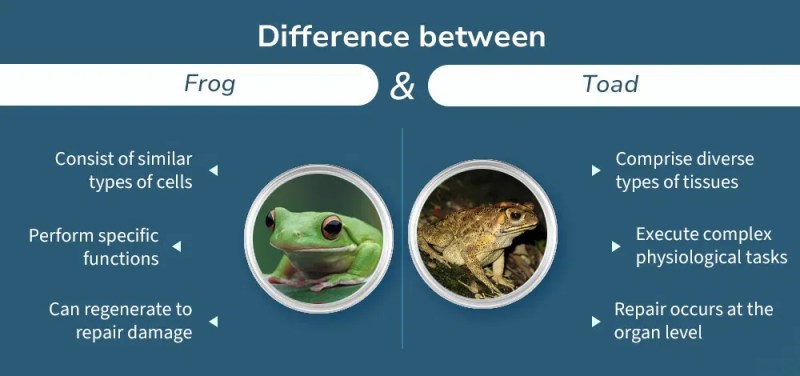
At first glance, the distinction between frogs and toads might seem trivial—a matter of moist skin versus bumpy hide, or perhaps a question of leaping versus lumbering. Yet beneath these surface traits lies a fascinating web of evolutionary adaptations, ecological roles, and even cultural symbolism. The question what’s the difference between a frog and a toad isn’t just about taxonomy; it’s about understanding how these creatures have carved out distinct niches in ecosystems worldwide. From the humid jungles of Costa Rica to the arid scrublands of Australia, their survival strategies reveal nature’s ingenuity in extreme conditions.
The confusion persists because many species blur the lines. A toad’s dry, warty skin might fool the eye into mistaking it for a frog, while some frogs—like the African bullfrog—exhibit toad-like features. But the truth is far more nuanced. Frogs and toads are not separate orders but suborders within the same taxonomic group (Anura), sharing a common ancestor that emerged over 200 million years ago. Their differences stem from evolutionary pressures: one adapted to aquatic life, the other to terrestrial resilience. The answer to what’s the difference between a frog and a toad lies in their anatomy, behavior, and the environments they dominate.
Even scientists acknowledge the ambiguity. Herpetologists often describe the divide as a spectrum rather than a binary. Yet for the curious naturalist or the weekend birder, recognizing these distinctions sharpens observational skills—and sometimes, it’s a matter of survival. A misidentified toad might be poisonous, while a frog could be a key indicator of ecosystem health. The stakes are higher than they appear.
The Complete Overview of What’s the Difference Between a Frog and a Toad
The debate over what’s the difference between a frog and a toad hinges on two primary frameworks: morphological traits (physical characteristics) and ecological roles. Morphologically, frogs tend to have sleeker bodies, longer legs for jumping, and smoother, moist skin optimized for aquatic or semi-aquatic habitats. Toads, conversely, are stockier, with shorter legs for walking, thicker skin to retain moisture in dry climates, and parotoid glands behind their eyes that secrete toxins. These adaptations reflect their evolutionary paths: frogs as agile hunters in water, toads as resilient survivors on land.Yet the line isn’t always clear-cut. Some species, like the Cane Toad (Rhinella marina), exhibit frog-like traits (long legs, smooth skin) but are classified as toads due to their terrestrial lifestyle and toxic secretions. Meanwhile, the African Clawed Frog (Xenopus laevis) resembles a toad in build but lacks the dry skin and parotoid glands. This overlap underscores why what’s the difference between a frog and a toad is less about rigid rules and more about contextual clues—habitat, behavior, and even vocalizations.
Historical Background and Evolution
The evolutionary split between frogs and toads traces back to the Triassic period, when early amphibians faced a critical dilemma: adapt to drying landmasses or remain tied to water. Frogs, descending from stem-batrachians, retained aquatic affinities, developing webbed feet and streamlined bodies for swimming. Their larvae (tadpoles) still require water to metamorphose, a holdover from their aquatic ancestry. Toads, however, underwent a radical transformation: their ancestors colonized terrestrial environments, evolving thicker skin to prevent desiccation and toxic glands to deter predators.Fossil records reveal that by the Cretaceous period, toads had diversified into arid regions, while frogs thrived in wetlands. The true toads (Bufonidae) emerged around 50 million years ago, their success tied to their ability to tolerate drought—a trait that allowed them to outcompete frogs in marginal habitats. This evolutionary arms race explains why what’s the difference between a frog and a toad today mirrors a story of specialization: frogs as aquatic opportunists, toads as terrestrial generalists.
Core Mechanisms: How It Works
The physiological differences between frogs and toads are rooted in their cutaneous respiration—the process of breathing through skin. Frogs, with their moist, permeable skin, rely on high humidity to absorb oxygen efficiently. Their buccal pumping (a method of forcing air into the lungs via throat expansion) is highly efficient in water but less so on land. Toads, however, have keratinized skin—a layer of tough, dry cells that reduces water loss. Their lungs are more developed, and they can survive in drier conditions by burrowing or estivating (a state of dormancy during dry seasons).Table of Contents
- The Complete Overview of What’s the Difference Between a Frog and a Toad
- Historical Background and Evolution
- Core Mechanisms: How It Works
- Key Benefits and Crucial Impact
- Major Advantages
- Comparative Analysis
- Future Trends and Innovations
- Conclusion
- Comprehensive FAQs
- Q: Can a frog and a toad interbreed?
- Q: Are all toads poisonous?
- Q: Why do frogs croak and toads ribbit?
- Q: Do frogs and toads eat the same things?
- Q: How can I tell if a species is a frog or toad in the wild?
- Q: Are frogs or toads more endangered?
- Q: Can pet frogs and toads live together?
- Q: Why do some frogs look like toads?
- Q: Do frogs and toads have cultural meanings beyond folklore?
Behaviorally, the mechanisms diverge further. Frogs are explosive breeders: they migrate en masse to temporary ponds, laying eggs in clusters that hatch rapidly. Toads, by contrast, often breed in permanent water bodies and exhibit parental care in some species (e.g., the Surinam toad, whose eggs fuse into its back). These adaptations ensure survival in their respective niches—frogs in ephemeral wetlands, toads in stable but resource-scarce environments.
Key Benefits and Crucial Impact
Understanding what’s the difference between a frog and a toad extends beyond academic curiosity—it informs conservation, agriculture, and even medicine. Frogs, as bioindicators, signal ecosystem health: their presence (or absence) in wetlands reflects water quality and biodiversity. Toads, with their pest-control abilities (eating insects like mosquitoes), are invaluable in agricultural systems. Their toxic secretions have also yielded pharmaceutical breakthroughs, such as epibatidine, a compound derived from the Epidobates tricolor frog that is 200 times more potent than morphine.The ecological divide between the two groups creates a keystone dynamic. Wetlands dominated by frogs support diverse food webs, while toad populations stabilize arid ecosystems. Their differences ensure that no single species monopolizes a niche, a principle critical in biodiversity management. As habitats shrink, distinguishing between them becomes vital for targeted conservation efforts.
"The toad is the frog’s shadow—a mirror of adaptation, not identity. One thrives where the other falters, and both are indispensable." — Dr. Tyrone Hayes, Stanford University Herpetologist
Major Advantages
- Ecological Redundancy: Frogs and toads fill complementary roles, ensuring resilience in changing climates. While frogs may decline in drying wetlands, toads persist, maintaining predator-prey balance.
- Medical Potential: Toad toxins (e.g., bufadienolides) are being studied for heart medications, while frog peptides (e.g., dermaseptin) show antimicrobial promise.
- Pest Control: Toads’ voracious appetites for agricultural pests reduce the need for chemical pesticides, offering sustainable solutions.
- Cultural Symbolism: Frogs symbolize fertility and transformation in many cultures (e.g., Egyptian gods, Japanese folklore), while toads represent luck or deception (e.g., Irish folklore, Shakespeare’s Macbeth).
- Indicators of Climate Change: Shifts in frog-toad ratios in regions like Australia’s Murray-Darling Basin signal water scarcity, providing early warnings for policymakers.

Comparative Analysis
| Trait | Frog | Toad |
|---|---|---|
| Skin Texture | Smooth, moist, permeable | Dry, bumpy, keratinized |
| Leg Adaptation | Long, muscular (optimized for jumping) | Shorter, sturdier (optimized for walking) |
| Breeding Habitat | Temporary ponds (explosive breeders) | Permanent water bodies (prolonged breeding) |
| Defense Mechanism | Camouflage, speed, some venom (e.g., poison dart frogs) | Toxic secretions (parotoid glands), burrowing |
Future Trends and Innovations
The question what’s the difference between a frog and a toad will take on new urgency as climate change reshapes habitats. Frogs, already threatened by chytrid fungus and habitat loss, may see their ranges contract to permanent wetlands, while toads could expand into newly aridified zones. Assisted migration—relocating species to suitable climates—may become a tool for conservationists, blurring traditional boundaries. Technologically, DNA barcoding is refining classifications, revealing cryptic species that defy old distinctions.Innovations in bioacoustics (studying frog/toad calls) could also redefine what’s the difference between a frog and a toad by identifying species via vocalizations alone. As urbanization encroaches, "frog-friendly" infrastructure (e.g., amphibian tunnels) will prioritize protecting these groups, with toads likely benefiting from their adaptability. The future may lie in hybrid ecosystems, where the two suborders collaborate in restored wetlands—proof that their differences are strengths, not divisions.

Conclusion
The answer to what’s the difference between a frog and a toad is not a simple checklist but a dynamic interplay of evolution, ecology, and resilience. Frogs and toads are two sides of the same amphibian coin, each honed by millions of years of specialization. Their distinctions—moist skin versus dry, leaps versus walks—are not arbitrary but the result of survival in vastly different worlds. Yet their shared vulnerabilities remind us that amphibians are canaries in the coal mine of environmental health.As scientists and citizens alike grapple with biodiversity loss, recognizing these differences becomes an act of stewardship. Whether you’re a herpetologist or a backyard naturalist, the next time you encounter a ribbit or a croak, pause to consider: is this a messenger from the wetlands or a survivor of the drylands? The answer may hold the key to understanding our own ecological future.
Comprehensive FAQs
Q: Can a frog and a toad interbreed?
A: No. While they share a common ancestor, frogs and toads belong to different families (e.g., Ranidae vs. Bufonidae) with incompatible reproductive barriers. Hybridization is extremely rare and typically results in sterile offspring.
Q: Are all toads poisonous?
A: Most toads secrete toxins through their parotoid glands, but the potency varies. The Colorado River Toad (Incilius alvarius) produces bufotenin, a psychedelic compound, while others (e.g., European Common Toad) are mildly toxic. Always avoid handling wild toads.
Q: Why do frogs croak and toads ribbit?
A: Vocalizations differ due to anatomical adaptations. Frogs use vocal sacs to amplify calls for mating, producing louder, more musical "ribbits." Toads have shorter, thicker vocal cords, resulting in deeper, grunting "croaks."
Q: Do frogs and toads eat the same things?
A: Dietary overlap exists, but frogs are more insectivorous (flies, mosquitoes) and aquatic (tadpoles eat algae). Toads consume ground-dwelling pests (beetles, slugs) and even small vertebrates. Their broader diet reflects their terrestrial niche.
Q: How can I tell if a species is a frog or toad in the wild?
A: Use the "Skin and Leg Rule": smooth skin + long legs = frog; dry, warty skin + short legs = toad. Observe behavior: frogs jump; toads walk or hop. Listen for calls (frogs: high-pitched; toads: low, guttural). When in doubt, consult a field guide or local herpetology group.
Q: Are frogs or toads more endangered?
A: Globally, frogs face higher extinction risks due to habitat destruction and chytrid fungus. However, toads like the Hawaiian Narrow-Mouthed Toad (Sphenocephalus laevis) are critically endangered. Conservation efforts often target both groups, as their declines indicate broader ecosystem collapse.
Q: Can pet frogs and toads live together?
A: Generally, no. Frogs require high humidity and may stress toads, which prefer drier conditions. Additionally, some toads (e.g., Cane Toads) are toxic and can harm frogs. Always research species-specific needs before cohabitation.
Q: Why do some frogs look like toads?
A: Convergent evolution explains this. Species like the African Bullfrog evolved toad-like features (short legs, thick skin) to exploit similar ecological niches. Conversely, some toads (e.g., Red-Eyed Leaf Toad) resemble frogs to avoid predation.
Q: Do frogs and toads have cultural meanings beyond folklore?
A: Yes. In Chinese medicine, toad venom (Chansu) treats heart conditions. The Australian Green Tree Frog appears in Indigenous Dreamtime stories as a trickster. Even in modern media, frogs symbolize transformation (e.g., The Princess and the Frog), while toads often represent luck (e.g., finding a "toadstool" in fairy tales).
Leave a Comment
Comments are moderated before appearing. The data you submit is processed according to the Privacy Policy of Neip.