Untitled
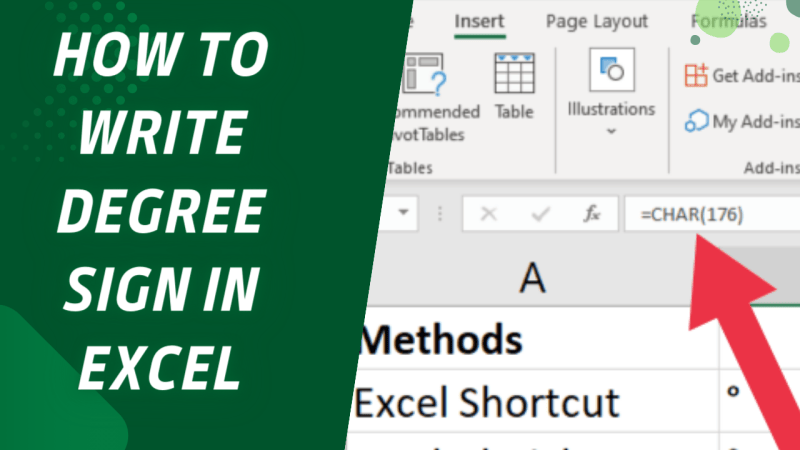
[JUDUL]
The Hidden Symbol: How to Write Degree Sign in Every Format
[/JUDUL]
[META_DESCRIPTION]
Master the degree symbol (°) across platforms—from keyboards to coding. Learn typographic rules, historical evolution, and troubleshooting tips for perfect precision.
[/META_DESCRIPTION]
[TAGS]
typography, degree symbol, keyboard shortcuts, Unicode, LaTeX, Microsoft Word, HTML, CSS, programming symbols, mathematical notation
[/TAGS]
[CATEGORY]
General
[/CATEGORY]
Table of Contents
- The Complete Overview of How to Write Degree Sign
- Historical Background and Evolution
- Core Mechanisms: How It Works
- Key Benefits and Crucial Impact
- Major Advantages
- Comparative Analysis
- Future Trends and Innovations
- Conclusion
- Comprehensive FAQs
- Q: Why does my degree symbol appear as a square or question mark?
- Q: Can I use "deg" instead of the degree symbol?
- Q: How do I type a degree symbol on a Mac without a numeric keypad?
- Q: What’s the difference between ° and °C in Unicode?
- Q: Why does my degree symbol look too large or small?
- Q: Are there regional variations in degree symbol usage?
- Q: How do I ensure the degree symbol prints correctly in PDFs?
- Q: Can I create a custom degree symbol in a font?
- Q: What’s the best way to teach someone how to write degree sign?
The degree sign (°) is more than a punctuation mark—it’s a precision tool. Whether you’re drafting a scientific report, designing a weather app, or coding a temperature display, its proper use separates clarity from confusion. Yet despite its ubiquity, many professionals struggle with inconsistencies: the wrong character slipping into documents, keyboard shortcuts failing across devices, or formatting errors in digital media. The solution lies in understanding not just where to find the degree symbol, but how to deploy it correctly in every context—from physical keyboards to programming languages.
The degree sign’s journey from medieval manuscripts to modern keyboards reveals a fascinating intersection of mathematics, typography, and technology. Originally derived from the Latin gradus (meaning "step"), it evolved alongside the development of angular measurement systems. Today, its digital incarnation spans disciplines: meteorologists rely on it for temperature (°C/°F), engineers for angles (° in CAD), and even astronomers for celestial coordinates. Yet its versatility comes with pitfalls—misplaced superscripts, incorrect Unicode encoding, or platform-specific rendering quirks can undermine professionalism.
For writers, designers, and developers, the degree sign is a silent sentinel of accuracy. A single incorrect character can alter meaning (e.g., °C vs. °F) or break code. This guide demystifies its mechanics—from historical roots to modern applications—ensuring you wield it with authority, regardless of the medium.
The Complete Overview of How to Write Degree Sign
The degree sign (°) is a Unicode character (U+00B0) with a dual role: as a mathematical symbol for angles and a unit indicator for temperature or latitude. Its proper usage hinges on three pillars: typographic conventions, platform-specific implementation, and contextual accuracy. In professional settings, the degree symbol must align with industry standards—whether in scientific publications (where it denotes angular degrees) or commercial documents (where it clarifies units). The challenge lies in its fragmented accessibility: while some systems (like Windows) offer direct keyboard shortcuts, others (Linux, macOS) require alternative methods, and digital formats (HTML, LaTeX) demand explicit encoding.Beyond basic insertion, the degree sign’s behavior varies by environment. In word processors, it may auto-format as a superscript; in code, it must be escaped or entity-encoded; and in design software, its kerning or scaling can affect readability. Mastery of these nuances ensures consistency across print, digital, and technical media. For instance, a weather forecast app displaying "32°F" requires precise Unicode handling to avoid rendering artifacts, while a physics textbook must distinguish between ° (degrees) and °C/°F (temperature scales). The following sections dissect these mechanisms to equip you with universal solutions.
Historical Background and Evolution
The degree sign’s origins trace back to 16th-century Europe, where mathematicians sought a standardized symbol for angular measurement. Early notations used abbreviations like "gr" (from gradus), but the circular (°) design emerged in the 17th century, inspired by the protractor’s arc. By the 18th century, it became integral to navigation and astronomy, appearing in charts and almanacs. The symbol’s adoption was formalized in the 19th century with the metric system’s expansion, where it denoted both angular degrees and Celsius/Fahrenheit units—a duality that persists today.In the digital age, the degree sign underwent a second transformation. The ASCII standard (1963) initially omitted it, forcing early programmers to use workarounds like "^o" or "deg." The Unicode Consortium resolved this in 1991 by assigning U+00B0 to the degree symbol, standardizing its representation across languages. This shift enabled global compatibility, from Japanese weather reports to Arabic engineering manuals. Yet remnants of its pre-Unicode era linger: some legacy systems still default to superscript "o" (e.g., °C rendered as oC), highlighting the need for vigilant encoding practices.
Core Mechanisms: How It Works
The degree sign’s functionality depends on the system’s character encoding and input method. On Windows, pressing `Alt` + `0176` on the numeric keypad inserts the symbol via ANSI code, while macOS users rely on `Option` + `Shift` + `8`. Linux distributions vary, often requiring `Compose` + `degree` or `Ctrl` + `Shift` + `U` followed by `00B0`. These methods exploit Unicode’s underlying architecture, where each character is mapped to a numerical value (here, `B0` in hexadecimal). For developers, the symbol can be inserted via:The key distinction lies between the standalone degree symbol (°) and its temperature-specific variants (°C, °F), which are composed characters requiring separate encoding. For example, °C is Unicode U+00B0 + U+0043, not a single entity. This compositional nature demands careful handling to avoid rendering errors, such as °C appearing as °C (misaligned superscript).
Key Benefits and Crucial Impact
Precision in symbol usage is non-negotiable in fields where units or angles dictate outcomes. A misplaced degree sign in a construction blueprint could alter structural integrity, while an incorrect temperature notation in medical software might lead to dosage errors. The degree symbol’s role extends beyond technical accuracy: in design, it enhances readability by visually distinguishing units from text; in publishing, it ensures compliance with style guides (e.g., Chicago Manual of Style mandates ° for angles, not "deg"). Even in casual writing, its correct use signals attention to detail—a trait valued in professional communication.The symbol’s versatility also fosters cross-disciplinary collaboration. A geologist analyzing seismic data and a climatologist modeling weather patterns rely on the same degree notation, creating a universal language. For businesses, consistent symbol usage in branding (e.g., "360° branding") reinforces professionalism. The ripple effects of mastering how to write degree sign are profound: it reduces ambiguity, streamlines workflows, and elevates the perceived quality of any output.
"Typography is the art of shaping ideas, and symbols like the degree sign are its silent architects. A single character can bridge the gap between data and understanding—or create a chasm of confusion."
— Stanisław Lem, The Cyberiad
Major Advantages
- Universal Compatibility: Unicode encoding ensures the degree sign renders correctly across devices, languages, and operating systems, from iOS to embedded systems.
- Precision in Technical Fields: Eliminates ambiguity in engineering, aviation, and scientific notation where ° vs. °C/°F distinctions are critical.
- Design Flexibility: Supports superscript/subscript variations (e.g., °² for squared degrees) and custom scaling in graphic design software.
- Accessibility: Screen readers interpret the degree symbol as a distinct unit, improving accessibility for visually impaired users.
- Future-Proofing: Adherence to Unicode standards future-proofs documents against legacy system incompatibilities.

Comparative Analysis
| Method | Use Case |
|---|---|
| Keyboard Shortcut (Windows: Alt+0176) | Quick insertion in documents, emails, or basic coding. Limited to systems with numeric keypads. |
| Unicode Insertion (U+00B0) | Programming, HTML/CSS, and international text where direct character input is needed. |
| LaTeX (\degree) | Academic and technical publishing requiring precise mathematical notation. |
| Character Map Tools | Troubleshooting missing symbols in non-standard keyboards or legacy systems. |
Future Trends and Innovations
As digital interfaces evolve, the degree sign’s role will expand into immersive environments. Virtual reality (VR) and augmented reality (AR) applications—such as architectural walkthroughs or flight simulators—will demand dynamic degree symbol rendering, where angles must adapt to user perspective in real time. Meanwhile, AI-driven typography tools may auto-correct degree symbol usage in real-time, flagging errors like °F instead of °C in global datasets. The rise of quantum computing could also introduce new encoding challenges, as symbols must integrate seamlessly into low-level programming languages.Accessibility will remain a priority, with voice-to-text systems refining their recognition of degree notations and braille displays developing tactile representations. For designers, variable fonts may allow the degree sign to morph between styles (e.g., minimalist for UX interfaces, traditional for print). These innovations underscore one truth: the degree sign is not static. Its future lies in adaptability—bridging the gap between human intuition and machine precision.

Conclusion
The degree sign is a testament to how small details shape clarity. Whether you’re a coder, a writer, or a designer, its correct implementation is a mark of professionalism. The key takeaway? How to write degree sign is not a one-size-fits-all question. It requires context-aware solutions: knowing when to use `Alt` + `0176`, when to encode `\u00B0`, and when to compose °C manually. The symbol’s journey—from medieval manuscripts to Unicode—mirrors humanity’s quest for precision, and its future will be defined by how we integrate it into an increasingly digital world.For those who treat it as an afterthought, the degree sign remains an invisible character. For those who master it, it becomes an invisible asset—one that ensures accuracy, fosters collaboration, and elevates the quality of every project.
Comprehensive FAQs
Q: Why does my degree symbol appear as a square or question mark?
The issue stems from font or encoding mismatches. Ensure your document uses a Unicode-compatible font (e.g., Arial, Times New Roman) and that the text is saved as UTF-8. If using HTML, verify the meta tag: ``. For legacy systems, try inserting the symbol via its Unicode value (`°`).
Q: Can I use "deg" instead of the degree symbol?
While "deg" is acceptable in some contexts (e.g., programming comments), it lacks the precision and professionalism of the degree symbol (°). Style guides like IEEE and APA mandate the symbol for formal documents. Use "deg" only when the symbol is unavailable or in code where readability is prioritized over typography.
Q: How do I type a degree symbol on a Mac without a numeric keypad?
Use the shortcut Option + Shift + 8. Alternatively, enable the Unicode Hex Input method in System Preferences (Keyboard > Input Sources) and type `00B0`, then press Enter. For touch devices, use the emoji keyboard and search for "degree."
Q: What’s the difference between ° and °C in Unicode?
The degree symbol (°) is U+00B0, while °C is a composed character combining ° (U+00B0) and "C" (U+0043). To create °C in HTML, use `°C` or `°C`. In LaTeX, use `^{\circ}C`. Never use ° followed by a space or lowercase "c," as this violates typographic standards.
Q: Why does my degree symbol look too large or small?
This occurs due to font scaling or kerning issues. In design software, manually adjust the symbol’s size or use a font with built-in degree symbol support (e.g., Adobe’s typefaces). In word processors, disable "auto-format as superscript" for the symbol. For code, ensure CSS properties like `vertical-align` or `font-size` are consistent.
Q: Are there regional variations in degree symbol usage?
Yes. In some European contexts, °C is written without a space (e.g., "20°C"), while American English often includes a space ("20 °C"). Japanese and Chinese documents may use the symbol in technical texts but omit it in casual writing, relying on "度" (dù) instead. Always follow the target audience’s conventions.
Q: How do I ensure the degree symbol prints correctly in PDFs?
Embed the Unicode font in your PDF (File > Export > "Include All Fonts" in Adobe Acrobat). If using LaTeX, compile with `xelatex` or `lualatex` for full Unicode support. For HTML-to-PDF conversions, specify UTF-8 encoding in the CSS: `@charset "UTF-8";`. Test the output in a PDF viewer that supports Unicode (e.g., Adobe Reader).
Q: Can I create a custom degree symbol in a font?
Yes, using vector editors like Adobe Illustrator or FontForge. Design the symbol to match your font’s metrics, then export as a `.ttf` or `.otf` file. Ensure it includes the Unicode value U+00B0. For commercial fonts, consult a typographer to maintain readability and scalability.
Q: What’s the best way to teach someone how to write degree sign?
Start with practical demonstrations: show keyboard shortcuts, Unicode insertion, and common pitfalls (e.g., ° vs. °C). Provide cheat sheets for different platforms (Windows/macOS/Linux). For technical audiences, include examples in HTML, LaTeX, and programming. Emphasize context—when precision matters (e.g., science) vs. when approximations suffice (e.g., informal writing).
[/KONTEN]
Leave a Comment
Comments are moderated before appearing. The data you submit is processed according to the Privacy Policy of Neip.