Untitled

[JUDUL]
Middle Class Income: The Financial Backbone of Stability and Growth
[/JUDUL]
[META_DESCRIPTION]
Explore the definition, historical evolution, and economic impact of middle class income—how it shapes societies, its core mechanisms, and future trends reshaping financial stability.
[/META_DESCRIPTION]
[TAGS]
middle class income, economic stability, household finances, wage growth, socioeconomic mobility
[/TAGS]
[CATEGORY]
General
[/CATEGORY]
Table of Contents
- The Complete Overview of Middle Class Income
- Historical Background and Evolution
- Core Mechanisms: How It Works
- Key Benefits and Crucial Impact
- Major Advantages
- Comparative Analysis
- Future Trends and Innovations
- Conclusion
- Comprehensive FAQs
- Q: How is the middle class income defined in my country?
- Q: Can you live comfortably on a middle class income?
- Q: What’s the difference between middle class and upper middle class?
- Q: How does inflation affect middle class income?
- Q: Are gig economy earners part of the middle class?
- Q: What policies could strengthen middle class income?
The middle class income is not just a statistical line on a graph—it’s the financial lifeblood of modern economies, the buffer between precarity and prosperity. For decades, it has been the silent engine of consumer demand, tax revenue, and social cohesion, yet its boundaries remain fluid, shaped by inflation, automation, and shifting labor markets. What once defined stability—steady wages, homeownership, and upward mobility—now faces erosion as global crises redefine the parameters of financial security.
The concept of middle-class earnings has evolved far beyond simple salary brackets. It now intersects with education, geography, and even cultural expectations, creating a patchwork of realities across nations. In the U.S., the Pew Research Center defines it as households earning between $53,000 and $157,000 annually (as of 2023), but in Germany or Singapore, the thresholds—and the associated lifestyle—differ dramatically. This disparity underscores a critical question: Is the middle class income a fixed benchmark or a moving target, constantly recalibrated by economic forces?
The stakes couldn’t be higher. A shrinking middle class income correlates with rising inequality, political unrest, and eroded public trust in institutions. Yet, for millions, it remains the aspirational goal—a threshold where financial stress gives way to opportunity. Understanding its mechanics, benefits, and vulnerabilities is essential for policymakers, workers, and families navigating an uncertain future.
The Complete Overview of Middle Class Income
The middle class income serves as both a mirror and a motor of economic health. It reflects societal priorities—access to education, healthcare, and homeownership—while driving demand for goods and services that sustain businesses. Historically, it emerged as a post-industrial phenomenon, a reward for the white-collar and skilled blue-collar workers who powered the 20th-century economy. Today, its definition is more complex, blending median wages with cost-of-living adjustments, debt levels, and even subjective measures of well-being.What distinguishes middle-class earnings from lower or upper tiers is not just the number on a paycheck but the options it unlocks. A household earning the median middle class income can afford basic necessities and discretionary spending—vacations, further education, or emergency savings—without relying on public assistance. This buffer is fragile, however. A single job loss, medical emergency, or housing market shift can push families into precarity, exposing the tenuous nature of financial stability.
Historical Background and Evolution
The modern middle class income traceable to the late 19th and early 20th centuries, as industrialization created a class of clerks, teachers, and factory foremen who earned enough to escape poverty but lacked elite wealth. In the U.S., the post-WWII era cemented its prominence through policies like the GI Bill, suburban expansion, and strong labor unions, which collectively expanded middle-class wages and homeownership rates. By the 1950s, nearly 60% of Americans identified as middle class—a demographic that fueled the consumer economy and political stability.The late 20th century, however, saw cracks in this foundation. Globalization, technological disruption, and stagnant wage growth eroded the purchasing power of middle-class incomes, particularly for those without college degrees. The 2008 financial crisis accelerated this trend, as home values plummeted and unemployment rates spiked, forcing millions into lower-income brackets. Meanwhile, the rise of the gig economy and remote work has blurred traditional definitions of middle-class stability, with many workers now juggling multiple income streams to maintain a lifestyle once guaranteed by a single salary.
Core Mechanisms: How It Works
At its core, middle class income operates on three pillars: earnings stability, asset accumulation, and social mobility. Earnings stability refers to predictable, sufficient wages that cover living expenses while allowing for savings—typically 20–30% of gross income. Asset accumulation, whether through homeownership, retirement funds, or investments, acts as a hedge against economic shocks. Social mobility, the ability to improve one’s economic standing over time, is often tied to access to education and healthcare, both of which require financial cushioning.The mechanics vary by region. In high-cost cities like San Francisco or London, a middle class income may not stretch as far as in rural areas, where housing and services are cheaper. Meanwhile, countries with strong social safety nets—like Nordic nations—may define middle-class earnings differently, factoring in subsidized childcare or universal healthcare that reduces out-of-pocket expenses. The result is a global mosaic where the same term can mean vastly different realities.
Key Benefits and Crucial Impact
The middle class income is more than a pay range—it’s a cornerstone of economic resilience. Societies with robust middle classes experience lower crime rates, higher civic engagement, and greater innovation, as stable households invest in education and entrepreneurship. The data is clear: nations where the majority earn middle-class wages tend to have stronger GDP growth and more equitable wealth distribution. This stability also translates to personal well-being, with studies linking middle-class earnings to lower stress levels and higher life satisfaction.Yet, the benefits are not automatic. Without protective policies—strong labor laws, affordable healthcare, and progressive taxation—the middle class income can become a precarious perch. The COVID-19 pandemic laid bare these vulnerabilities, as millions of service workers and gig economy earners found themselves without the safety nets that once defined middle-class security. The lesson? Stability requires more than income alone; it demands systemic support.
"The middle class is the backbone of any democracy. When it weakens, so does the social contract that holds societies together." — Joseph Stiglitz, Nobel laureate in Economics
Major Advantages
A household earning a middle class income enjoys distinct financial and lifestyle advantages:- Financial Buffer: Ability to save for emergencies (3–6 months’ expenses) and retirement without extreme austerity.
- Education Access: Fund college tuition, private schools, or vocational training for children, breaking the cycle of intergenerational poverty.
- Homeownership: Build equity through mortgages, a primary wealth-building tool in many economies.
- Healthcare Security: Afford premium health insurance, reducing reliance on public systems during crises.
- Consumer Leverage: Drive demand for durable goods (cars, electronics) and services (travel, dining), sustaining local economies.
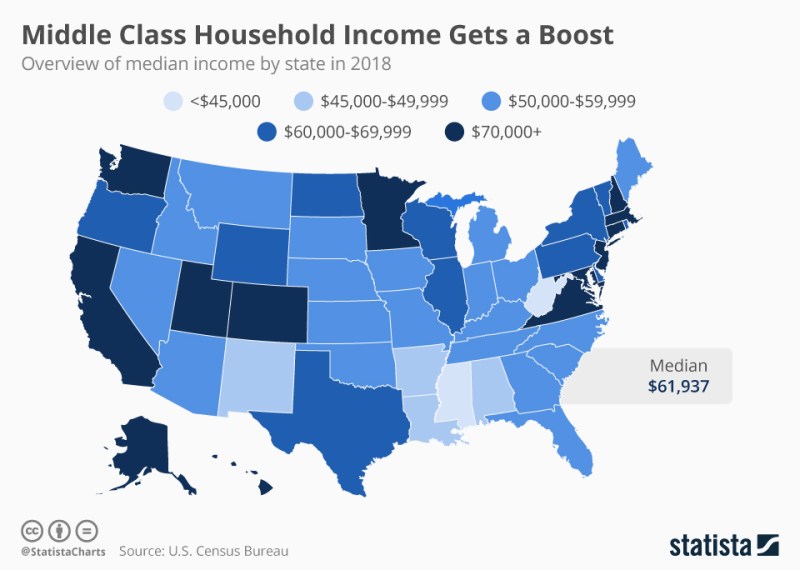
Comparative Analysis
The middle class income varies dramatically by country, reflecting differences in labor markets, cost of living, and social policies. Below is a comparison of median middle-class earnings (annual household income) in select nations, adjusted for purchasing power parity (PPP):| Country | Median Middle Class Income (PPP) |
|---|---|
| United States | $53,000–$157,000 |
| Germany | €30,000–€75,000 (~$32,500–$82,000) |
| Japan | ¥4 million–¥10 million (~$27,000–$68,000) |
| India | ₹12 lakh–₹30 lakh (~$14,000–$35,000) |
Future Trends and Innovations
The middle class income is undergoing a transformation driven by automation, remote work, and climate change. On one hand, AI and algorithmic management threaten to displace mid-skilled jobs (e.g., administrative roles, retail), compressing middle-class wages for those without advanced degrees. On the other hand, the rise of the "digital nomad" class—workers leveraging remote jobs to live in lower-cost regions—could redefine middle-class lifestyles, prioritizing mobility over traditional homeownership.Innovations like universal basic income (UBI) experiments and portable benefits (e.g., healthcare tied to individuals, not employers) may also reshape middle-class security. Meanwhile, sustainability pressures could increase the cost of living (e.g., green housing retrofits), forcing households to adapt or risk falling into lower income brackets. The future of middle class income hinges on whether policymakers can balance technological disruption with equitable growth—ensuring that stability remains within reach for the majority.

Conclusion
The middle class income remains the bedrock of economic and social stability, but its foundations are being tested like never before. From its post-war heyday to today’s gig-driven economy, its definition has shifted, yet its importance endures. The challenge for governments and individuals alike is to preserve the buffers that define middle-class living—savings, education, and healthcare access—in an era of uncertainty.For workers, the message is clear: middle-class earnings are no longer guaranteed by tenure or loyalty. They require proactive planning—upskilling, diversifying income streams, and advocating for policies that protect wage growth. The alternative—a hollowing out of the middle—risks not just financial strain but the erosion of the social cohesion that middle-class incomes have historically upheld.
Comprehensive FAQs
Q: How is the middle class income defined in my country?
A: Definitions vary by nation. In the U.S., Pew Research uses $53,000–$157,000 (2023), while the OECD often employs median income adjusted for household size. Check your country’s statistical agency (e.g., Eurostat for Europe, Statistics Canada) for localized thresholds.
Q: Can you live comfortably on a middle class income?
A: Comfort depends on location and lifestyle. In low-cost areas, a middle class income may afford homeownership, travel, and savings. In high-cost cities, it may require frugality or side income. Research local cost-of-living calculators (e.g., Numbeo) for precise estimates.
Q: What’s the difference between middle class and upper middle class?
A: The upper middle class typically earns 2–3x the median middle class income (e.g., $150,000+ in the U.S.) and enjoys greater asset accumulation (e.g., multiple properties, private schooling). Key differences include tax brackets, investment opportunities, and generational wealth.
Q: How does inflation affect middle class income?
A: Inflation erodes purchasing power. If wages stagnate while costs (housing, healthcare) rise, a middle class income may no longer cover basics. Historically, real wage growth (adjusted for inflation) has outpaced nominal growth—track the Consumer Price Index (CPI) to monitor your income’s value.
Q: Are gig economy earners part of the middle class?
A: Not automatically. Gig work (e.g., Uber, freelancing) often lacks benefits like healthcare or retirement contributions, making it harder to achieve middle-class stability. However, some gig workers supplement traditional jobs to reach middle-class earnings, especially in high-demand fields.
Q: What policies could strengthen middle class income?
A: Evidence-based solutions include:
- Progressive taxation to fund public services (education, healthcare).
- Strong labor unions to negotiate fair wages.
- Subsidized childcare and eldercare to reduce household expenses.
- Investments in reskilling programs for displaced workers.
Leave a Comment
Comments are moderated before appearing. The data you submit is processed according to the Privacy Policy of Neip.