What Adhoc Means: The Hidden Logic Behind Spontaneity in Work, Tech, and Life
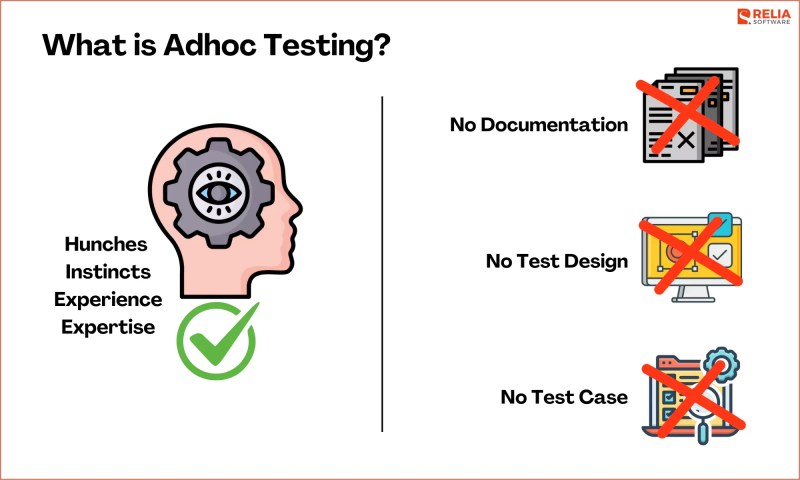
The word adhoc carries weight in boardrooms, tech stacks, and even casual conversations—yet its precise meaning often slips through the cracks. It’s not just jargon; it’s a philosophy embedded in how teams respond to chaos, how software adapts to unforeseen demands, and how individuals pivot when plans collapse. When a developer scrambles to patch a zero-day vulnerability overnight or a manager approves a last-minute budget shift to seize an opportunity, they’re operating in adhoc mode. The term itself is a Latin-derived shorthand for "for this," a deliberate contrast to rigid, pre-planned systems. Its power lies in ambiguity—it’s both a verb and a noun, a strategy and a crutch, depending on the context.
What adhoc means in practice is often misunderstood. Many conflate it with improvisation or chaos, but its essence is precision under pressure: a structured response to the unstructured. In agile development, it’s the unplanned sprint; in crisis management, it’s the improvised solution that saves the day. The confusion stems from its dual nature: it can describe a temporary fix or a deliberate, repeatable process—like a "fire drill" that becomes institutionalized. The line between adhoc and ad hoc (the formal Latin spelling) matters legally and linguistically, but in everyday use, the distinction rarely stops professionals from leaning on the term when deadlines loom and playbooks fail.
The term’s versatility is its greatest strength—and its biggest pitfall. It’s the go-to label for anything that doesn’t fit neatly into a Gantt chart or a Scrum board. But what adhoc means in one industry (e.g., a tech team’s emergency patch) may clash with its meaning in another (e.g., a government’s unchecked policy tweak). The ambiguity forces clarity: is adhoc a bandage or a blueprint? The answer depends on whether the organization embraces it as a tool or a last resort.
The Complete Overview of What Adhoc Means
At its core, what adhoc means boils down to contextual problem-solving without predefined frameworks. It’s the antithesis of bureaucratic inertia, a nod to the reality that not every challenge can be anticipated. In corporate settings, it often surfaces when stakeholders demand immediate action—think of a CMO approving an adhoc influencer campaign after a competitor’s scandal. Here, adhoc isn’t a failure of planning; it’s a feature of agility. The term’s flexibility makes it indispensable in fields where rigidity is a liability, from cybersecurity (where adhoc responses to breaches are standard) to healthcare (where triage decisions are adhoc by necessity).Yet the same qualities that make adhoc valuable also create risks. Without guardrails, it can devolve into reactive chaos, where short-term fixes accumulate technical debt or ethical dilemmas. The key lies in intentional ad-hocness: treating adhoc as a temporary state with clear exit criteria. For example, a software team might deploy an adhoc workaround for a bug, then document it as a "known issue" to address in the next sprint. This hybrid approach—balancing spontaneity with structure—is where adhoc thrives.
Historical Background and Evolution
The Latin phrase ad hoc ("for this specific purpose") emerged in 16th-century Europe as a way to describe custom solutions, often in legal or diplomatic contexts. By the 20th century, its anglicized form, adhoc, seeped into business lexicon as factories and offices grappled with industrial-era unpredictability. The term gained traction during World War II, when military logistics relied on adhoc supply chains to outmaneuver enemies. Post-war, it trickled into corporate jargon as companies adopted lean methodologies, where adhoc became shorthand for "whatever works now."The digital revolution amplified adhoc’s relevance. In the 1990s, as businesses migrated to client-server models, IT teams faced adhoc demands to integrate legacy systems with new software—a problem that persists today in cloud migrations. The rise of DevOps in the 2010s further cemented adhoc as a cornerstone of modern workflows, where "move fast and break things" often translates to adhoc experimentation. Even now, as AI tools promise to automate decision-making, adhoc remains a human-centric counterbalance, ensuring that machines don’t replace the ability to think on one’s feet.
Core Mechanisms: How It Works
Understanding what adhoc means in action requires dissecting its mechanics. At the operational level, adhoc processes typically follow a three-phase cycle:1. Trigger: An unplanned event (e.g., a system failure, a market shift) disrupts normal workflows.
2. Response: A cross-functional team assembles resources—skills, tools, or budgets—to address the trigger.
3. Resolution: The solution is implemented, then either retired (if temporary) or formalized (if viable long-term).
Table of Contents
- The Complete Overview of What Adhoc Means
- Historical Background and Evolution
- Core Mechanisms: How It Works
- Key Benefits and Crucial Impact
- Major Advantages
- Comparative Analysis
- Future Trends and Innovations
- Conclusion
- Comprehensive FAQs
- Q: Is "adhoc" the same as "improvisation"?
- Q: Can "adhoc" be documented or standardized?
- Q: What’s the difference between "adhoc" and "ad hoc" (with a space)?
- Q: When should you avoid using "adhoc" in a professional setting?
- Q: How can teams reduce the downsides of "adhoc" work?
- Q: Are there industries where "adhoc" is discouraged?
For instance, when a SaaS company detects a data leak, the adhoc response might involve security engineers, legal teams, and PR specialists collaborating overnight to contain the breach. The "workaround" (e.g., a temporary firewall rule) isn’t part of the original architecture, but its adhoc nature doesn’t negate its critical role. The challenge lies in ensuring these responses don’t become permanent adhoc dependencies—what’s called "process drift" in organizational design.
The psychology of adhoc is equally critical. Studies in behavioral economics show that humans default to adhoc thinking under stress, prioritizing speed over optimization. This explains why adhoc solutions often favor simplicity over elegance: a duct-tape fix beats no fix when time is scarce. However, over-reliance on adhoc can erode institutional memory, as teams forget why certain workarounds exist. The solution? Documentation-light agility: capturing adhoc decisions in lightweight formats (e.g., Slack threads, wikis) to preserve institutional knowledge without stifling spontaneity.
Key Benefits and Crucial Impact
The allure of adhoc lies in its ability to turn constraints into opportunities. In fast-moving industries like fintech or biotech, where first-mover advantage hinges on rapid iteration, adhoc isn’t a crutch—it’s a competitive weapon. A startup might launch an adhoc beta test based on user feedback, then pivot entirely if metrics don’t align. This iterative adhoc approach minimizes sunk costs while maximizing learning. Similarly, in crisis management, adhoc responses (e.g., improvising a supply chain during a pandemic) can mean the difference between survival and collapse.Yet the impact of adhoc isn’t always positive. When misapplied, it can lead to technical debt, compliance gaps, or cultural burnout. The 2008 financial crisis, for example, exposed how adhoc risk management in banks contributed to systemic failures. The lesson? Adhoc must be strategic, not reckless. Organizations that treat it as a default mode—rather than a calculated tool—risk trading short-term gains for long-term instability.
"Adhoc is the art of making do with what you have, but the science of knowing when to stop making do." — Dr. Elena Vasquez, Organizational Psychologist, Harvard Business Review
Major Advantages
- Speed Over Perfection: Adhoc solutions deliver results when time is the limiting factor, avoiding the paralysis of over-analysis.
- Resource Efficiency: Leverages existing assets (skills, tools, budgets) without requiring new investments, ideal for lean teams.
- Innovation Catalyst: Forces creative problem-solving by breaking away from rigid processes, often leading to breakthroughs.
- Customer-Centric Adaptation: Allows businesses to respond dynamically to niche or emerging customer needs (e.g., adhoc product customization).
- Resilience Building: Trains teams to handle ambiguity, a critical skill in volatile industries like AI or geopolitics.

Comparative Analysis
| Adhoc | Alternative Approaches |
|---|---|
| Unplanned, context-specific solutions. |
|
| Best for crises, rapid prototyping, or unknown variables. |
|
| Risks: Process drift, lack of documentation, short-term thinking. |
|
| Industries: Tech, crisis management, startups, healthcare. |
|
Future Trends and Innovations
As AI and automation reshape workflows, the role of adhoc is evolving. Tools like GitHub Copilot or Jira’s adhoc automation features are blurring the line between human improvisation and machine-assisted problem-solving. The future may see adhoc becoming semi-automated, where algorithms suggest adhoc fixes (e.g., code patches) while humans validate them—a hybrid model that retains agility without sacrificing oversight. Meanwhile, in remote work, adhoc collaboration tools (e.g., Slack’s "urgent" channels, Figma’s real-time edits) are redefining how teams operate in the moment.The bigger question is whether adhoc will remain a reactive tool or evolve into a proactive strategy. Forward-thinking organizations are embedding adhoc capabilities into their DNA—training teams to recognize when to improvise, when to formalize, and when to discard. The goal isn’t to eliminate adhoc but to weaponize it: turning spontaneity into a repeatable advantage. As industries grow more complex, the ability to pivot adhoc—while still adhering to core principles—will separate leaders from followers.

Conclusion
What adhoc means is less about chaos and more about controlled improvisation. It’s the difference between a fire drill that saves lives and one that causes more damage. Its power lies in the tension between structure and spontaneity—a balance that demands self-awareness. Organizations that master adhoc don’t fear the unplanned; they harness it. They document the lessons learned from adhoc fixes, they set boundaries to prevent abuse, and they celebrate the wins that come from thinking on their feet.The term itself is a reminder that perfection is often the enemy of progress. In a world where change is the only constant, adhoc isn’t a dirty word—it’s the acknowledgment that sometimes, the best-laid plans need a detour.
Comprehensive FAQs
Q: Is "adhoc" the same as "improvisation"?
Not exactly. While both involve spontaneity, adhoc implies a deliberate, goal-driven response to a specific problem, often within existing constraints. Improvisation, by contrast, is more open-ended (e.g., jazz musicians creating on the spot). Adhoc in business or tech is constrained by tools, budgets, or deadlines, whereas improvisation may have no limits.
Q: Can "adhoc" be documented or standardized?
Yes, but with caveats. Organizations often create "adhoc playbooks"—lightweight guides outlining steps for common adhoc scenarios (e.g., "How to handle a DDoS attack"). The key is to document the process, not the solution, so teams can replicate the thinking, not just the fix. Over-documenting adhoc risks turning it into bureaucracy, so balance is critical.
Q: What’s the difference between "adhoc" and "ad hoc" (with a space)?
The space matters. "Ad hoc" (Latin, two words) is the formal spelling, used in legal or academic contexts to describe something created for a specific purpose (e.g., an ad hoc committee). "Adhoc" (one word) is the anglicized, colloquial version, now widely accepted in business and tech. Using the wrong form can undermine credibility in formal writing.
Q: When should you avoid using "adhoc" in a professional setting?
Avoid adhoc when:
- The solution could (or should) be planned in advance.
- Stakeholders expect long-term viability (e.g., adhoc isn’t a substitute for a strategic roadmap).
- Legal or compliance risks are involved (e.g., adhoc policy changes may violate regulations).
Q: How can teams reduce the downsides of "adhoc" work?
Mitigate adhoc risks with these strategies:
- Timeboxes: Set deadlines for adhoc tasks to prevent drift.
- Ownership: Assign a "cleanup" owner to formalize or retire the solution.
- Retrospectives: After an adhoc effort, review what worked and what didn’t.
- Hybrid Frameworks: Combine adhoc with structured methods (e.g., "adhoc sprints" in agile).
Q: Are there industries where "adhoc" is discouraged?
Yes. Industries with high regulatory scrutiny, safety risks, or long-term stakes often limit adhoc practices:
- Aerospace: Adhoc fixes in flight systems are rare due to certification requirements.
- Pharmaceuticals: Drug development relies on rigid protocols; adhoc changes can void approvals.
- Military Logistics: While adhoc is used in combat, peacetime operations favor standardized procedures.
Leave a Comment
Comments are moderated before appearing. The data you submit is processed according to the Privacy Policy of Neip.