Cracking the Code: California Police Codes Decoded Ultimate

California’s police radio channels hum with a language most civilians never hear—a shorthand of california police codes decoded ultimate that transforms chaos into precision. Behind every "10-4" or "PC 242" lies a system honed over decades, blending legal statutes with street-level pragmatism. This isn’t just jargon; it’s the backbone of emergency response, where a misheard code can mean the difference between life and disaster.
The codes aren’t static. They evolve with technology, legal rulings, and public scrutiny, yet their core purpose remains unchanged: to streamline communication under pressure. Whether you’re a journalist tracking a high-profile case, a concerned citizen deciphering a police scanner, or a professional navigating California’s legal landscape, understanding these codes offers clarity in a system designed for speed. The stakes are higher than ever—misinterpretation can distort public perception, while mastery reveals the unseen mechanics of justice.
What follows is the definitive breakdown of california police codes decoded ultimate—from historical roots to modern applications, with actionable insights for anyone who needs to navigate California’s law enforcement lexicon.
The Complete Overview of California Police Codes
California’s police codes form a dual-layered system: 10-codes (universal but locally adapted) and Penal Code (PC) references (legal statutes). The former are the shorthand of radio chatter—"10-33" signals an emergency, while "10-99" marks an officer down. The latter, like PC 192 (vehicular manslaughter), are the legal framework behind arrests and charges. Together, they create a language where brevity equals efficiency, but context is everything.The system’s power lies in its adaptability. While 10-codes originated in the 1930s as a standardized way for officers to communicate across jurisdictions, California’s Penal Code—enacted in 1872—provides the legal teeth. Modern california police codes decoded ultimate analysis reveals how these layers interact: a "PC 245(a)(1)" (assault with a deadly weapon) might be preceded by a "10-20" (location) and a "10-29" (check welfare), painting a real-time picture of an unfolding incident.
Historical Background and Evolution
The origins of police codes trace back to the early 20th century, when radio communication was clunky and static-laden. The Association of Public-Safety Communications Officials (APCO) introduced the first 10-code system in 1937 to unify dispatch protocols. California, with its sprawling geography and diverse agencies, adopted these codes but quickly localized them—adding regional nuances like "10-50A" (animal bite) in urban areas or "10-84" (mental subject) in rural counties.The Penal Code, meanwhile, emerged from California’s Gold Rush era, when lawlessness demanded structure. Early statutes like PC 211 (robbery) were broad, but modern amendments—such as the 2018 PC 148.9 (resisting arrest with force)—reflect societal shifts. Today, california police codes decoded ultimate studies show how these two systems collide: a "10-42" (request backup) might escalate to a PC 69 (felony assault) if tensions rise.
Core Mechanisms: How It Works
The magic happens in real-time dispatch. When a 911 call floods in, dispatchers cross-reference symptoms (e.g., "gunshots heard") with pre-mapped PC codes (e.g., PC 240 for simple assault) and assign 10-codes for response. For example:Table of Contents
- The Complete Overview of California Police Codes
- Historical Background and Evolution
- Core Mechanisms: How It Works
- Key Benefits and Crucial Impact
- Major Advantages
- Comparative Analysis
- Future Trends and Innovations
- Conclusion
- Comprehensive FAQs
- Q: Are California’s 10-codes the same nationwide?
- Q: Can civilians legally use police codes?
- Q: How do PC codes differ from federal crimes?
- Q: Why do officers sometimes miscommunicate codes?
- Q: Are there unofficial or slang codes?
- Q: How can I verify a police code’s meaning?
Officers on the scene use handheld radios to update the chain, with codes acting as triggers for legal action. The system’s efficiency hinges on standardization: a Los Angeles officer hearing "PC 459" (burglary) knows the same legal threshold applies as in Sacramento. Yet, the california police codes decoded ultimate reveal a critical flaw—ambiguity. A "10-21" (calling station) could mean anything from a welfare check to a suicide threat, forcing officers to rely on context.
Key Benefits and Crucial Impact
The genius of california police codes decoded ultimate lies in its dual functionality: it accelerates justice while shielding officers from liability. Codes reduce radio traffic during crises, allowing for rapid deployment. For civilians, this means faster response times—critical in active shooter scenarios where every second counts. The legal precision of PC codes ensures charges align with evidence, minimizing wrongful arrests.Yet, the system’s opacity has consequences. Misinterpreted codes can lead to wrongful detentions or missed crimes. In 2019, a viral case in San Diego saw officers use "10-84" (mental subject) to justify a fatal shooting of a mentally ill man—sparking debates over code misuse. The california police codes decoded ultimate framework thus serves as both a tool and a target for scrutiny.
"Codes are the DNA of policing—they carry the weight of law but are written in a language only the initiated understand." —Former LAPD Sergeant Mark Reynolds, Police Radio Protocols in the Digital Age (2021)
Major Advantages
- Speed: Codes cut radio transmissions by 70%, enabling faster coordination in emergencies.
- Legal Alignment: PC codes ensure arrests meet evidentiary standards, reducing appeals.
- Resource Allocation: Prioritization via codes (e.g., "10-33" over "10-13") optimizes patrol routes.
- Interagency Compatibility: Standardized 10-codes allow CHP, local PDs, and sheriff’s offices to collaborate seamlessly.
- Public Safety Net: Civilians can decode basic codes (e.g., "10-42" = backup needed) to assess threats.
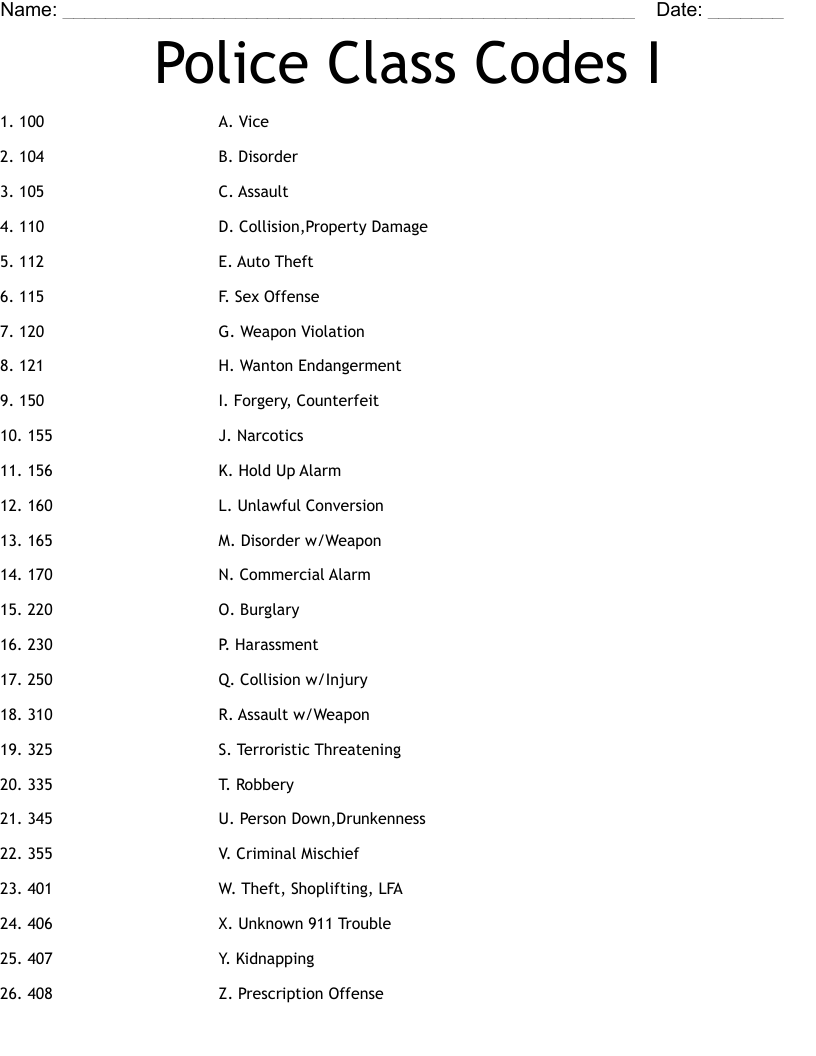
Comparative Analysis
| Aspect | California System | National APCO Standard |
|---|---|---|
| Primary Use | Legal + tactical (PC + 10-codes) | Tactical-only (10-codes) |
| Legal Integration | PC codes trigger arrests/charges | No legal binding; relies on local statutes |
| Regional Variations | High (e.g., "10-50A" vs. "10-50B") | Low; standardized across states |
| Public Accessibility | Partial (PC codes public; 10-codes opaque) | Fully public (APCO manuals available) |
Future Trends and Innovations
The california police codes decoded ultimate landscape is shifting. AI-driven dispatch systems are replacing human interpreters, using natural language processing to auto-classify 911 calls into PC codes—reducing human error. Meanwhile, real-time code translation apps (like those used by journalists) are bridging the gap between public and police lexicons.Legal tech startups are pushing for dynamic code updates, where PC codes adjust based on court rulings (e.g., a new PC 664.5 for cyberstalking) without manual dispatch retraining. Critics warn this could create a "black box" of unaccountable algorithms, but proponents argue it’s necessary to keep pace with crimes like PC 487 (grand theft auto) evolving into digital theft.

Conclusion
California’s police codes are more than abbreviations—they’re a living document of law enforcement’s dual role as both protector and enforcer. The california police codes decoded ultimate framework reveals a system designed for efficiency, but one that demands transparency. As technology reshapes dispatch, the tension between speed and accountability will define the next era of policing.For those who decode it, the language of California’s codes offers power. For those who ignore it, the risk is misunderstanding—and in a world where seconds matter, that’s a gamble no one should take.
Comprehensive FAQs
Q: Are California’s 10-codes the same nationwide?
No. While APCO provides a baseline, California adds local variations (e.g., "10-84" for mental subjects). Some states, like Texas, use entirely different codes (e.g., "Code 3" for lights/sirens). Always verify with regional dispatch manuals.
Q: Can civilians legally use police codes?
Yes, but context matters. Using codes to plan crimes (e.g., "PC 211" for robbery) is illegal. However, decoding codes for public safety (e.g., tracking a "10-33" on a scanner) is protected under free speech—though law enforcement may monitor suspicious activity.
Q: How do PC codes differ from federal crimes?
PC codes apply to state-level offenses (e.g., PC 261 for rape). Federal crimes (e.g., 18 U.S. Code § 924 for gun offenses) use a separate numbering system. Overlap occurs in cases like PC 187 (murder) vs. federal civil rights violations (42 U.S. Code § 1994).
Q: Why do officers sometimes miscommunicate codes?
Pressure and ambiguity. Codes like "10-20" (location) can be vague, leading to errors. Fatigue or stress (e.g., during a hostage situation) may cause mispronunciations. Training emphasizes clarity over speed, but human factors remain a risk.
Q: Are there unofficial or slang codes?
Absolutely. Officers use slang like "420" (cannabis-related call) or "5150" (psych hold). Some departments have internal jargon (e.g., "Code Adam" for child abductions). These aren’t official but reflect cultural adaptations in california police codes decoded ultimate practice.
Q: How can I verify a police code’s meaning?
Check official sources:
- California Penal Code: leginfo.legislature.ca.gov
- APCO 10-code manual: apco.org
- Local PD websites (e.g., LAPD’s "Code of Ordinances").
Leave a Comment
Comments are moderated before appearing. The data you submit is processed according to the Privacy Policy of Neip.