When Is RCT Required? The Definitive Rules & Real-World Scenarios
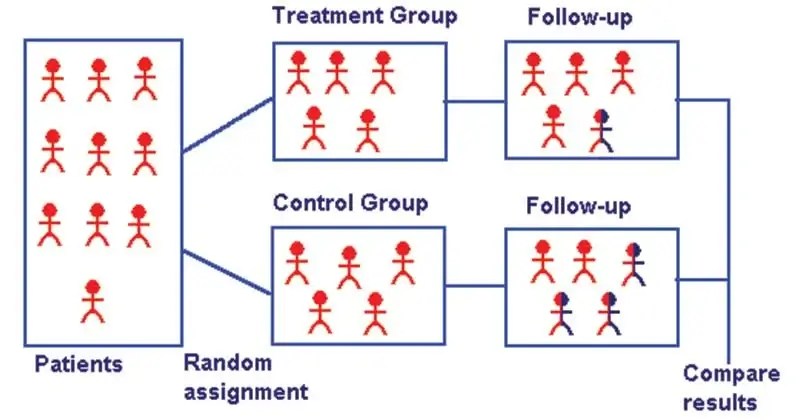
The question of when is RCT required cuts across disciplines—medicine, public health, and regulatory science—yet its application remains murky for many professionals. Unlike observational studies or case reports, RCTs demand rigorous randomization, blinding, and statistical power, making them the gold standard for causal inference. Yet their implementation isn’t universal; context dictates necessity. A pharmaceutical trial testing a new cancer drug will invariably require an RCT, while a retrospective analysis of hospital readmission rates might not. The distinction hinges on risk, uncertainty, and the potential for harm—or benefit—when interventions are deployed at scale.
What separates a scenario where an RCT is non-negotiable from one where alternatives suffice? The answer lies in three pillars: regulatory mandates, ethical obligations, and scientific rigor. Regulatory bodies like the FDA or EMA often stipulate RCTs for high-stakes interventions (e.g., biologics, medical devices with invasive applications), while ethics committees may demand them when harm risks are unclear. Yet even here, exceptions exist—adaptive trials or pragmatic designs may reduce requirements under specific conditions. The ambiguity forces researchers to navigate gray areas, where legal compliance intersects with methodological pragmatism.
Missteps in determining when an RCT is mandatory can lead to wasted resources, delayed approvals, or—worst—patient harm. A 2022 study in The BMJ highlighted how 30% of Phase III trials in oncology were rejected due to flawed randomization schemes, a preventable oversight. The stakes are equally high in public health, where policy decisions (e.g., vaccine rollouts) often hinge on RCT-derived evidence. This article dissects the thresholds, exceptions, and real-world triggers that define when randomization isn’t just advisable—it’s indispensable.
The Complete Overview of RCT Requirements
The demand for RCTs isn’t monolithic; it varies by intervention type, risk profile, and regulatory jurisdiction. In pharmaceuticals, for instance, the International Council for Harmonisation (ICH) guidelines treat RCTs as the default for confirming efficacy in chronic diseases, unless historical controls or surrogate endpoints are validated. Conversely, in surgical trials, equipoise—the genuine uncertainty about treatment superiority—often dictates RCT necessity, as seen in the landmark LAP4 trial comparing laparoscopic vs. open surgery for colorectal cancer. The key variable isn’t the study design itself but the balance between evidence certainty and ethical tolerance for uncertainty.Beyond medicine, fields like behavioral science or education occasionally mandate RCTs when interventions target vulnerable populations (e.g., children in school-based programs). Here, when is an RCT required becomes a question of causal attribution: Can alternative designs (e.g., stepped-wedge clusters) achieve comparable validity? The answer depends on whether the intervention’s effects are time-sensitive, context-dependent, or subject to confounding—factors that RCTs uniquely address. Even then, hybrid models (e.g., pragmatic RCTs) are gaining traction to bridge the gap between academic rigor and real-world applicability.
Historical Background and Evolution
The RCT’s rise to prominence traces back to the 1940s, when Sir Austin Bradford Hill’s trials on streptomycin for tuberculosis demonstrated its superiority over observational methods. Hill’s work established three foundational principles: randomization to minimize bias, blinding to prevent placebo effects, and statistical power to detect true effects. These tenets became non-negotiable as medicine shifted from anecdotal practice to evidence-based care. The 1960s and 70s saw RCTs cemented in drug approval processes, particularly after thalidomide’s tragic legacy exposed the dangers of untested interventions.Yet the evolution hasn’t been linear. The 1990s introduced adaptive trial designs, allowing modifications mid-study to improve efficiency, while the 2010s saw regulatory flexibility in response to crises (e.g., COVID-19 vaccines). Today, when is an RCT required is less about dogma and more about risk stratification. For example, the FDA’s Breakthrough Therapy designation may waive traditional RCT requirements if preliminary data show "substantial improvement" over existing treatments—a shift reflecting both scientific progress and ethical pragmatism.
Core Mechanisms: How It Works
At its core, an RCT’s requirement stems from its ability to isolate causal effects by eliminating confounding variables through randomization. Participants are allocated to treatment or control groups via algorithms (e.g., minimization, stratified sampling) to ensure comparability at baseline. Blinding—whether single-, double-, or triple—mitigates observer and participant bias, while intent-to-treat analysis preserves the trial’s integrity by analyzing all randomized subjects, regardless of adherence. These mechanisms collectively address Hawthorne effects (behavioral changes due to observation) and confounding by indication (where sicker patients receive novel treatments).Table of Contents
- The Complete Overview of RCT Requirements
- Historical Background and Evolution
- Core Mechanisms: How It Works
- Key Benefits and Crucial Impact
- Major Advantages
- Comparative Analysis
- Future Trends and Innovations
- Conclusion
- Comprehensive FAQs
- Q: Can an RCT ever be waived for a drug approval?
- Q: Are there industries outside medicine where RCTs are mandatory?
- Q: How do ethics committees determine if an RCT is necessary?
- Q: What’s the difference between an RCT and a pragmatic trial?
- Q: Can a trial be both randomized and observational?
- Q: What happens if a Phase III trial fails randomization?
The power calculation—determining sample size based on anticipated effect size, variability, and desired confidence—is critical. Underpowered trials risk false negatives, while overpowered ones waste resources. Regulatory bodies like the EMA now require sample size justifications as part of trial protocols, ensuring when an RCT is mandatory aligns with statistical feasibility. For instance, a trial testing a rare disease therapy might use enriched designs (selecting high-probability responders) to reduce sample sizes without compromising validity.
Key Benefits and Crucial Impact
The insistence on RCTs in high-stakes scenarios isn’t arbitrary; it reflects their unparalleled ability to reduce uncertainty. Unlike observational studies, which rely on statistical adjustments to infer causality, RCTs generate it directly. This distinction is critical in pharmacoeconomics, where a single RCT can justify billions in healthcare spending (e.g., PCSK9 inhibitors for cholesterol management). The 2010 Nobel Prize in Medicine awarded for discovering H. pylori’s role in ulcers underscored how RCTs can redefine clinical practice—yet their absence in earlier eras led to prolonged suffering.Their impact extends beyond medicine. In public policy, RCTs have reshaped education (e.g., Finland’s Education RCT Program), criminal justice (e.g., Chicago’s violence reduction trials), and even climate science (e.g., geoengineering pilot studies). The World Bank’s Development Impact Evaluation (DIME) initiative now funds RCTs to evaluate aid programs, proving that when is an RCT required transcends disciplinary boundaries. As one epidemiologist noted:
"An RCT isn’t just a study design—it’s a contract with the future. It says, ‘We won’t gamble with lives or public funds on unproven interventions.’ That contract is why societies trust evidence-based medicine."
— Dr. Steven Woolf, Virginia Commonwealth University
Major Advantages
- Causal Inference: Randomization ensures treatment effects are attributable to the intervention, not lurking variables (e.g., socioeconomic status in drug trials).
- Generalizability: Large, diverse RCTs (e.g., ALLHAT trial for hypertension) produce results applicable across populations, unlike single-center studies.
- Regulatory Approval: Agencies like the FDA rarely approve drugs without Phase III RCT data, except in compassionate-use exceptions.
- Ethical Safeguards: RCTs with independent data monitoring boards (DMBs) can halt trials early if harm emerges, as seen in the ACCORD study (diabetes management).
- Cost-Efficiency in Long Term: While RCTs are expensive upfront, they prevent post-market liabilities (e.g., lawsuits over untested medical devices).

Comparative Analysis
| Scenario | RCT Required? | Alternatives Considered ||-----------------------------|-------------------|--------------------------------------|
| New molecular entity (NME) drug | ✅ Mandatory (Phase III) | Historical controls (rarely accepted) |
| Medical device with invasive use | ✅ Mandatory (IDE trials) | Single-arm studies (for compassionate use) |
| Behavioral intervention (e.g., school programs) | ⚠️ Conditional (if high risk) | Stepped-wedge cluster designs |
| Diagnostic test validation | ❌ Usually not (unless high stakes) | Cross-sectional cohorts with gold-standard comparisons |
| Public health policy (e.g., vaccine mandates) | ✅ Often required | Natural experiments (e.g., Sweden’s COVID-19 cluster) |
Future Trends and Innovations
The rigid boundaries around when is an RCT required are softening due to technological advancements and regulatory innovation. Machine learning is enabling adaptive randomization, where algorithms dynamically allocate participants based on real-time response data, reducing sample sizes by up to 40%. Meanwhile, decentralized trials (using telemedicine and wearables) are expanding access to diverse populations, addressing historical underrepresentation in RCTs. The FDA’s Project Optimus now accepts real-world evidence (RWE)—derived from electronic health records—as supplementary to RCTs for certain indications, though full approval still demands randomized data.Another frontier is equipoise in pragmatic trials. Traditional RCTs prioritize internal validity, but pragmatic RCTs (e.g., UK’s CRASH-2 trial) focus on external validity, testing interventions in routine care settings. This shift may reduce the need for RCTs in low-risk interventions where observational data suffice. However, skeptics warn that trade-offs in bias control could undermine progress. As the NIH’s Precision Medicine Initiative expands, the question of when an RCT is mandatory may evolve into when it’s the most efficient design—not the only one.

Conclusion
The answer to when is RCT required is neither binary nor static. It’s a dynamic interplay of risk, regulation, and scientific necessity. While RCTs remain the cornerstone of high-stakes interventions, their dominance is being challenged by hybrid designs, regulatory flexibility, and technological integration. The future may see a tiered approach: core RCTs for life-saving innovations, supplemented by adaptive or observational methods where uncertainty is lower.For researchers and policymakers, the takeaway is clear: RCTs are not a one-size-fits-all solution, but their absence demands rigorous justification. As methodologies evolve, so too must the criteria for determining when randomization is non-negotiable—and when it can yield to more pragmatic alternatives.
Comprehensive FAQs
Q: Can an RCT ever be waived for a drug approval?
A: Rarely. The FDA may accept surrogate endpoints (e.g., biomarker changes) or historical controls in compassionate-use scenarios, but full approval typically requires Phase III RCT data. Exceptions exist for rare diseases under the FDA’s Accelerated Approval Program, where surrogate markers suffice temporarily.
Q: Are there industries outside medicine where RCTs are mandatory?
A: Yes. Education (e.g., U.S. Department of Education’s Investing in Innovation grants), criminal justice (e.g., Snitching Programs in Baltimore), and climate policy (e.g., carbon offset trials) increasingly mandate RCTs to evaluate interventions with societal impact.
Q: How do ethics committees determine if an RCT is necessary?
A: Committees assess equipoise (genuine uncertainty about treatment benefits) and risk-benefit ratios. If a novel intervention poses minimal harm and prior data suggest promise, they may approve RCTs. For low-risk interventions, observational studies with propensity score matching might suffice.
Q: What’s the difference between an RCT and a pragmatic trial?
A: Traditional RCTs prioritize internal validity (e.g., strict inclusion criteria, blinding) to isolate causal effects. Pragmatic trials prioritize external validity (e.g., real-world settings, minimal restrictions) to test implementation feasibility. The latter may reduce RCT requirements for public health interventions where generalizability is critical.
Q: Can a trial be both randomized and observational?
A: No—but hybrid designs (e.g., stepped-wedge RCTs) blend elements of both. In these, randomization occurs at the cluster level (e.g., hospitals), while observational data is collected post-intervention. They’re increasingly used in healthcare quality improvement to balance rigor with practicality.
Q: What happens if a Phase III trial fails randomization?
A: Regulatory agencies like the EMA or FDA will likely reject the study, requiring a redesign. Common fixes include stratified randomization (to balance covariates) or increased sample size. The 2018 FDA guidance on adaptive designs now allows mid-trial adjustments to salvage flawed randomization schemes—provided transparency is maintained.
Leave a Comment
Comments are moderated before appearing. The data you submit is processed according to the Privacy Policy of Neip.