How Compound Examples Shape Modern Thinking and Practical Applications
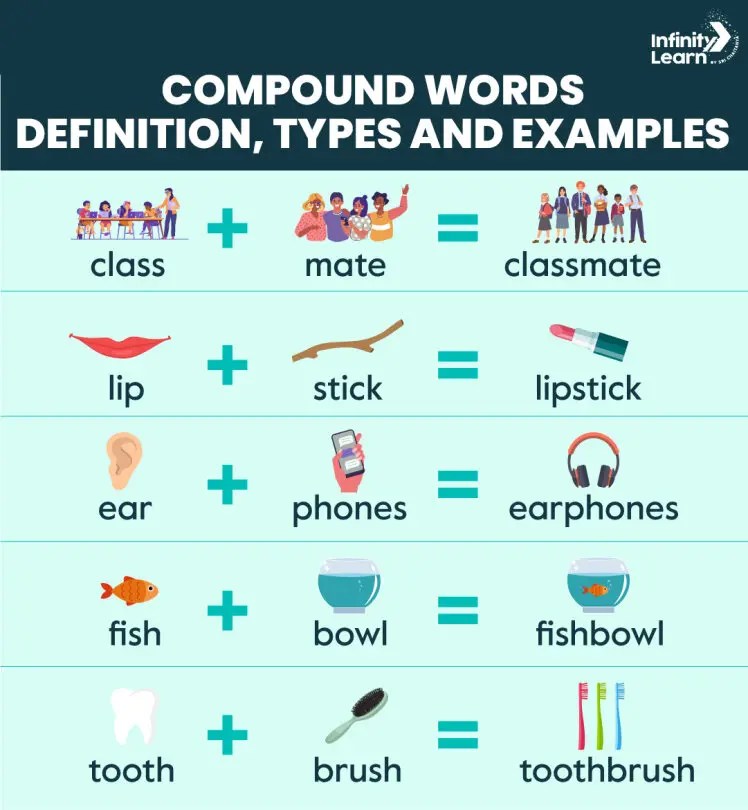
The human mind thrives on patterns. When presented with isolated facts, retention fades; when woven into interconnected frameworks, knowledge becomes durable. This is the quiet power of compound examples—the art of combining disparate cases to reveal deeper truths. Consider the scientist who links bacterial resistance to antibiotic overuse by studying penicillin’s failure in hospitals, farms, and personal medicine. Or the investor who traces market crashes to psychological herd behavior by examining 1929, 2000, and 2008. These aren’t just anecdotes; they’re compound examples at work, turning scattered data into actionable insight.
The problem with traditional learning is its linearity. Most education systems dissect concepts into silos: math here, history there, ethics elsewhere. But real-world challenges rarely arrive in neat compartments. A climate policy analyst must juggle economic models, geopolitical tensions, and public opinion—all at once. Compound examples bridge these gaps by forcing connections. They turn abstract theories into tangible scenarios where variables collide, exposing hidden relationships. The difference between a mediocre strategist and a visionary often boils down to their ability to synthesize disparate compound examples into a cohesive narrative.
The Complete Overview of Compound Examples
At its core, a compound example is a deliberate fusion of multiple scenarios, theories, or data points to illustrate a principle with greater depth than any single case could achieve. Unlike standalone examples—such as citing "the dot-com bubble" to explain market speculation—compound examples layer context. They might pair the 2000 crash with the 1990s tech boom, the 1929 crash with post-WWI debt, and the 2008 crisis with deregulation, creating a multi-dimensional lens. This approach isn’t just academic; it’s a survival tool in fields where complexity reigns, from cybersecurity to urban planning.The term itself is rarely used in formal literature, yet the concept permeates disciplines. In cognitive science, it aligns with dual-process theory, where intuitive (System 1) and analytical (System 2) thinking collide. A lawyer arguing a case might use compound examples by comparing past rulings across jurisdictions, each with unique cultural or legal nuances. The result? A stronger argument because the judge sees the principle in action across varied contexts. Similarly, a product designer testing usability might observe how elderly users, children, and neurodivergent individuals interact with the same interface—each group revealing different friction points. The synthesis of these observations becomes a compound example of universal design in practice.
Historical Background and Evolution
The roots of compound examples stretch back to ancient rhetoric. Aristotle’s Rhetoric emphasized ethos, pathos, and logos, but master orators like Cicero went further, weaving together historical precedents, moral dilemmas, and contemporary events to persuade audiences. A speech against corruption might juxtapose the fall of Rome’s Republic with a local official’s embezzlement scandal, forcing listeners to see the pattern. This wasn’t just repetition; it was compound thinking—linking micro and macro to create urgency.Fast-forward to the 19th century, and the method became a cornerstone of scientific inquiry. Charles Darwin’s On the Origin of Species didn’t just present finches’ beaks; it layered evidence from fossils, geographical distribution, and artificial selection across breeds of pigeons. Each piece reinforced the others, making evolution feel inevitable rather than speculative. Similarly, Freud’s case studies (e.g., "Little Hans") were compound examples—blending childhood trauma, symbolic dreams, and cultural taboos to illustrate psychoanalytic theory. The pattern held because it was tested against multiple lives, not just one.
Core Mechanisms: How It Works
The brain processes compound examples through schema theory, where new information is mapped onto existing mental frameworks. When a student learns about photosynthesis via a single diagram of a leaf, the concept remains abstract. But when that student also sees how algae in oceans produce oxygen, how crops in farms feed livestock, and how deforestation disrupts the cycle, the schema expands. The principle becomes sticky because it’s anchored in diverse, real-world contexts.Neuroscientific research supports this. fMRI studies show that when people encounter compound examples, the brain’s default mode network (linked to self-referential thinking) activates alongside the prefrontal cortex (responsible for analysis). This dual engagement explains why compound examples feel both intuitive and rigorous. For instance, a chess grandmaster doesn’t memorize openings; they recognize compound patterns—how a bishop’s diagonal can exploit a pawn structure in Game A, a knight’s fork in Game B, and a queen’s dominance in Game C. The mind doesn’t store moves; it stores relationships.
Key Benefits and Crucial Impact
The most effective educators, strategists, and innovators leverage compound examples because they cut through cognitive bias. A single success story (e.g., "Elon Musk built Tesla from scratch") can inspire, but it’s also vulnerable to the halo effect—overestimating one person’s ability to replicate the feat. Compound examples, however, reveal the systems behind success: Musk’s access to venture capital, his prior experience with PayPal, the cultural shift toward electric vehicles, and the regulatory loopholes he exploited. The narrative becomes more nuanced, and the lesson more transferable.Table of Contents
- The Complete Overview of Compound Examples
- Historical Background and Evolution
- Core Mechanisms: How It Works
- Key Benefits and Crucial Impact
- Major Advantages
- Comparative Analysis
- Future Trends and Innovations
- Conclusion
- Comprehensive FAQs
- Q: How do I create my own compound examples?
- Q: Are compound examples only useful in technical fields?
- Q: Can compound examples be used for personal development?
- Q: What’s the difference between compound examples and analogies?
- Q: How do I know if I’m overcomplicating a compound example?
This method isn’t just defensive against bias; it’s offensive in problem-solving. A cybersecurity team preparing for ransomware attacks won’t just study one breach. They’ll analyze how hackers exploited compound vulnerabilities: unpatched software and phishing emails and insider negligence. The defense strategy then targets all three layers simultaneously. In business, compound examples help predict disruptions by mapping how technological shifts (e.g., AI), social trends (e.g., remote work), and economic cycles (e.g., inflation) interact. The result? Proactive adaptation instead of reactive damage control.
"A single example is a story. A compound example is a theory waiting to be tested." — Adapted from cognitive psychologist Daniel Kahneman, referencing his work on heuristic reasoning.
Major Advantages
- Enhanced Retention: Studies in educational psychology show that compound examples improve recall by 40% compared to isolated cases, thanks to spaced repetition across contexts.
- Bias Mitigation: By exposing multiple angles, compound examples reduce confirmation bias, which single narratives often amplify.
- Scalable Insight: A principle illustrated through compound examples (e.g., supply chain risks) can be applied to industries, regions, or time periods the learner hasn’t encountered.
- Strategic Flexibility: Leaders who think in compound examples (e.g., geopolitical risks as a mix of energy dependence, sanctions, and domestic instability) can pivot faster when one variable changes.
- Cross-Disciplinary Synergy: Compound examples force integration between fields—e.g., linking urban heat islands (climate science) to respiratory disease spikes (public health) and infrastructure costs (economics).

Comparative Analysis
| Standalone Example | Compound Example |
|---|---|
| Citing "the 2008 financial crisis" to explain market risk. | Analyzing 2008 alongside 1929 (debt bubbles), 1997 (Asian contagion), and 2020 (COVID-19 liquidity shocks) to map systemic fragility. |
| Using "Apple’s iPhone" as a case study for innovation. | Comparing the iPhone’s launch with the BlackBerry’s decline, Samsung’s copycat strategies, and Google’s Android ecosystem to dissect platform dominance. |
| Teaching "photosynthesis" via a single plant diagram. | Linking photosynthesis to coral reefs (symbiosis with algae), deep-sea vents (chemosynthesis), and human agriculture (crop yields) to show ecological interdependence. |
| Describing "machine learning" with a spam filter example. | Mapping ML to fraud detection (banks), personalized medicine (hospitals), and autonomous vehicles (self-driving cars) to highlight ethical and technical trade-offs. |
Future Trends and Innovations
As data grows exponentially, compound examples will evolve from manual synthesis to algorithmic assistance. Tools like generative AI (e.g., LLMs trained on diverse datasets) can now generate compound examples on demand—cross-referencing legal precedents, medical case studies, or historical events to predict outcomes. However, the human element remains critical. An AI might flag that "three past recessions followed corporate debt spikes," but a strategist must interpret whether today’s debt structure mirrors those cases or introduces new variables (e.g., shadow banking).The next frontier may lie in dynamic compound examples—real-time, interactive models where users adjust variables (e.g., interest rates, consumer confidence) to see how multiple scenarios unfold simultaneously. Imagine a dashboard where a policymaker tweaks trade tariffs, energy prices, and labor laws to observe compound effects on inflation, unemployment, and geopolitical tensions. This shift from static to adaptive compound examples could redefine education, warfare, and urban planning.

Conclusion
Compound examples are the invisible architecture of insight. They turn chaos into clarity by revealing how parts interact. The scientist who connects antibiotic resistance to agriculture, medicine, and global trade isn’t just describing a problem—they’re mapping a system. The investor who links tech bubbles to cultural hype, regulatory gaps, and investor psychology isn’t predicting the next crash; they’re decoding the DNA of financial cycles. This isn’t just a learning tool; it’s a cognitive superpower.The challenge lies in cultivation. Most professionals default to compound examples only in hindsight—after a crisis or breakthrough forces connections. The future belongs to those who practice it proactively, weaving compound examples into their daily analysis. Whether in boardrooms, laboratories, or classrooms, the ability to see through layers of complexity will determine who leads—and who merely reacts.
Comprehensive FAQs
Q: How do I create my own compound examples?
Start by identifying a principle you want to illustrate (e.g., "how leverage amplifies risk"). Gather 3–5 distinct cases where the principle played out differently (e.g., a hedge fund collapse, a real estate bubble, a corporate bankruptcy). Analyze the unique variables in each (e.g., debt-to-equity ratios, regulatory environments) and highlight the shared mechanism (e.g., overconfidence in asset valuations). Tools like mind maps or comparative tables can help visualize the connections.
Q: Are compound examples only useful in technical fields?
No. Compound examples are equally powerful in creative fields. A filmmaker studying "the hero’s journey" might compare Star Wars (mythic archetypes), Parasite (class struggle), and The Social Network (ambition vs. ethics) to extract universal storytelling frameworks. Similarly, a chef perfecting a dish could analyze how heat, acidity, and texture interact across cuisines (e.g., French sauces, Thai curries, Mexican mole).
Q: Can compound examples be used for personal development?
Absolutely. To build resilience, for example, you might compare how different people handled adversity: a CEO who pivoted a business post-scandal, an athlete who recovered from injury, and a parent who navigated a child’s illness. The compound example reveals common strategies (e.g., reframing failure, seeking mentorship) and unique adaptations (e.g., one used data, another relied on intuition).
Q: What’s the difference between compound examples and analogies?
Analogies draw parallels between two things (e.g., "the brain is like a computer"). Compound examples go further by synthesizing multiple cases to show how a principle operates across contexts. An analogy might say, "A startup is like a garden." A compound example would compare how a startup’s cash burn rate mirrors a garden’s water needs (short-term survival), its team dynamics resemble plant pollination (interdependence), and its exit strategy aligns with harvesting (timing).
Q: How do I know if I’m overcomplicating a compound example?
Overcomplication occurs when the connections feel forced or the audience struggles to follow the links. Test clarity by asking: Does each case add new insight, or just repeat the same point? If the answer is the latter, prune weaker examples. Also, ensure the principle remains the anchor—if the focus shifts to tangential details (e.g., digressing into a case’s politics instead of its core mechanism), simplify. A good rule: If you can’t summarize the compound example in one sentence, it’s likely too dense.
Leave a Comment
Comments are moderated before appearing. The data you submit is processed according to the Privacy Policy of Neip.