The Hidden Power of What Is Fluid Intelligence—and Why It Matters Now
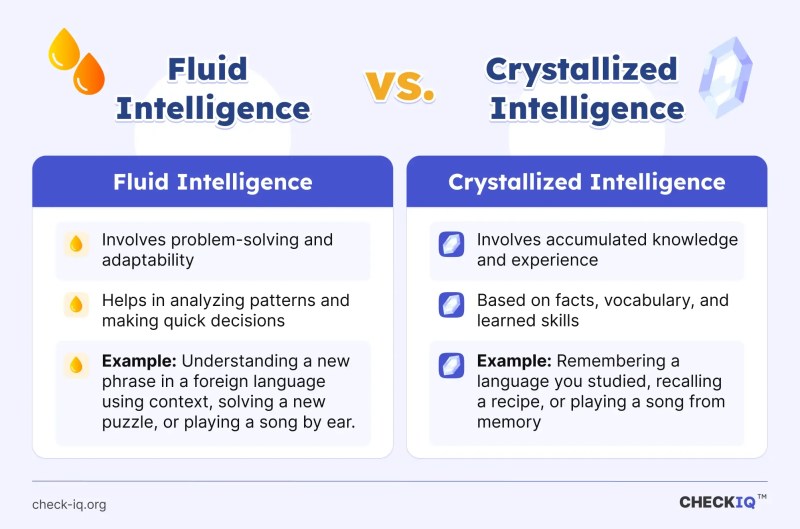
The concept of what is fluid intelligence often surfaces in debates about human potential, yet its true significance remains underappreciated. Unlike crystallized knowledge—facts and skills acquired through experience—fluid intelligence represents the raw, dynamic capacity to reason, solve novel problems, and adapt to unfamiliar challenges. It’s the cognitive engine behind innovation, the silent partner in scientific breakthroughs, and the reason some individuals thrive in ambiguity while others falter.
Neuroscientists and psychologists have long distinguished between this adaptable form of intelligence and its crystallized counterpart, but the distinction isn’t just academic. Fluid intelligence predicts performance in high-stakes environments—from AI-driven workplaces to high-pressure medical decisions—where rigid expertise alone fails. The ability to think on one’s feet, detect patterns in chaos, and pivot strategies mid-course isn’t innate; it’s a skill that can be cultivated, measured, and even enhanced with targeted interventions.
What sets fluid intelligence apart is its malleability. While crystallized intelligence plateaus with age, fluid intelligence can decline—or improve—depending on lifestyle, training, and environmental exposure. This makes understanding what is fluid intelligence critical not just for educators and researchers, but for anyone navigating a world where traditional expertise is being disrupted by automation and rapid technological change.
The Complete Overview of What Is Fluid Intelligence
Fluid intelligence, often abbreviated as Gf, is a cornerstone of cognitive psychology, first articulated in the mid-20th century as part of the Cattell-Horn-Carroll (CHC) theory of intelligence. It encompasses the mental operations required to process information, manipulate concepts, and solve problems in novel contexts. Unlike crystallized intelligence (Gc), which relies on accumulated knowledge (e.g., vocabulary, historical facts), fluid intelligence thrives in uncertainty. It’s the cognitive equivalent of a Swiss Army knife—versatile, immediate, and essential when no pre-existing solution exists.The term itself is deceptively simple. Fluid intelligence isn’t a single ability but a constellation of interconnected processes: working memory, inductive reasoning, problem sensitivity, and cognitive flexibility. These processes allow individuals to break down complex problems, identify relationships between disparate pieces of information, and generate innovative solutions. For instance, a chess grandmaster leveraging fluid intelligence might recognize a pattern in an unfamiliar opening, while a software engineer might debug code by mentally simulating alternative outcomes. The common thread? Both are engaging in high-level abstraction and mental manipulation—hallmarks of what is fluid intelligence in action.
Historical Background and Evolution
The roots of fluid intelligence trace back to Charles Spearman’s 1904 theory of general intelligence (g), which posited a single underlying cognitive factor driving performance across diverse tasks. However, it was Raymond Cattell in the 1940s who first split g into two distinct components: fluid and crystallized intelligence. Cattell argued that fluid intelligence—rooted in biological processes—peaks in early adulthood, while crystallized intelligence continues to grow with experience. This duality reshaped how psychologists viewed human cognition, shifting focus from static IQ scores to dynamic, context-dependent abilities.The 1970s and 1980s saw further refinement, particularly through John Horn’s work, which expanded the CHC model to include fluid intelligence as a primary factor alongside other cognitive abilities like processing speed and memory. Modern neuroscience has since validated these theories, linking fluid intelligence to the prefrontal cortex, parietal lobes, and dopamine-regulated neural networks. Functional MRI studies reveal that individuals with higher fluid intelligence exhibit greater efficiency in neural resource allocation, allowing them to solve problems with minimal cognitive effort. This biological grounding explains why what is fluid intelligence isn’t just a psychological construct but a measurable, physiological trait.
Core Mechanisms: How It Works
At its core, fluid intelligence operates through three interdependent mechanisms: working memory, executive function, and neural plasticity. Working memory—the ability to hold and manipulate information temporarily—serves as the workspace for fluid intelligence. When confronted with a novel problem, the brain activates the dorsolateral prefrontal cortex to maintain relevant information while suppressing irrelevant details. Executive functions, governed by the anterior cingulate cortex, then orchestrate attention, inhibition, and cognitive switching to explore potential solutions.Table of Contents
- The Complete Overview of What Is Fluid Intelligence
- Historical Background and Evolution
- Core Mechanisms: How It Works
- Key Benefits and Crucial Impact
- Major Advantages
- Comparative Analysis
- Future Trends and Innovations
- Conclusion
- Comprehensive FAQs
- Q: How is fluid intelligence different from IQ?
- Q: Can fluid intelligence be improved?
- Q: Does fluid intelligence decline with age?
- Q: Is fluid intelligence genetic?
- Q: How does fluid intelligence relate to creativity?
- Q: Can AI measure fluid intelligence?
- Q: What’s the best way to test fluid intelligence?
Neural plasticity, the brain’s capacity to reorganize itself, is the third critical mechanism. Fluid intelligence thrives in environments that challenge the brain to adapt, such as learning a new language or mastering a musical instrument. Studies show that individuals with higher fluid intelligence demonstrate greater synaptic flexibility, allowing them to rapidly form and prune neural connections in response to cognitive demands. This plasticity is why what is fluid intelligence isn’t static; it evolves with practice, stress, and even sleep, which consolidates learning and strengthens neural pathways.
Key Benefits and Crucial Impact
The implications of fluid intelligence extend beyond academic circles, influencing career trajectories, creative output, and even mental health. In professions where adaptability is paramount—such as entrepreneurship, research, or emergency medicine—fluid intelligence often correlates with success more strongly than domain-specific expertise. It’s the difference between a doctor who memorizes symptoms and one who diagnoses rare conditions by synthesizing disparate clues, or between a marketer who follows scripts and one who pivots strategies based on real-time data.Research also links fluid intelligence to resilience. Individuals with higher fluid intelligence tend to recover more quickly from cognitive decline, exhibit greater emotional regulation, and adapt better to stress. This isn’t just about raw brainpower; it’s about cognitive agility—the ability to reframe problems, reject mental ruts, and embrace uncertainty. In an era where jobs are being redefined by AI and global disruptions, the question isn’t whether fluid intelligence matters, but how to harness it before it atrophies.
"Fluid intelligence is the mind’s capacity to navigate the unknown—not just to solve puzzles, but to redefine them." — Dr. Robert Sternberg, Yale University
Major Advantages
Understanding what is fluid intelligence reveals its transformative advantages:- Problem-Solving in Unfamiliar Domains: Fluid intelligence allows individuals to tackle challenges without prior training, such as debugging code in an unfamiliar language or negotiating in a new cultural context.
- Accelerated Learning: High fluid intelligence correlates with faster acquisition of new skills, as the brain efficiently maps relationships between concepts.
- Creative Innovation: Many breakthroughs—from scientific theories to artistic movements—emerge from fluid intelligence’s ability to combine disparate ideas into novel solutions.
- Stress Resilience: Individuals with strong fluid intelligence exhibit better cognitive control under pressure, reducing the risk of decision paralysis.
- Lifelong Cognitive Health: Engaging in fluid intelligence-enhancing activities (e.g., puzzles, strategy games) may delay age-related decline by maintaining neural plasticity.

Comparative Analysis
To grasp the nuances of what is fluid intelligence, it’s essential to contrast it with other cognitive constructs:| Fluid Intelligence (Gf) | Crystallized Intelligence (Gc) |
|---|---|
| Peaks in early adulthood (20s–30s), then declines. | Grows throughout life with experience and education. |
| Measured by tasks like matrix reasoning or analogies. | Assessed via vocabulary tests, general knowledge quizzes. |
| Biologically tied to prefrontal cortex efficiency. | Depends on accumulated knowledge stored in semantic memory. |
| Enhanced by practice, sleep, and cognitive challenges. | Improved through education, reading, and cultural exposure. |
Future Trends and Innovations
The study of fluid intelligence is entering a golden age, driven by advancements in neuroscience, AI, and personalized education. Brain-computer interfaces (BCIs) may soon allow real-time monitoring of fluid intelligence, enabling targeted cognitive training. Meanwhile, adaptive learning platforms—like those used in elite military training—are designing curricula that dynamically adjust to an individual’s fluid intelligence profile, maximizing retention and problem-solving speed.Another frontier is the intersection of fluid intelligence and mental health. Research suggests that cognitive training programs can mitigate symptoms of depression and anxiety by enhancing fluid intelligence’s role in emotional regulation. As remote work and gig economies reshape labor markets, fluid intelligence could become the most valuable currency, outpacing traditional credentials. The challenge? Scaling interventions that preserve and enhance it across diverse populations.

Conclusion
Fluid intelligence is more than an abstract concept—it’s the cognitive backbone of human progress. Whether you’re a student grappling with abstract algebra, a professional navigating industry disruption, or simply someone seeking to sharpen their mind, what is fluid intelligence is a question with profound practical answers. The good news? Unlike crystallized intelligence, which relies on passive accumulation, fluid intelligence responds to deliberate practice, curiosity, and environmental stimulation.The future belongs to those who can adapt, innovate, and rethink. As AI automates routine tasks, the human advantage will lie in our ability to leverage fluid intelligence—to see patterns others miss, to ask questions no algorithm can answer, and to turn uncertainty into opportunity. The question isn’t whether you have fluid intelligence; it’s how you’ll cultivate it before the next wave of change arrives.
Comprehensive FAQs
Q: How is fluid intelligence different from IQ?
A: IQ tests often measure a mix of fluid and crystallized intelligence, but fluid intelligence specifically assesses reasoning and problem-solving in novel situations. While IQ can predict academic success, fluid intelligence is a better indicator of adaptability in dynamic environments.
Q: Can fluid intelligence be improved?
A: Yes. Activities like dual n-back training, chess, and learning new languages have been shown to enhance fluid intelligence. Even lifestyle factors—such as adequate sleep, stress management, and physical exercise—play a critical role in maintaining and boosting it.
Q: Does fluid intelligence decline with age?
A: Research indicates that fluid intelligence begins declining in the late 20s or early 30s, with steeper drops after 60. However, interventions like cognitive training and mental stimulation can slow or even reverse this decline.
Q: Is fluid intelligence genetic?
A: Genetics account for about 50% of the variation in fluid intelligence, but environmental factors—such as education, nutrition, and cognitive challenges—play an equally significant role. Twin studies suggest that while some individuals may have a predisposition, nurture shapes its development.
Q: How does fluid intelligence relate to creativity?
A: Fluid intelligence is a foundational element of creativity, enabling the cognitive flexibility to generate novel ideas and make unconventional connections. Many creative fields (e.g., design, writing) prioritize fluid intelligence over domain-specific knowledge.
Q: Can AI measure fluid intelligence?
A: Emerging AI tools can simulate fluid intelligence tasks (e.g., pattern recognition, abstract reasoning), but they lack the contextual understanding of human cognition. Current assessments still rely on psychometric tests designed by cognitive psychologists.
Q: What’s the best way to test fluid intelligence?
A: Standardized tests like the Raven’s Progressive Matrices or the Cattell Culture-Fair Intelligence Test are gold standards. These tools present abstract patterns or sequences that require logical deduction without relying on prior knowledge.
Leave a Comment
Comments are moderated before appearing. The data you submit is processed according to the Privacy Policy of Neip.