Family Guy the Video Game: The Lost Gem of Adult Animation
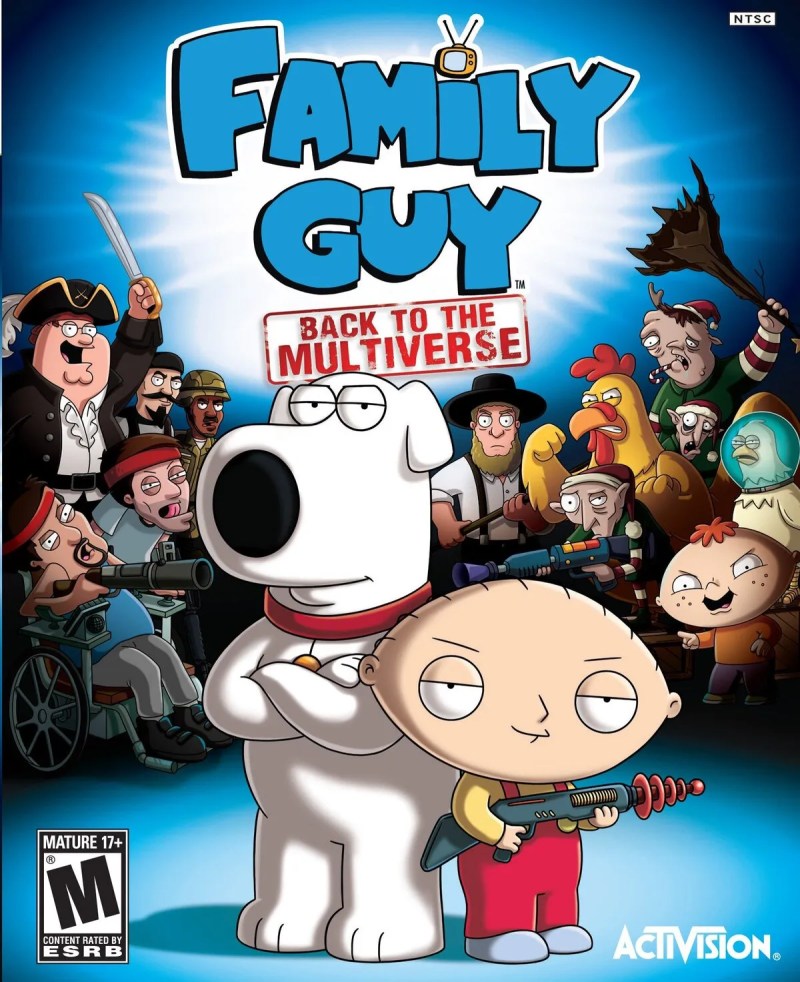
Family Guy the Video Game arrived in 2006 like a satirical tornado—unexpected, loud, and utterly unlike anything else in gaming. Developed by Quantic Dream (best known for Heavy Rain and Detroit: Become Human) in collaboration with Fox Interactive, it was the first and only official Family Guy game, a bold experiment that fused the show’s absurdist humor with interactive storytelling. Unlike licensed games that merely repackaged TV content, this title dared to expand the Griffins’ world into a playable, branching narrative, complete with voice acting from the original cast. Yet for all its ambition, it remains a footnote in gaming history—a title so polarizing that it vanished without a trace, leaving behind only fragmented memories and a cult following that still mourns its absence.
The game’s premise was simple on paper: Peter Griffin, drunk and directionless, stumbles into a time-traveling adventure that forces him to confront his past mistakes. But execution was another matter. Critics panned its clunky controls, repetitive missions, and a narrative that struggled to balance Family Guy’s signature wit with interactive depth. Yet, for fans of the show, it was a sacred artifact—a rare instance where the Griffins’ chaotic energy translated into gameplay. The voice acting alone (with Seth MacFarlane reprising his roles) made it a must-play for die-hards, even if the gameplay itself was a mixed bag. Decades later, Family Guy the Video Game stands as a fascinating case study in how adult animation and gaming can—or can’t—collide.
What makes the title even more intriguing is its place in history. Released during a golden age of licensed games (think The Simpsons, South Park, King of the Hill), it failed to leave a lasting mark, overshadowed by more polished entries. Yet, its cult status persists in niche circles, where discussions about its potential revival occasionally resurface. Was it a flawed experiment doomed by its era’s technical limitations? Or could it have been something greater with better execution? The answer lies in understanding its origins, mechanics, and the cultural context that shaped its legacy.
The Complete Overview of Family Guy the Video Game
Family Guy the Video Game is a first-person action-adventure title set in a surreal, cartoonish world where Peter Griffin’s misadventures take center stage. The game follows a nonlinear structure, allowing players to explore different time periods—from Peter’s childhood to his present-day struggles—while completing missions that range from slapstick comedy to outright absurdity. The narrative hinges on Peter’s quest to fix his life by altering pivotal moments, a premise that, on paper, aligns perfectly with the show’s meta-humor. However, the execution was uneven, with gameplay mechanics that often felt disjointed from the source material’s tone.
Developed by Quantic Dream, a studio known for cinematic storytelling, the game attempted to replicate the show’s improvisational energy through branching paths and multiple endings. Yet, its technical limitations—clumsy controls, repetitive combat, and a lack of depth in side activities—undercut its ambitions. The voice acting, however, remained a standout, with MacFarlane and the cast delivering their usual brand of irreverent humor. For fans, this was less about gameplay and more about experiencing the Griffins in a new medium, even if that medium was flawed. The game’s failure to resonate with a broader audience didn’t diminish its cult appeal; instead, it cemented its status as a curiosity for Family Guy enthusiasts.
Historical Background and Evolution
The origins of Family Guy the Video Game trace back to the early 2000s, when Fox Interactive began exploring video game adaptations of its animated properties. By 2004, development had begun under Quantic Dream, a studio that had previously worked on Heavy Rain’s narrative-driven approach. The collaboration was risky—Seth MacFarlane’s show was known for its adult humor, and translating that into a playable format required a delicate balance. The game was announced in 2005, generating excitement among fans who saw it as a rare opportunity to interact with their favorite characters. However, the hype was tempered by skepticism, as previous licensed games (like The Simpsons’ early entries) had often disappointed.
Table of Contents
- The Complete Overview of Family Guy the Video Game
- Historical Background and Evolution
- Core Mechanisms: How It Works
- Key Benefits and Crucial Impact
- Major Advantages
- Comparative Analysis
- Future Trends and Innovations
- Conclusion
- Comprehensive FAQs
- Q: Is Family Guy the Video Game playable today?
- Q: Why did Family Guy the Video Game fail?
- Q: Are there any rumors of a sequel or remake?
- Q: What makes Family Guy the Video Game unique compared to other licensed games?
- Q: Can I find the original game’s soundtrack or voice clips online?
- Q: Would a modern remake of Family Guy the Video Game succeed?
Upon its release in September 2006 for PlayStation 2 and Xbox 360, Family Guy the Video Game received mixed reviews. Critics praised its voice acting and humor but criticized its repetitive gameplay and lack of innovation. The game’s sales were modest, failing to meet Fox’s expectations, and it was quickly overshadowed by more successful licensed titles. Despite this, it developed a niche following, particularly among fans who appreciated its attempt to blend Family Guy’s chaotic energy with interactive storytelling. Over the years, rumors of a sequel or remake have persisted, fueled by MacFarlane’s occasional hints about revisiting the concept. Yet, as of 2024, nothing has materialized, leaving the original game as a footnote in both Family Guy and gaming history.
Core Mechanisms: How It Works
Gameplay in Family Guy the Video Game revolves around first-person action, with Peter Griffin as the protagonist navigating through various environments—from his childhood home to the Quahog police station. Missions typically involve combat, puzzle-solving, and platforming, though the latter is minimal. Players use a basic arsenal of weapons (including a beer bottle and a frying pan) to take down enemies, often in over-the-top, cartoonish battles. The game’s time-travel mechanic allows players to revisit key moments in Peter’s life, altering outcomes and unlocking new paths. However, the branching narrative is shallow, with most missions leading to the same conclusion regardless of player choices.
The game’s controls are its weakest point, with clunky aiming and awkward animations that detract from the experience. The voice acting, however, remains its strongest asset, with MacFarlane and the cast delivering their usual sharp wit. Dialogue options occasionally influence the story, but these choices rarely have meaningful consequences. The game’s art style is a direct lift from the show, with exaggerated animations and a color palette that feels vibrant yet dated by modern standards. Despite its flaws, Family Guy the Video Game offers a unique glimpse into the Griffins’ world, even if it’s not a polished experience.
Key Benefits and Crucial Impact
For Family Guy fans, Family Guy the Video Game was more than just a title—it was a cultural artifact that bridged two mediums rarely seen together. Its existence proved that adult animation could, in theory, translate into interactive entertainment, even if the execution was imperfect. The game’s voice acting alone made it a must-play for die-hards, offering a rare chance to experience the show’s humor in a new format. Beyond its entertainment value, it also served as a conversation starter, sparking debates about whether licensed games could ever truly capture the essence of their source material.
The game’s impact extended beyond its initial release, fostering a small but dedicated fanbase that still discusses its potential today. While it didn’t achieve commercial success, its legacy lies in its ambition—a rare attempt to merge Family Guy’s chaotic energy with gaming mechanics. Even now, discussions about a revival or remake occasionally resurface, keeping the title relevant in gaming history.
"The game was a mess, but it was our mess—the Griffins’ world, just messier." — Anonymous Family Guy forum moderator, 2010
Major Advantages
- Exclusive Voice Acting: The full cast reprised their roles, delivering Family Guy’s signature humor in a playable format.
- Time-Travel Narrative: A unique premise that allowed players to alter Peter’s life, even if the execution was flawed.
- Niche Appeal: Despite poor reviews, it cultivated a cult following among Family Guy fans.
- Historical Significance: One of the few adult animation games to attempt interactive storytelling.
- Potential for Revival: Its legacy has kept discussions about a sequel or remake alive for nearly two decades.

Comparative Analysis
| Aspect | Family Guy the Video Game (2006) | The Simpsons: Hit & Run (2003) | South Park: The Stick of Truth (2014) |
|---|---|---|---|
| Gameplay Style | First-person action with time-travel mechanics | Third-person driving/stealth hybrid | RPG with branching dialogue and player choice |
| Voice Acting | Full cast, including Seth MacFarlane | Original cast (Hank Azaria, etc.) | Trey Parker and Matt Stone reprising roles |
| Critical Reception | Mixed; praised for humor, panned for controls | Positive; praised for humor and gameplay | Overwhelmingly positive; praised for depth and humor |
| Legacy | Cult following, no sequel | Became a franchise staple | Considered one of the best animated RPGs |
Future Trends and Innovations
The failure of Family Guy the Video Game to achieve mainstream success doesn’t necessarily spell doom for future adult animation games. In fact, the landscape has shifted dramatically since 2006. Modern advancements in voice acting technology, narrative design, and interactive storytelling (as seen in The Walking Dead or Life is Strange) suggest that a reboot could thrive today. A new Family Guy game, developed with modern tools and a deeper focus on player choice, could finally capture the show’s essence while addressing the original’s shortcomings. The key would be to prioritize narrative depth over repetitive gameplay, leveraging the Griffins’ humor as a foundation rather than a gimmick.
Another possibility lies in remastering the original game for modern platforms, complete with updated controls and graphical enhancements. Given the resurgence of interest in retro gaming, a Family Guy the Video Game remake could appeal to both nostalgia-driven fans and newcomers. However, any revival would need to avoid the pitfalls of its predecessor—particularly the clunky mechanics—that turned off casual players. If executed well, such a project could redefine what it means to adapt adult animation into interactive entertainment.

Conclusion
Family Guy the Video Game was a bold experiment that, for better or worse, failed to leave a lasting mark. Yet, its existence remains significant—a testament to the challenges of merging adult animation with gaming. While it may not have been a critical or commercial success, it offered something rare: a playable extension of Family Guy’s world. For fans, it was a love letter to the show, flawed but endearing. For developers, it served as a cautionary tale about the difficulties of balancing humor, narrative, and gameplay.
Decades later, the game’s legacy persists in whispers of a revival, a reminder that sometimes the most interesting projects are the ones that don’t quite work—but still leave an indelible impression. Whether through a remake, a sequel, or even a spiritual successor, Family Guy the Video Game remains a fascinating piece of gaming history, one that continues to spark curiosity about what could have been.
Comprehensive FAQs
Q: Is Family Guy the Video Game playable today?
A: The original game is not officially available on modern platforms, but it occasionally surfaces in used game markets or digital resale stores (like GameFly). No official remaster or re-release has been announced as of 2024.
Q: Why did Family Guy the Video Game fail?
A: The game suffered from clunky controls, repetitive gameplay, and a lack of depth in its branching narrative. While its humor and voice acting were strong, these flaws overshadowed its potential, leading to poor sales and critical reception.
Q: Are there any rumors of a sequel or remake?
A: Yes. Seth MacFarlane has occasionally hinted at revisiting the concept, and fan demand remains strong. However, no official development has been confirmed, and Fox Interactive has not announced any plans.
Q: What makes Family Guy the Video Game unique compared to other licensed games?
A: Unlike most licensed games that simply repurpose TV content, Family Guy the Video Game attempted an original narrative with time-travel mechanics and voice acting from the full cast. Its failure to execute this ambition makes it a fascinating case study in adaptation.
Q: Can I find the original game’s soundtrack or voice clips online?
A: Yes. Due to its cult status, fans have uploaded gameplay clips, voice lines, and even full mission walkthroughs on platforms like YouTube and Twitch. Some clips also appear in Family Guy’s DVD commentaries and behind-the-scenes features.
Q: Would a modern remake of Family Guy the Video Game succeed?
A: Potentially. With advancements in interactive storytelling (e.g., Life is Strange, Tell Me Why), a remake could leverage modern tools to address the original’s flaws. However, success would depend on balancing humor, gameplay, and narrative depth—a challenge the first game failed to overcome.
Leave a Comment
Comments are moderated before appearing. The data you submit is processed according to the Privacy Policy of Neip.