How Net Operating Income Decodes Business Health—Beyond Profit Margins

Net operating income (NOI) is the silent architect of financial clarity—a metric that strips away the noise of interest, taxes, and one-time expenses to reveal what a business actually earns from its core operations. Unlike net income, which can be skewed by financing decisions or accounting quirks, NOI speaks in the language of operational truth. It’s the difference between a company that appears profitable on paper and one that truly generates cash from its daily activities. For real estate investors, it’s the linchpin of property valuation; for corporate strategists, it’s the litmus test for scalability. Yet despite its critical role, NOI remains misunderstood—often conflated with earnings before interest and taxes (EBIT) or lumped into broader profitability discussions. The reality? NOI is a precision tool, designed to isolate the income a business produces from its primary revenue streams, before accounting for capital structure or tax policy.
The power of NOI lies in its simplicity. While net income reflects the bottom line after every possible deduction, NOI zeroes in on what the business does—not how it’s financed or taxed. This distinction is why private equity firms dissect NOI when evaluating acquisitions, why commercial lenders demand it in loan covenants, and why public companies use it to justify dividends. It’s the financial equivalent of a stress test: if NOI is strong, the business can weather debt, inflation, or market downturns. If it’s weak, even a high net income may be an illusion. The problem? Many executives and investors treat NOI as an afterthought, buried in footnotes or overlooked in favor of flashier metrics like revenue growth. That’s a strategic misstep—because NOI doesn’t just measure profit; it predicts sustainability.
The confusion stems from terminology. NOI isn’t the same as operating income (which may include non-core items like asset sales), nor is it identical to EBIT (which excludes depreciation). It’s a tailored metric, often customized by industry—real estate NOI, for instance, excludes mortgage payments, while a manufacturing NOI might strip out R&D costs. This adaptability makes it both versatile and vulnerable to misinterpretation. A tech startup’s NOI might look anemic compared to a mature retailer’s, yet both could be perfectly healthy within their contexts. The key is understanding which expenses NOI excludes—and why. That’s where the distinction between accounting conventions and operational reality becomes critical. NOI isn’t just a number; it’s a lens through which to view a business’s true earning capacity.
The Complete Overview of Net Operating Income
Net operating income (NOI) serves as the financial backbone of operational performance, offering a clearer picture of a business’s intrinsic value than traditional profit metrics. While net income accounts for every expense—from interest payments to CEO bonuses—NOI focuses solely on the income generated from core business activities, excluding non-operating items like financing costs, taxes, and extraordinary gains. This refinement is particularly vital in industries where capital structure varies widely, such as real estate or leveraged buyouts, where debt levels can distort net income without affecting operational health. For example, a highly leveraged hotel chain might report a modest net income due to interest expenses, yet its NOI could reveal robust occupancy-driven revenue. The metric’s strength lies in its ability to standardize comparisons across businesses with different capital strategies, making it indispensable for benchmarking and strategic planning.The calculation of NOI is deceptively straightforward, yet its application varies by industry and accounting framework. At its core, NOI is derived by subtracting all operating expenses—including cost of goods sold (COGS), salaries, rent, utilities, and depreciation—from gross revenue. However, the line between "operating" and "non-operating" expenses is often blurred. In commercial real estate, NOI excludes mortgage payments and property taxes (treated as non-operating), while in manufacturing, it might include R&D but exclude interest on plant equipment loans. This flexibility is both a strength and a pitfall: while it allows for industry-specific precision, it also means NOI can be manipulated if not defined clearly in financial disclosures. For investors, this underscores the importance of scrutinizing how a company defines its operating expenses—because what one business calls "operational," another might classify as "capital."
Historical Background and Evolution
The concept of NOI emerged from the need to separate a business’s operational efficiency from the distortions caused by financing and tax policies—a distinction that became acute in the early 20th century as corporate debt levels surged. Before the widespread adoption of accrual accounting, businesses relied on cash-flow-based metrics, but the rise of leverage in the 1920s exposed a critical flaw: net income could mask or exaggerate performance depending on how a company was financed. Real estate developers were among the first to formalize NOI as a metric, stripping out mortgage interest to evaluate property cash flow independently of debt. This approach gained traction in the 1970s and 1980s as private equity firms began using NOI to assess the viability of leveraged acquisitions, particularly in commercial real estate. The metric’s evolution reflects broader shifts in financial theory, from the Modigliani-Miller irrelevance proposition (which argued that capital structure doesn’t affect value) to the recognition that operational cash flow does drive enterprise value.Today, NOI is a cornerstone of financial analysis, embedded in frameworks like discounted cash flow (DCF) modeling and capital asset pricing models (CAPM). Its adoption in real estate valuation standards—such as the Income Capitalization Approach—cemented its role in property transactions, where NOI is often used to calculate capitalization rates (cap rates). Meanwhile, corporate finance has adapted NOI to reflect industry-specific realities: a tech company’s NOI might exclude server maintenance costs (classified as capital expenditures), while a retail chain’s NOI would include store-level utilities but not corporate overhead. This evolution highlights NOI’s dual nature as both a static metric and a dynamic tool, capable of being tailored to almost any business model. Yet its foundational principle remains unchanged: to isolate the income generated by the business’s core operations, free from the noise of external financial factors.
Core Mechanisms: How It Works
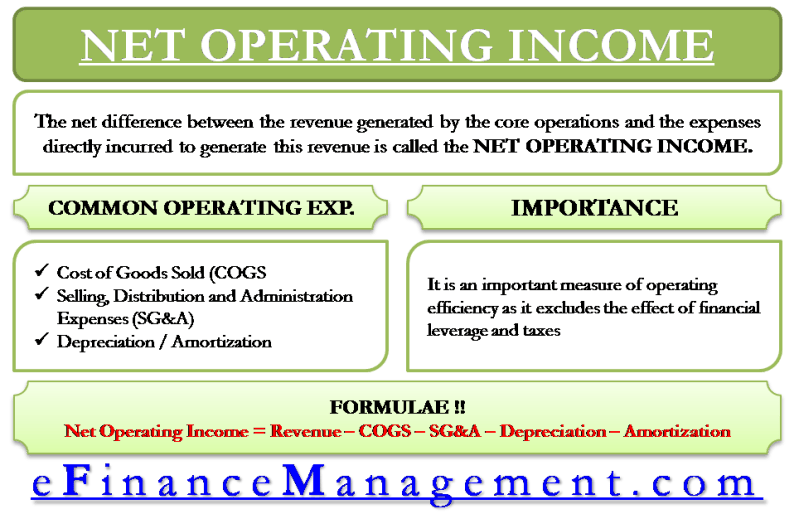
The calculation of net operating income begins with revenue, but the path to NOI diverges sharply from that of net income. Start with gross revenue (or gross profit, if COGS has already been deducted), then subtract all direct operating expenses—costs that arise from the business’s primary activities. These typically include:Table of Contents
- The Complete Overview of Net Operating Income
- Historical Background and Evolution
- Core Mechanisms: How It Works
- Key Benefits and Crucial Impact
- Major Advantages
- Comparative Analysis
- Future Trends and Innovations
- Conclusion
- Comprehensive FAQs
- Q: How is net operating income (NOI) different from EBIT?
- Q: Can NOI be negative?
- Q: Why do real estate investors focus so heavily on NOI?
- Q: How does NOI relate to free cash flow (FCF)?
- Q: Can a company manipulate NOI?
- Q: What industries rely most on NOI?
- Q: How does NOI affect a company’s credit rating?
The critical step is defining what constitutes an "operating expense." Unlike net income, which subtracts interest, taxes, and non-recurring items, NOI excludes:
For example, a manufacturing firm’s NOI might look like this:
```
Gross Revenue: $50M
Here, interest payments ($3M) and corporate taxes ($2M) are excluded, leaving $8M as the true operating cash flow. The same company’s net income might be $5M after accounting for those non-operating items—a 37.5% difference. This gap illustrates why NOI is often called the "operating profit" or "EBITDA minus non-cash adjustments," though the exact formula depends on industry conventions.
The subtlety lies in the "operating" label. A retail store’s NOI would include store-level utilities but exclude corporate HQ expenses, while a SaaS company might exclude cloud hosting costs if classified as capital expenditures. This variability is why NOI is rarely found in standardized financial statements; it’s typically calculated ad hoc for analysis. For investors, this means cross-referencing a company’s NOI definition with its footnotes or management commentary to avoid misinterpretation. A discrepancy here could mean the difference between a sound investment and a misleading one.
Key Benefits and Crucial Impact
Net operating income is more than a financial line item—it’s a strategic compass for businesses navigating debt, taxes, and market volatility. While net income tells you how much profit remains after all expenses, NOI reveals whether that profit is sustainable. Consider a highly leveraged private equity portfolio: if NOI is strong, the business can service its debt even if interest rates rise. If NOI is weak, even a high net income could be at risk from refinancing shocks. This predictive power is why NOI is a staple in credit agreements, where lenders use it to assess repayment capacity. Similarly, in real estate, NOI determines property valuations; a $1M NOI might justify a $10M sale price at a 10% cap rate, regardless of the owner’s mortgage structure. The metric’s ability to decouple operations from financing makes it indispensable for comparing businesses across different capital structures—a critical advantage in industries like hospitality or manufacturing, where debt levels vary widely.The impact of NOI extends beyond finance into corporate strategy. Companies use NOI to:
For public companies, NOI also serves as a reality check against earnings manipulation. If a company reports high net income but weak NOI, investors should ask whether profits are being propped up by one-time items or aggressive accounting. The contrast between NOI and net income can expose red flags, such as excessive debt reliance or non-recurring revenue spikes. This is why activist investors and hedge funds often dissect NOI when targeting underperforming firms—they’re looking for operational inefficiencies hidden behind financial engineering.
> "Net operating income is the financial equivalent of a business’s pulse: it tells you whether the company is healthy or just surviving on borrowed time." — Howard Marks, Co-Chairman, Oaktree Capital Management
Major Advantages
- Debt-Independent Valuation: NOI removes the distortion of interest payments, allowing accurate comparisons between leveraged and unleveraged businesses. A real estate investor can evaluate a property’s cash flow without knowing its mortgage terms.
- Tax-Neutral Analysis: By excluding taxes, NOI provides a clearer view of operational profitability regardless of a company’s tax jurisdiction or structure (e.g., offshore entities vs. domestic operations).
- Industry-Specific Precision: NOI can be customized to exclude non-core expenses (e.g., R&D in biotech, seasonality adjustments in retail), making it more relevant than generic metrics like EBIT.
- Lender and Investor Confidence: Banks and private equity firms rely on NOI to assess repayment ability and growth potential. A high NOI margin signals operational strength, reducing perceived risk.
- Strategic Decision-Making: NOI helps executives identify profit leaks (e.g., high operating costs in a division) and prioritize investments. For example, a restaurant chain might use NOI to decide whether to franchise a low-margin location.
Comparative Analysis
| Metric | Key Differences vs. NOI |
|---|---|
| Net Income | Includes all expenses (interest, taxes, non-operating items). Distorted by capital structure and tax policy. Example: A tech company with high R&D costs may have low net income but strong NOI. |
| EBIT (Earnings Before Interest and Taxes) | Excludes interest and taxes but may include non-operating items (e.g., asset sales). NOI is stricter, often excluding depreciation and other non-cash items in some industries. |
| EBITDA (Earnings Before Interest, Taxes, Depreciation, Amortization) | Adds back depreciation/amortization to EBIT, making it a cash-flow proxy. NOI may include or exclude these items depending on industry (e.g., real estate NOI excludes depreciation). |
| Free Cash Flow (FCF) | Subtracts capital expenditures (CapEx) from NOI or EBITDA. NOI focuses on operating income, while FCF measures cash available after reinvestment. |
Future Trends and Innovations
As businesses embrace digital transformation, the definition of "operating income" is evolving. The rise of subscription models (e.g., SaaS, streaming) has blurred the line between revenue and expenses, prompting some analysts to argue that NOI should exclude customer acquisition costs (CAC) or platform fees. Meanwhile, the growth of platform economies (e.g., Uber, Airbnb) challenges traditional NOI calculations, as their "operating expenses" include third-party payments that may not fit neatly into historical frameworks. Innovations like automated NOI tracking (via AI-driven financial software) are also reshaping how companies monitor this metric in real time, reducing reliance on quarterly reports.The future of NOI may lie in its integration with unit economics—breaking down NOI by customer, product line, or geographic segment to identify micro-trends. For example, a retail chain might calculate NOI per square foot to optimize store locations, while a B2B SaaS company could track NOI per active user to assess pricing strategies. As ESG (Environmental, Social, Governance) factors gain prominence, some argue NOI should also exclude "non-sustainable" expenses (e.g., carbon offsets, regulatory fines), creating a hybrid metric that balances financial and ethical performance. Whether these trends take hold remains to be seen, but one thing is certain: NOI’s core purpose—revealing operational truth—will only grow in importance as businesses face greater complexity in their revenue streams and cost structures.

Conclusion
Net operating income is the financial metric that separates the wheat from the chaff in business performance. While net income and EBIT provide useful snapshots, NOI cuts through the noise of financing and taxes to reveal what a business actually earns from its day-to-day operations. This clarity is why NOI is the metric of choice for lenders, investors, and strategists—it’s the one number that tells you whether a company’s profits are real or an artifact of accounting or debt. Yet its power lies not just in its calculation but in its application: whether used to justify a property acquisition, restructure a portfolio, or negotiate with creditors, NOI is the bedrock of informed decision-making.The challenge for businesses is to move beyond treating NOI as a static line item and instead use it as a dynamic tool for growth. By dissecting NOI by segment, product, or customer cohort, companies can identify hidden inefficiencies, optimize pricing, and allocate capital more effectively. In an era of volatile interest rates and shifting tax policies, NOI’s ability to isolate operational performance makes it more relevant than ever. The businesses that master this metric will be the ones that thrive—not just survive—in an increasingly complex economic landscape.
Comprehensive FAQs
Q: How is net operating income (NOI) different from EBIT?
NOI and EBIT (Earnings Before Interest and Taxes) are closely related but not identical. EBIT includes all operating expenses and non-cash items like depreciation, while NOI typically excludes depreciation/amortization in some industries (e.g., real estate). For example, a manufacturing firm’s NOI might exclude R&D depreciation if classified as capital, whereas EBIT would include it. The key difference is that NOI is often tailored to industry norms, whereas EBIT is a standardized GAAP metric.
Q: Can NOI be negative?
Yes, NOI can be negative if operating expenses exceed revenue. This signals severe inefficiency or unsustainable cost structures. For instance, a startup with high burn rates but no revenue would have a negative NOI, even if it reports net income from investor subsidies. Negative NOI is a red flag for lenders and investors, as it indicates the business isn’t generating enough cash to cover its core operations.
Q: Why do real estate investors focus so heavily on NOI?
Real estate NOI excludes mortgage payments and property taxes (non-operating items), providing a pure measure of a property’s cash-generating ability. Investors use NOI to calculate cap rates (NOI ÷ Property Value) and cash-on-cash returns, making it the primary metric for evaluating rental income potential. Unlike net income, which varies with financing, NOI remains constant regardless of debt levels, offering a debt-independent valuation.
Q: How does NOI relate to free cash flow (FCF)?
Free cash flow (FCF) is derived from NOI by subtracting capital expenditures (CapEx) and adding back non-cash items like depreciation. For example:
NOI ($8M) – CapEx ($2M) + Depreciation ($1M) = FCF ($7M)While NOI measures operating profitability, FCF shows how much cash is available after reinvestment. A high NOI but low FCF might indicate heavy CapEx needs, whereas strong FCF suggests excess cash for dividends or acquisitions.
Q: Can a company manipulate NOI?
Yes, but only by reclassifying expenses. For example, a company could shift R&D costs from "operating" to "capital" to inflate NOI, or defer maintenance expenses to boost short-term NOI at the cost of long-term asset health. However, such manipulations are often detectable through footnote analysis or industry benchmarks. Unlike net income (which can be gamed via revenue recognition), NOI’s transparency depends on clear definitions of "operating expenses."
Q: What industries rely most on NOI?
Industries with high fixed costs, significant capital expenditures, or debt-heavy structures rely most on NOI:
- Real Estate (commercial, residential, hotels).
- Manufacturing (where COGS and depreciation dominate).
- Retail/Hospitality (high rent and labor costs).
- Private Equity/LBOs (to assess leverage impact).
- Utilities/Infrastructure (regulated NOI for rate-setting).
Q: How does NOI affect a company’s credit rating?
Lenders and credit agencies (e.g., S&P, Moody’s) use NOI to assess a company’s ability to service debt. A high NOI-to-debt ratio signals lower default risk, while declining NOI trends can trigger downgrades. For example, a leveraged buyout (LBO) target with strong NOI may secure favorable loan terms, whereas a company with weak NOI might face higher interest rates or covenants requiring equity injections.
Leave a Comment
Comments are moderated before appearing. The data you submit is processed according to the Privacy Policy of Neip.