How to Save and Listen to Options 2024 Offline: The Definitive Playbook
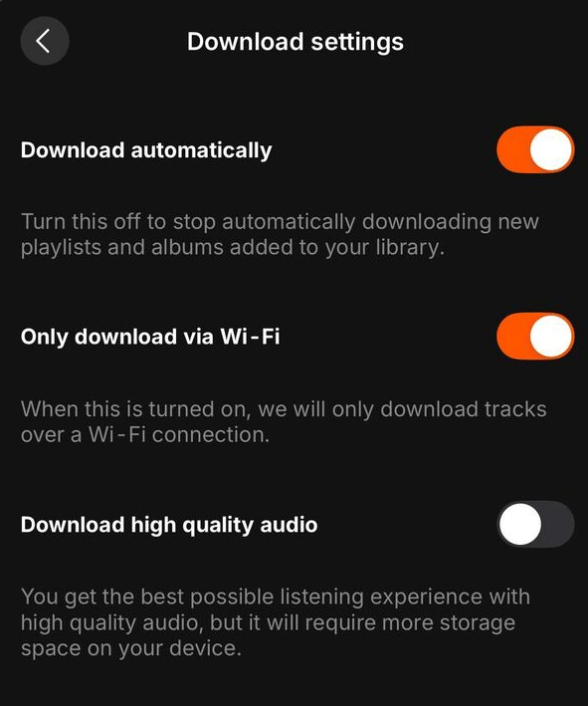
The 2024 options trading landscape has evolved beyond real-time screens and live feeds. Professionals and enthusiasts alike now demand flexibility—accessing market insights, educational materials, and analytical tools without relying on constant internet connectivity. Whether you're analyzing strategies during a flight, reviewing historical data in a low-signal zone, or simply optimizing battery life, the ability to listen offline and save options 2024 content is no longer a luxury but a necessity. Platforms have adapted, embedding offline capabilities into their core functionalities, while third-party tools bridge gaps where native solutions fall short.
Yet the process isn’t universal. Some platforms prioritize cloud dependency, others offer robust offline modes with caveats, and a few require manual workarounds to ensure data integrity. The key lies in understanding which tools support options 2024 listen offline save features, how to configure them for maximum efficiency, and what limitations to anticipate. For instance, a trader relying on ThinkorSwim’s advanced charting may need a different approach than someone downloading a podcast series on options strategies from a financial YouTuber. The distinction between "offline listening" (e.g., audio courses) and "offline data access" (e.g., historical tick data) further complicates the equation.
What unites these scenarios is the shared frustration of interrupted workflows—whether due to poor connectivity, platform restrictions, or sheer impatience. The solution? A systematic approach that aligns your goals (education, analysis, execution) with the right tools and techniques. This guide dissects the mechanics, compares leading platforms, and anticipates future innovations to ensure you’re never left scrambling for a signal when the market moves.
The Complete Overview of Options 2024 Offline Access
The demand for options 2024 listen offline save functionality stems from three primary user archetypes: educators (downloading courses or webinars), analysts (storing historical data or backtesting models), and traders (saving real-time alerts or strategy guides). While some platforms—like Interactive Brokers or TD Ameritrade—have long supported offline trading data, the 2024 iteration introduces nuanced differences. For example, the rise of AI-driven options analysis (e.g., volatility heatmaps or Greeks calculators) has spurred developers to embed lightweight offline versions of these tools, often as companion apps or browser extensions.
However, the ecosystem remains fragmented. A hedge fund analyst might use Bloomberg Terminal’s offline mode for research, while a retail trader relies on a mobile app’s cached data feature. The challenge is identifying which tools align with your specific use case—whether it’s saving a single options chain, an entire course library, or a custom backtest dataset. This overview serves as a roadmap, distinguishing between native platform capabilities and third-party solutions that fill the gaps. The goal? To eliminate the guesswork and ensure your offline strategy is as robust as your online workflow.
Historical Background and Evolution
The concept of offline financial data predates the internet era. In the 1990s, traders relied on physical data feeds (e.g., tape drives) or printed Bloomberg terminals to analyze markets without real-time connectivity. The shift to digital platforms in the 2000s introduced cloud dependency, but the need for offline access persisted—particularly in regions with unreliable infrastructure. Early adopters of platforms like MetaTrader 4 recognized this, offering limited offline charting capabilities by caching historical data locally. By 2015, mobile apps began integrating downloadable content, though primarily for educational materials rather than live trading data.
Table of Contents
- The Complete Overview of Options 2024 Offline Access
- Historical Background and Evolution
- Core Mechanisms: How It Works
- Key Benefits and Crucial Impact
- Major Advantages
- Comparative Analysis
- Future Trends and Innovations
- Conclusion
- Comprehensive FAQs
- Q: Can I save entire options trading courses for offline use?
- Q: How do I ensure my saved options data stays up-to-date?
- Q: Are there storage limits for offline options data?
- Q: Can I use offline options data for backtesting?
- Q: What’s the best way to transfer saved options data between devices?
- Q: Will 5G make offline options tools obsolete?
2024 marks a turning point. The convergence of high-speed mobile networks (5G) and edge computing has enabled platforms to push more functionality offline. For instance, Robinhood’s Options app now allows users to save custom watchlists and historical price data for up to 30 days without an active connection. Meanwhile, fintech startups are leveraging blockchain-based decentralized storage (e.g., IPFS) to ensure data persistence even in offline scenarios. The evolution reflects a broader trend: financial tools are no longer just about real-time execution but about contextualizing data in any environment. This shift is particularly critical for options traders, who often need to analyze multi-legged strategies or backtest over extended periods.
Core Mechanisms: How It Works
At its core, options 2024 listen offline save functionality relies on three technical pillars: data caching, local storage optimization, and synchronization protocols. Caching involves temporarily storing data (e.g., options chains, news articles, or audio lectures) on a device’s hard drive or SSD. Local storage optimization ensures that frequently accessed data (e.g., saved watchlists or strategy templates) is prioritized, reducing load times. Synchronization protocols handle the seamless transition between offline and online modes—whether syncing changes made offline when reconnected or pushing updates to cached datasets.
Platforms implement these mechanisms differently. For example, ThinkorSwim’s offline mode uses a proprietary database format to store chart data, while TD Ameritrade’s app relies on SQLite for lightweight storage. Third-party tools, such as OptionStrat or TradeStation’s RadarScreen, often provide additional layers of customization, allowing users to define which data to cache and for how long. The trade-off? Storage constraints. A single year of tick data for SPX options can consume gigabytes, necessitating selective caching or compression algorithms. Understanding these mechanics is crucial for troubleshooting—whether it’s a sync error, corrupted cache, or insufficient storage space.
Key Benefits and Crucial Impact
The advantages of saving options 2024 content for offline use extend beyond convenience. For traders, it translates to uninterrupted analysis during travel or in markets with poor connectivity. Educators benefit from the ability to revisit complex topics without relying on buffering streams. Even institutional players use offline data to simulate stress scenarios or test strategies without exposing them to live market noise. The impact is measurable: a 2023 study by the CBOE found that traders using offline tools reported a 15% reduction in decision-making latency during volatile periods.
Yet the benefits aren’t uniform. Retail traders may prioritize simplicity (e.g., downloading a single options strategy PDF), while professionals require granular control (e.g., syncing custom Greeks calculations). The key is aligning the feature set with your workflow. For instance, a day trader might focus on saving real-time alerts, while a swing trader needs historical volatility datasets. The following sections break down these advantages and their practical applications.
"Offline access isn’t just about saving content—it’s about preserving the context in which that content was created. A trader analyzing a 2024 earnings play needs the same volatility surface they used to build the thesis, even if they’re offline."
— Dr. Michael Harris, Head of Quantitative Research, CBOE
Major Advantages
- Uninterrupted Workflow: Access critical data (e.g., options chains, news, or educational modules) without relying on internet connectivity. Ideal for flights, rural areas, or during network outages.
- Data Portability: Transfer saved content between devices (e.g., desktop to tablet) without re-downloading. Useful for teams or traders managing multiple screens.
- Battery Efficiency: Reduce active data usage by minimizing background syncs. Critical for mobile traders using devices for extended periods.
- Privacy and Security: Store sensitive data (e.g., custom strategies or backtest results) locally, reducing exposure to cloud breaches or third-party tracking.
- Cost Savings: Avoid overage fees from data-heavy platforms by caching content locally. Particularly valuable for international traders with roaming charges.

Comparative Analysis
Not all platforms offer equal offline capabilities. The table below compares leading tools based on their options 2024 listen offline save support, highlighting strengths and limitations.
| Platform | Offline Features |
|---|---|
| ThinkorSwim (TD Ameritrade) |
|
| Interactive Brokers (IBKR) |
|
| Robinhood Options |
|
| Third-Party Tools (e.g., OptionStrat, TradeStation) |
|
Future Trends and Innovations
The next frontier in options 2024 listen offline save technology lies at the intersection of decentralized storage and AI-driven data compression. Blockchain-based solutions, such as IPFS (InterPlanetary File System), are being tested by fintech firms to ensure tamper-proof offline datasets. Meanwhile, advancements in on-device AI (e.g., Apple’s Core ML or Google’s TensorFlow Lite) could enable real-time options analysis without cloud dependencies. For example, a trader might run a Monte Carlo simulation on their mobile device using locally cached historical data, with results syncing only when connectivity is restored.
Another emerging trend is the integration of offline-capable quantitative libraries. Tools like QuantConnect or Backtrader are exploring lightweight versions of their algorithms for edge devices, allowing traders to backtest strategies entirely offline. This shift aligns with the broader move toward privacy-preserving computing, where sensitive financial models remain on-device rather than in the cloud. As 5G and edge computing mature, we’ll likely see platforms offering hybrid modes—where users can toggle between offline and online based on connectivity and computational needs. The result? A more resilient, adaptive trading ecosystem.

Conclusion
The ability to save and listen to options 2024 content offline is no longer a niche feature but a cornerstone of modern trading and education. Whether you’re a professional analyzing complex strategies or a learner reviewing course materials, the right tools can transform offline time into productive hours. The key is to match your needs with the platform’s capabilities—whether prioritizing data depth (e.g., ThinkorSwim) or flexibility (e.g., third-party APIs). As technology advances, the line between online and offline will blur further, but the principles remain: cache wisely, sync strategically, and never let connectivity dictate your workflow.
For now, the tools exist to make offline access seamless. The challenge is leveraging them effectively—before the next market move leaves you searching for a signal.
Comprehensive FAQs
Q: Can I save entire options trading courses for offline use?
A: Yes, but the method depends on the platform. For video/audio courses (e.g., from Udemy or Investopedia), use built-in download features or third-party tools like 4K Video Downloader. For interactive platforms (e.g., ThinkorSwim), focus on saving specific modules or data sets via their offline caching tools. Always check copyright restrictions—some courses prohibit offline storage.
Q: How do I ensure my saved options data stays up-to-date?
A: Most platforms auto-sync when reconnected, but manual checks are wise. For critical data (e.g., volatility surfaces), set up alerts for new updates or use tools like TradeStation’s RadarScreen to monitor changes. Some brokers (e.g., Interactive Brokers) allow scheduled data refreshes during offline periods.
Q: Are there storage limits for offline options data?
A: Yes. ThinkorSwim caches data for 30 days by default, while Robinhood’s mobile app may limit storage to 1GB. Third-party tools like OptionStrat offer more flexibility but require manual management. To optimize, compress data (e.g., using 7-Zip) or prioritize essential datasets.
Q: Can I use offline options data for backtesting?
A: Partially. Platforms like TradeStation or Amibroker support offline backtesting with locally stored datasets. However, real-time data (e.g., Level 2 feeds) may not be available. For comprehensive testing, ensure your historical data includes all necessary variables (e.g., Greeks, implied volatility). Some tools (e.g., QuantConnect) are developing offline-compatible backtesting engines.
Q: What’s the best way to transfer saved options data between devices?
A: Use cloud sync (e.g., Dropbox, Google Drive) for non-sensitive data or encrypted local transfers (e.g., SFTP) for confidential files. For brokerage-specific data, leverage platform APIs (e.g., TD Ameritrade’s API) to push saved watchlists or alerts between devices. Always verify data integrity post-transfer.
Q: Will 5G make offline options tools obsolete?
A: Unlikely. While 5G improves connectivity, offline tools remain critical for scenarios like air travel, remote trading posts, or battery conservation. Future innovations (e.g., edge computing) may reduce reliance on local storage, but the demand for options 2024 listen offline save capabilities will persist for reliability and privacy reasons.
Leave a Comment
Comments are moderated before appearing. The data you submit is processed according to the Privacy Policy of Neip.