How Individuals Using Freedom Information Law Reshape Transparency Worldwide

Every year, thousands of citizens wield a quiet but powerful tool: the right to demand information from governments, corporations, and institutions. These individuals—journalists, activists, researchers, and concerned citizens—are the unsung architects of transparency. Through freedom information law, they dismantle opacity, challenge power structures, and force accountability where it’s most needed. The stories they uncover—from medical malpractice cover-ups to environmental disasters—often begin with a single request, a legal deadline, and an unyielding commitment to public knowledge.
The law itself is a double-edged sword. On one hand, it’s a promise: that democracy thrives when citizens can scrutinize decisions affecting their lives. On the other, it’s a battleground—where bureaucracies resist, courts interpret ambiguously, and the cost of access can deter even the most determined seekers. Yet, the trend is undeniable. From the U.S. Freedom of Information Act (FOIA) to the EU’s General Data Protection Regulation (GDPR), these legal frameworks have become the backbone of modern transparency movements. The question isn’t whether individuals using freedom information law work, but how deeply they’ve reshaped the balance of power between the governed and the governors.
Consider the case of the New York Times’s Pulitzer-winning investigation into the CIA’s torture program. It began with a FOIA request. Or the revelations by German activists using GDPR to expose Facebook’s data practices. These aren’t isolated victories; they’re part of a global shift where the law is no longer just a shield for institutions but a weapon for the public. The stakes are higher than ever, as authoritarian regimes tighten control over information while democratic societies debate how far access should go. For those navigating this landscape, understanding the law’s mechanics, its limitations, and its evolving role is the difference between success and frustration.
The Complete Overview of Individuals Using Freedom Information Law
Freedom information law—whether framed as "right to know" legislation, access to information acts, or data protection regulations—operates on a simple premise: governments and private entities hold data that belongs to the public. The challenge lies in translating that premise into action. Individuals using freedom information law don’t just file requests; they strategize around exemptions, leverage legal precedents, and often collaborate with watchdogs to amplify impact. The process is part legal maneuvering, part investigative journalism, and part civic activism. What distinguishes the most effective practitioners is their ability to turn raw data into narratives that force change.
The law’s reach extends beyond traditional journalism. Academics dissect public spending to uncover inefficiencies, whistleblowers use FOIA to expose corporate crimes, and communities demand transparency on local infrastructure projects. The tools themselves are diverse: from formal requests under national laws to creative workarounds like scraping public datasets or using freedom of information law to bypass corporate secrecy. The common thread? A belief that transparency is not a privilege but a right—and that with the right approach, anyone can wield it.
Historical Background and Evolution
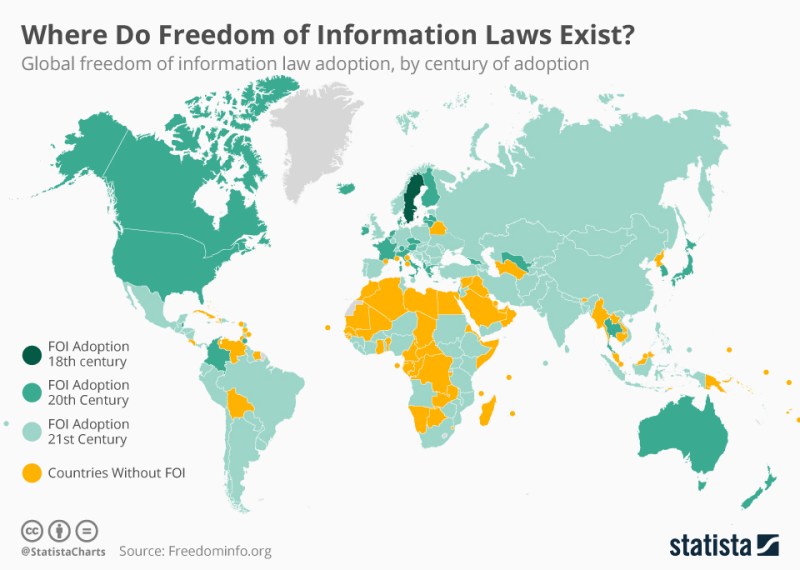
The modern era of freedom information law traces back to the mid-20th century, when post-WWII democracies began institutionalizing public access as a counterbalance to state secrecy. Sweden’s 1766 Freedom of the Press Act is often cited as an early precursor, but the real turning point came in 1966 with the U.S. Freedom of Information Act (FOIA), which codified the public’s right to federal records. The law was born from frustration: journalists and citizens realized that without legal recourse, agencies would withhold information indefinitely. FOIA’s passage marked the first time a government explicitly granted itself a duty to disclose—unless compelling reasons existed to hide.
Table of Contents
- The Complete Overview of Individuals Using Freedom Information Law
- Historical Background and Evolution
- Core Mechanisms: How It Works
- Key Benefits and Crucial Impact
- Major Advantages
- Comparative Analysis
- Future Trends and Innovations
- Conclusion
- Comprehensive FAQs
- Q: How do I file a freedom of information request?
- Q: What are the most common exemptions, and how can I avoid them?
- Q: Can I request information from private companies under FOI laws?
- Q: What if an agency ignores my request or takes too long to respond?
- Q: Are there risks to making FOI requests, such as retaliation?
- Q: How can I use FOI data effectively in my advocacy or reporting?
- Q: What’s the difference between FOIA and data protection laws like GDPR?
- Q: Are there success stories where FOI led to major policy changes?
- Q: How can I get help if I’m struggling with a complex FOI request?
Since then, the movement has globalized. The United Nations’ 2000 Declaration of Principles on Freedom of Expression endorsed access to information as a cornerstone of democracy, spurring nations to adopt their own laws. The EU’s GDPR (2018) took a different tack, focusing on data subject rights rather than institutional disclosure, while countries like South Africa and India enshrined FOI as fundamental rights. Yet, the evolution hasn’t been linear. Authoritarian regimes, including Russia and China, have weaponized FOI laws to silence dissent, turning transparency into a tool of control. Meanwhile, in democracies, courts have repeatedly narrowed exemptions—such as the U.S. Supreme Court’s 2019 Food Marketing Institute v. Argus Leader ruling, which expanded FOIA’s scope for commercial data. The tension between openness and secrecy remains unresolved.
Core Mechanisms: How It Works
At its core, freedom information law operates on a request-response cycle. An individual submits a query to a public body (or, in some cases, a private entity under data protection laws), specifying the records sought. The law then imposes deadlines—typically 20 to 30 days—for a response, along with fees (though many jurisdictions cap or waive costs for low-income applicants). The crux lies in the exemptions: national security, personal privacy, or trade secrets often justify withholding information. Here, the skill lies in drafting requests that avoid triggering these carve-outs. For example, a request for "emails discussing Project X" might be denied, but "minutes from Project X meetings" could yield results. Legal precedents play a critical role; activists often cite past rulings to argue for broader disclosure.
Beyond formal requests, individuals using freedom information law employ tactical innovations. "FOIA mapping" involves systematically requesting records across agencies to build a fuller picture, while "document dumps" (bulk releases) force institutions to confront overwhelming transparency. Digital tools, such as automated FOIA trackers or natural language processing to analyze responses, have democratized the process. However, the system isn’t foolproof. Bureaucratic delays, vague exemptions, and legal challenges can stall progress. Some organizations, like the U.S.-based MuckRock, specialize in assisting requesters, offering templates and legal support to navigate pitfalls. The most effective practitioners treat FOI as an ongoing campaign, not a one-off request.
Key Benefits and Crucial Impact
The impact of individuals using freedom information law is measurable in dollars, lives saved, and policies changed. A 2022 study by the Sunlight Foundation found that FOIA requests in the U.S. alone led to over $1 billion in recovered funds from fraud, improved public health outcomes, and the closure of unsafe facilities. In the UK, the Information Commissioner’s Office reported that 60% of FOI responses in 2023 revealed previously unknown issues, from council corruption to NHS inefficiencies. The law’s power lies in its ability to shift power dynamics: when citizens demand data, institutions must justify secrecy. This isn’t just about uncovering wrongdoing; it’s about normalizing accountability as a default state.
Yet, the benefits extend beyond tangible outcomes. Freedom information law fosters civic engagement by giving people a tangible way to participate in governance. A parent requesting school district records on lead exposure isn’t just seeking data—they’re inserting themselves into a system that once ignored them. Similarly, journalists using FOI to expose police misconduct don’t just inform the public; they arm communities with evidence to demand reform. The law’s ripple effect is cultural: it erodes the mystique of institutional power and replaces it with a demand for clarity. As one FOIA activist put it: "The more people ask, the harder it becomes to say no."
"Transparency is the antidote to corruption. But the cure only works if the patient is willing to take the medicine—and that starts with asking the right questions."
— Carla Anne Robbins, Executive Director, National Security Archive
Major Advantages
- Democratization of Power: FOI laws level the playing field, allowing individuals to access the same data as lobbyists or corporate insiders. A single request can expose patterns that institutions spend millions to obscure.
- Cost-Effective Investigations: Compared to traditional journalism (which relies on sources and insider leaks), FOI is a scalable tool. A well-crafted request can yield years’ worth of records for a fraction of the cost.
- Legal Safeguards: Unlike undercover reporting or hacking, FOI operates within the law, reducing legal risks for requesters. Courts often side with transparency, especially when public interest is demonstrated.
- Cross-Border Synergy: Data obtained via FOI in one country can inform advocacy in another. For example, EU GDPR requests targeting U.S. tech firms have pressured global compliance.
- Long-Term Institutional Change: Repeated FOI successes force agencies to reform internal processes. Agencies that frequently deny requests risk reputational damage, while those that comply build trust.
Comparative Analysis
| Aspect | Strengths | Weaknesses |
|---|---|---|
| U.S. FOIA |
|
|
| EU GDPR |
|
|
| Indian RTI Act |
|
|
| South African PAIA |
|
|
Future Trends and Innovations
The next decade will test the adaptability of freedom information law in an era of AI, deepfakes, and state surveillance. One emerging trend is the use of algorithmic transparency requests, where individuals demand access to the training data behind AI systems (e.g., predictive policing tools). Courts in the EU have already ruled that GDPR applies to AI models, setting a precedent for similar challenges in the U.S. Another frontier is collaborative FOI, where networks of requesters pool resources to overwhelmed agencies, as seen in projects like FOIA Machine. Technology will also play a role in automating responses: some governments are experimenting with AI-driven FOI portals, though concerns about bias in automated denials persist.
Geopolitically, the battle over information access is intensifying. Authoritarian regimes are expanding FOI laws to monitor citizens under the guise of transparency, while democracies grapple with balancing openness against national security. The rise of dark patterns—where institutions design systems to obscure information (e.g., burying records in PDFs or using legalese)—will likely spur new legal strategies. Meanwhile, the global south is becoming a hotbed for FOI innovation, with countries like Kenya and Brazil using technology to make requests more accessible. The key question is whether these tools will empower citizens or become another layer of bureaucratic control. The answer may hinge on who controls the narrative—and who has the resources to fight for access.

Conclusion
Individuals using freedom information law are not just filing paperwork; they’re participating in a quiet revolution. The law itself is a living document, shaped by litigation, activism, and technological change. Its strength lies in its simplicity: anyone with a question can ask, and institutions must respond—or face consequences. Yet, the system is far from perfect. Delays, legal loopholes, and resource disparities mean that success often depends on persistence, creativity, and sometimes, luck. The most effective practitioners treat FOI as a skill to be honed, not a one-time transaction. They recognize that every denied request is a lesson, every successful disclosure a victory, and every policy change a step toward a more accountable world.
The future of transparency depends on whether citizens continue to demand access—and whether institutions can resist the pressure. The tools are there. The precedents exist. What’s needed now is a sustained commitment to the idea that knowledge is power, and that power should belong to the people. For those willing to ask the questions, the law remains one of the most potent weapons in the fight for an informed society.
Comprehensive FAQs
Q: How do I file a freedom of information request?
A: The process varies by jurisdiction, but generally involves submitting a written request to the relevant agency, specifying the records sought. Include details like dates, names, or topics to narrow the scope. Many countries have online portals (e.g., U.S. FOIA, UK EIR). Always check local guidelines for formatting and fees. For complex requests, consult organizations like MuckRock or Access Info Europe.
Q: What are the most common exemptions, and how can I avoid them?
A: Exemptions typically include national security, personal privacy, trade secrets, and law enforcement investigations. To avoid triggering them, frame requests broadly but precisely. For example, instead of asking for "all emails about Project X," request "minutes from Project X meetings." Use past successful requests as templates, and if denied, appeal with evidence of public interest. Courts often override exemptions when the benefit to society outweighs the harm of disclosure.
Q: Can I request information from private companies under FOI laws?
A: It depends on the law. In the U.S., FOIA only applies to federal agencies, but some states (e.g., California) have laws targeting private entities performing public functions. The EU’s GDPR allows individuals to request their own data from companies, while laws like the UK’s Environmental Information Regulations cover private firms in certain sectors. Always verify whether the entity is subject to FOI in your jurisdiction.
Q: What if an agency ignores my request or takes too long to respond?
A: Most FOI laws include deadlines (e.g., 20–30 days). If unanswered, escalate by filing a complaint with the relevant oversight body (e.g., the U.S. Office of Government Information Services or the UK Information Commissioner’s Office). Some jurisdictions allow lawsuits for delays. Document all correspondence and use templates from advocacy groups to strengthen your case.
Q: Are there risks to making FOI requests, such as retaliation?
A: Yes, particularly in authoritarian regimes or when targeting powerful entities. Journalists and activists have faced harassment, job loss, or legal threats after using FOI. Mitigate risks by requesting anonymously (if allowed), working with legal allies, and avoiding requests that could endanger sources. In some cases, organizations like Reporters Without Borders or Article 19 provide support for at-risk requesters.
Q: How can I use FOI data effectively in my advocacy or reporting?
A: Start by organizing the data—use spreadsheets, timelines, or visualizations to spot patterns. Cross-reference with other sources (e.g., financial records, witness statements) to build context. For reporting, collaborate with journalists or use platforms like ProPublica’s FOIA machine to analyze responses. In advocacy, frame requests around policy goals (e.g., "This data proves X policy is failing—here’s how to fix it"). Always credit the source to encourage further transparency.
Q: What’s the difference between FOIA and data protection laws like GDPR?
A: FOIA focuses on institutional disclosure (e.g., government records), while GDPR and similar laws grant individuals control over their personal data (e.g., requesting deletion or correction). GDPR is reactive (you ask for your own data), whereas FOIA is proactive (you ask for records about others). Some jurisdictions (e.g., Canada’s PIPEDA) blend both approaches, but the legal pathways and goals differ.
Q: Are there success stories where FOI led to major policy changes?
A: Absolutely. The New York Times’s CIA torture exposé (FOIA-based) led to congressional hearings and policy reforms. In the UK, FOI requests revealed the Post Office Horizon scandal, forcing a £58 million compensation payout. In India, RTI requests exposed malnourishment in schools, prompting nationwide reforms. Even smaller victories—like a city council reversing a budget decision after FOI scrutiny—demonstrate the law’s power to shift power dynamics.
Q: How can I get help if I’m struggling with a complex FOI request?
A: Leverage existing networks: MuckRock offers free templates and legal support, while Access Info Europe assists with EU requests. Many universities have FOI clinics where law students help pro bono. For high-stakes cases, consider hiring a transparency lawyer or joining a collective like FOIA Machine. Some governments provide training—check resources like the National Freedom of Information Coalition (U.S.) or Right2Know (global).
Leave a Comment
Comments are moderated before appearing. The data you submit is processed according to the Privacy Policy of Neip.