How to Download Google Maps Offline: The Definitive Guide for Seamless Navigation
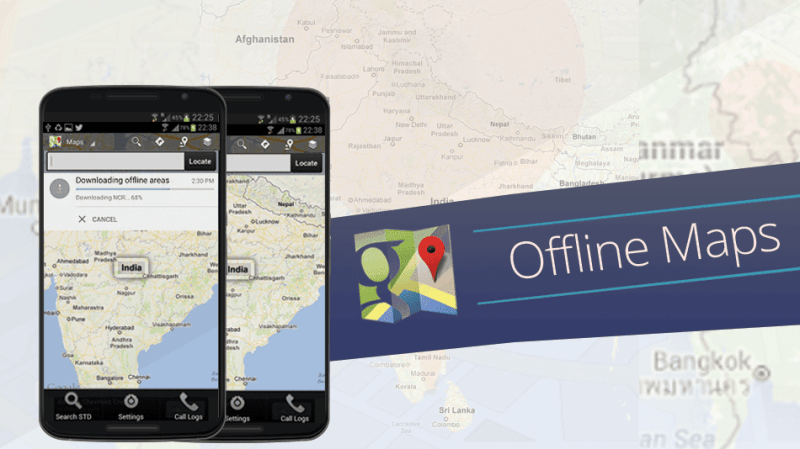
Google Maps has become an indispensable tool for travelers, commuters, and explorers alike. Yet, its offline capabilities—often overlooked—can transform your experience in areas with unreliable connectivity. Whether you're navigating a bustling metropolis or a remote wilderness, the ability to download Google Maps offline ensures you stay on course without relying on data. This functionality isn’t just a convenience; it’s a necessity for those who prioritize reliability over real-time updates.
The process of saving Google Maps for offline use has evolved significantly since its inception. Early versions required cumbersome workarounds, but today, the feature is streamlined, accessible, and tailored to different user needs. From urban explorers to off-grid adventurers, understanding how to cache Google Maps offline can mean the difference between a smooth journey and a frustrating detour. The key lies in knowing which areas to prioritize, how to optimize storage, and when to update your saved maps.
For professionals, travelers, or anyone who values independence from digital dependencies, mastering offline navigation is a game-changer. Below, we break down the mechanics, benefits, and future of this essential tool—ensuring you’re equipped to navigate with confidence, no matter where your path leads.
The Complete Overview of Downloading Google Maps Offline
The ability to download Google Maps offline is rooted in Google’s broader strategy to make its services accessible in low-connectivity environments. This feature was introduced to address a critical gap: what happens when you’re in a region with poor or no internet access? The solution is straightforward—preload maps for specific areas before you need them. This ensures that turn-by-turn directions, points of interest, and even satellite imagery remain available at your fingertips, regardless of signal strength.The process itself is deceptively simple, but its execution requires attention to detail. Users must select the precise regions they intend to visit, adjust the zoom level to balance detail and storage, and confirm the download before disconnecting from the internet. While the interface is intuitive, nuances—such as map expiration policies or storage limitations—can impact usability. For instance, a downloaded map may expire after a set period unless refreshed, a detail that often catches users off guard during long trips.
Historical Background and Evolution
The concept of offline maps predates Google Maps, with early GPS devices offering limited preloaded cartography. However, these solutions were rigid, offering static datasets that couldn’t be updated dynamically. Google’s entry into the market in 2005 revolutionized navigation with real-time updates, but it wasn’t until 2013 that the company introduced offline map downloads as a native feature. This milestone was significant, as it allowed users to carry an entire city—or even a country’s worth of maps—on their devices without an active connection.Over the years, the feature has undergone refinements to address common pain points. Early versions required users to manually select and download maps, a time-consuming process that often led to incomplete coverage. Today, the system is more efficient, with automated updates and the ability to download multiple regions simultaneously. Additionally, Google has optimized storage by compressing map data, allowing users to save larger areas without draining device memory. These advancements reflect a broader trend in tech: making essential tools more accessible, even in the absence of connectivity.
Core Mechanisms: How It Works
At its core, downloading Google Maps offline involves caching map tiles—a grid-based system where each tile represents a small segment of the map at a specific zoom level. When you select an area to save, Google’s servers package these tiles into a compressed format, which your device stores locally. The process is seamless, but the mechanics behind it are worth understanding, particularly for users concerned about storage or performance.Table of Contents
- The Complete Overview of Downloading Google Maps Offline
- Historical Background and Evolution
- Core Mechanisms: How It Works
- Key Benefits and Crucial Impact
- Major Advantages
- Comparative Analysis
- Future Trends and Innovations
- Conclusion
- Comprehensive FAQs
- Q: Can I download Google Maps offline on both Android and iOS?
- Q: How long do downloaded maps stay valid?
- Q: What happens if I exceed the 2GB storage limit for offline maps?
- Q: Can I download maps for multiple cities at once?
- Q: Are offline maps available for all countries?
The system relies on two key components: the map’s zoom level and the device’s storage capacity. A higher zoom level increases detail but consumes more space, while a lower level reduces storage but may obscure finer details. Additionally, Google imposes a 2GB storage limit for offline maps on most devices, which can be a constraint for users who need extensive coverage. Understanding these trade-offs is crucial for optimizing the experience. For example, a traveler planning a multi-city route might prioritize downloading urban centers at a moderate zoom level, then supplement with on-demand searches for specific landmarks.
Key Benefits and Crucial Impact
The advantages of saving Google Maps for offline use extend beyond mere convenience. For travelers, it eliminates the frustration of buffering or failed navigation in areas with poor signal. For professionals, it ensures critical routes—such as those used in logistics or fieldwork—remain accessible even in remote locations. The feature also enhances security, as users can rely on preloaded maps in regions where data costs are prohibitive or where privacy concerns limit internet access.Beyond individual use cases, the ability to download Google Maps offline has broader implications for digital equity. It bridges the gap between connected and disconnected communities, ensuring that navigation tools are not a luxury but a necessity. This aligns with Google’s mission to make information universally accessible, regardless of infrastructure limitations.
"Offline maps aren’t just about convenience—they’re about empowerment. Whether you’re a traveler in a rural village or a first responder in a disaster zone, having reliable navigation can be a matter of safety and efficiency." — Google Maps Product Team
Major Advantages
- Uninterrupted Navigation: Access turn-by-turn directions, points of interest, and transit options without relying on an internet connection.
- Cost Efficiency: Avoid data charges in regions where roaming or local connectivity is expensive.
- Reliability in Remote Areas: Navigate with confidence in off-grid locations, such as national parks or developing regions.
- Privacy and Security: Reduce exposure to potential data breaches or surveillance by minimizing active internet use.
- Optimized Storage Management: Download only the areas you need, balancing detail and storage constraints effectively.

Comparative Analysis
While Google Maps remains the most popular offline mapping solution, other tools offer competing features. Below is a comparison of key aspects:| Feature | Google Maps | Apple Maps | Maps.me | OSMAnd |
|---|---|---|---|---|
| Offline Map Downloads | Yes (2GB limit, region-specific) | Limited (iOS only, no full offline maps) | Yes (unlimited storage, global coverage) | Yes (customizable, supports GPX tracks) |
| Storage Efficiency | Moderate (compressed tiles) | N/A | High (lightweight format) | High (adjustable detail) |
| Real-Time Updates | Yes (when online) | Yes | No (static maps) | No (static maps) |
| Additional Features | Transit, business listings, Street View | Siri integration, Apple Pay | Offline routing, hiking trails | GPX support, terrain layers |
Future Trends and Innovations
The future of offline mapping is likely to focus on two key areas: artificial intelligence and edge computing. AI could enable dynamic map updates, where offline caches are refreshed in the background using minimal data. Edge computing, meanwhile, may allow devices to process map data locally with even greater efficiency, reducing storage requirements while maintaining detail.Another emerging trend is the integration of offline maps with augmented reality (AR). Imagine pointing your device at a street and seeing real-time directions overlaid on your surroundings, even without an internet connection. While still in development, such innovations could redefine how we interact with navigation tools, blending digital and physical worlds seamlessly.

Conclusion
The ability to download Google Maps offline is more than a technical feature—it’s a testament to how digital tools can adapt to real-world challenges. Whether you’re a frequent traveler, a professional in a field that demands reliability, or simply someone who values self-sufficiency, offline maps provide a critical safety net. By understanding the mechanics, optimizing storage, and staying informed about updates, you can leverage this tool to its fullest potential.As technology advances, the line between online and offline experiences will continue to blur. For now, however, the power to navigate without connectivity remains one of the most practical and empowering features in modern mapping.
Comprehensive FAQs
Q: Can I download Google Maps offline on both Android and iOS?
A: Yes, Google Maps supports offline downloads on both Android and iOS devices. The process is nearly identical, though iOS users may encounter minor interface differences due to Apple’s operating system restrictions.
Q: How long do downloaded maps stay valid?
A: Offline maps typically expire after 30 days unless refreshed. Google may update this policy, so checking the app’s settings or help section is advisable before long trips.
Q: What happens if I exceed the 2GB storage limit for offline maps?
A: Google Maps will prevent additional downloads until you free up space by deleting existing offline maps. You can manage storage in the "Offline maps" section of the app settings.
Q: Can I download maps for multiple cities at once?
A: Yes, you can select and download multiple regions simultaneously. However, each download counts toward the 2GB limit, so prioritize areas based on your needs.
Q: Are offline maps available for all countries?
A: Google Maps offers offline downloads for most countries, though coverage may vary. Some remote or less-developed regions might have limited or outdated offline data. Always verify availability before relying on offline maps for critical navigation.
Leave a Comment
Comments are moderated before appearing. The data you submit is processed according to the Privacy Policy of Neip.