What Is SCADA System? The Hidden Nervous System of Modern Industry
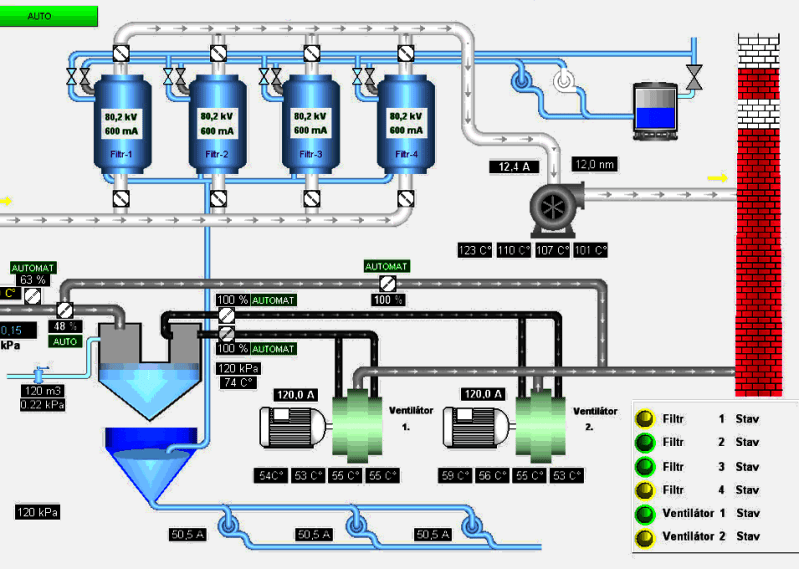
Industries don’t run on intuition—they run on data. Behind every seamless power grid, efficient water treatment plant, or automated manufacturing line lies a silent architect: the SCADA system. This isn’t just software or hardware; it’s the nervous system of modern infrastructure, translating raw signals into actionable intelligence. When a utility company balances supply and demand in real time, or a chemical plant adjusts temperatures with micron precision, the invisible hand is almost always a SCADA system at work.
Yet for all its ubiquity, the concept often remains shrouded in technical jargon. Terms like "HMI," "PLC," and "supervisory control" float in meetings, but few outside niche circles grasp how these components stitch together to form a cohesive whole. The gap between theory and practice is wide—until now. Understanding what is SCADA system isn’t just about memorizing acronyms; it’s about recognizing the invisible threads that keep civilization’s pulse steady.
The first SCADA deployments in the 1960s were rudimentary by today’s standards—clunky telemetry units monitoring a handful of sensors over telegraph lines. Fast-forward to 2024, and these systems now orchestrate thousands of devices across continents, integrating AI, cloud computing, and cybersecurity protocols. The evolution mirrors a broader truth: technology that was once revolutionary becomes so embedded in daily operations that its presence is taken for granted. But peel back the layers, and the sophistication is staggering.
The Complete Overview of SCADA Systems
A SCADA (Supervisory Control and Data Acquisition) system is a centralized platform designed to monitor, control, and optimize industrial processes in real time. At its core, it bridges the physical world of sensors, actuators, and machinery with the digital realm of data analysis and human decision-making. The term "supervisory" reflects its role—not as a direct controller of every valve or motor, but as an overseer that gathers data, identifies anomalies, and triggers corrective actions through subordinate systems like Programmable Logic Controllers (PLCs).
What sets SCADA apart from other control systems is its scale and scope. Unlike a standalone PLC managing a single assembly line, a SCADA system can oversee an entire power grid, a sprawling oil pipeline network, or a city’s water distribution. Its architecture typically consists of four layers: field devices (sensors/actuators), remote terminal units (RTUs), the master station (where data is processed), and the human-machine interface (HMI). This modularity allows it to adapt to industries as diverse as manufacturing, energy, transportation, and healthcare. The question isn’t just what is SCADA system but how it redefines efficiency, safety, and connectivity in sectors where failure isn’t an option.
Historical Background and Evolution
The origins of SCADA trace back to the 1950s and 60s, when early telemetry systems were used to monitor remote pipelines and electrical grids. The first commercial SCADA systems emerged in the late 1960s, primarily for gas and oil industries. These systems relied on analog signals transmitted over dedicated phone lines or radio frequencies, a far cry from today’s digital, networked architectures. The breakthrough came with the advent of digital computers and PLCs in the 1970s, which allowed for more precise control and data logging.
Table of Contents
- The Complete Overview of SCADA Systems
- Historical Background and Evolution
- Core Mechanisms: How It Works
- Key Benefits and Crucial Impact
- Major Advantages
- Comparative Analysis
- Future Trends and Innovations
- Conclusion
- Comprehensive FAQs
- Q: What industries rely most on SCADA systems?
- Q: How does SCADA differ from MES (Manufacturing Execution Systems)?
- Q: Are SCADA systems vulnerable to cyberattacks?
- Q: Can SCADA systems operate without human intervention?
- Q: What’s the role of IoT in SCADA?
By the 1980s, SCADA systems had become indispensable in critical infrastructure, with industries adopting them for their ability to centralize monitoring and reduce operational costs. The 1990s brought the integration of Windows-based HMIs and open protocols like OPC (OLE for Process Control), which standardized communication between devices. The 2000s saw the rise of distributed SCADA systems, leveraging Ethernet and IP networks to connect geographically dispersed assets. Today, the convergence of SCADA with the Industrial Internet of Things (IIoT) and edge computing is pushing the boundaries of what these systems can achieve—from predictive maintenance to autonomous process optimization.
Core Mechanisms: How It Works
The functionality of a SCADA system hinges on its ability to collect, process, and act on data from disparate sources. Field devices—such as temperature sensors, flow meters, or pressure transducers—send analog or digital signals to RTUs or PLCs, which act as local processing hubs. These signals are then transmitted to the master station, where they’re aggregated, analyzed, and displayed on HMIs. The HMI provides operators with a real-time visual representation of the system’s status, often through customizable dashboards and alarms.
What distinguishes SCADA from other control systems is its supervisory nature. While PLCs execute predefined logic at the device level, SCADA systems operate at a higher level, making strategic decisions based on broader operational goals. For example, in a water treatment plant, a PLC might control the speed of a pump, but the SCADA system determines when to adjust chemical dosages based on water quality trends. This hierarchical structure ensures scalability and flexibility, allowing SCADA to adapt to complex, dynamic environments. The interplay between hardware, software, and human intervention is what makes what is SCADA system a critical question for industries reliant on precision and reliability.
Key Benefits and Crucial Impact
SCADA systems don’t just monitor—they transform. By providing real-time visibility into operations, they enable proactive decision-making, reducing downtime and waste. In energy sectors, for instance, SCADA optimizes grid performance, balancing supply and demand with millisecond precision. In manufacturing, it ensures quality control by adjusting parameters dynamically. The impact extends beyond efficiency: safety is inherently improved as systems detect and mitigate risks before they escalate. For industries where seconds count, SCADA is the difference between routine operations and catastrophic failure.
The economic and operational advantages are equally compelling. Studies show that organizations using SCADA systems achieve up to 30% reductions in maintenance costs through predictive analytics and remote diagnostics. The ability to integrate third-party data—such as weather forecasts for energy grids or supply chain updates for logistics—further enhances decision-making. Yet, the true value lies in resilience. In a world where cyber threats and physical disruptions are constant, SCADA’s redundancy and fail-safes provide a critical layer of protection.
"SCADA is the silent guardian of modern industry—unseen but indispensable. It doesn’t just react; it anticipates, adapts, and ensures continuity in an era where complexity is the only constant."
— Dr. Elena Vasquez, Industrial Automation Specialist, MIT
Major Advantages
- Real-Time Monitoring: Continuous data acquisition from thousands of devices, enabling instant visibility into system health and performance.
- Centralized Control: Operators manage distributed assets from a single interface, reducing human error and improving coordination.
- Predictive Maintenance: AI-driven analytics identify wear patterns before failures occur, slashing downtime and repair costs.
- Scalability: Modular architecture allows expansion from small facilities to continent-wide infrastructure without overhauling the entire system.
- Enhanced Safety: Automated alarms and fail-safes prevent accidents by intervening before critical thresholds are breached.

Comparative Analysis
| SCADA Systems | PLC Systems |
|---|---|
| Designed for large-scale, distributed monitoring and control across industries. | Focused on localized, real-time control of specific machinery or processes. |
| Uses HMIs for high-level supervision and data analysis. | Relies on direct input/output (I/O) for immediate machine control. |
| Integrates with enterprise systems (ERP, MES) for broader operational insights. | Operates independently, though can be networked for coordination. |
| Critical for infrastructure like power grids, water treatment, and oil pipelines. | Essential for assembly lines, packaging machines, and robotic systems. |
Future Trends and Innovations
The next decade will redefine what is SCADA system as it merges with emerging technologies. Edge computing is already reducing latency by processing data closer to the source, while 5G enables ultra-low-latency communication for remote assets. AI and machine learning are being embedded into SCADA to move beyond reactive control to true predictive and autonomous operations. For example, smart grids will use SCADA-driven AI to dynamically reroute power based on demand fluctuations and renewable energy availability.
Cybersecurity remains a focal point, with SCADA systems becoming prime targets for cyberattacks. The shift toward zero-trust architectures and blockchain-based authentication is critical to safeguarding these systems. Additionally, the rise of digital twins—virtual replicas of physical systems—will allow operators to simulate and optimize SCADA-controlled processes before implementing changes in the real world. As industries embrace sustainability, SCADA will play a pivotal role in optimizing resource use, from energy-efficient manufacturing to carbon-neutral supply chains.

Conclusion
SCADA systems are the unsung heroes of modern industry, operating behind the scenes to ensure the smooth functioning of critical infrastructure. Their evolution from telegraph-era telemetry to AI-integrated control platforms underscores their adaptability and necessity. For professionals in engineering, operations, or IT, grasping what is SCADA system is no longer optional—it’s a prerequisite for navigating an increasingly automated world.
The future of SCADA isn’t just about maintaining the status quo; it’s about reimagining what’s possible. As industries adopt smarter, more connected systems, SCADA will continue to evolve, blurring the lines between physical and digital operations. One thing is certain: the systems that keep our world running will only grow more intelligent—and more indispensable.
Comprehensive FAQs
Q: What industries rely most on SCADA systems?
A: SCADA is most critical in energy (power grids, oil/gas), water and wastewater management, manufacturing (automotive, chemical), transportation (rail, airports), and healthcare (hospital equipment monitoring). Any sector with large-scale, distributed assets benefits from its real-time oversight.
Q: How does SCADA differ from MES (Manufacturing Execution Systems)?
A: While SCADA focuses on high-level monitoring and control of physical processes (e.g., adjusting temperatures in a refinery), MES tracks production data at the shop-floor level (e.g., tracking individual parts on an assembly line). SCADA is broader in scope, often interfacing with MES for end-to-end visibility.
Q: Are SCADA systems vulnerable to cyberattacks?
A: Yes. SCADA systems, especially legacy ones, are prime targets due to their critical infrastructure role. Attacks like Stuxnet (2010) demonstrated how malware can disrupt physical processes. Modern SCADA deployments now incorporate air-gapped networks, encryption, and intrusion detection to mitigate risks.
Q: Can SCADA systems operate without human intervention?
A: While SCADA itself requires human oversight for strategic decisions, many modern systems incorporate autonomous control modes. For example, a smart grid’s SCADA might automatically reroute power during outages without operator input, though humans retain ultimate authority for complex scenarios.
Q: What’s the role of IoT in SCADA?
A: IoT extends SCADA’s capabilities by adding more sensors and devices to the network, enabling granular data collection. For instance, IoT-enabled valves in a pipeline can report their status in real time, allowing SCADA to optimize flow dynamically. This integration is driving the shift toward "Industrial IoT" (IIoT) within SCADA architectures.
Leave a Comment
Comments are moderated before appearing. The data you submit is processed according to the Privacy Policy of Neip.