The Pullman Strike Explained: Labor’s Defining Moment in U.S. History

The Pullman Strike of 1894 wasn’t just another industrial dispute—it was a seismic event that exposed the raw tensions between unchecked corporate power and the desperate struggles of America’s working class. When George Pullman, the railroad sleeping car magnate, slashed wages by 25% while maintaining exorbitant rents in his company town, thousands of workers walked off the job, triggering a nationwide railroad shutdown that paralyzed commerce. The strike’s ripple effects reached the White House, forcing President Grover Cleveland to deploy federal troops and setting a precedent for government intervention in labor disputes that still echoes today.
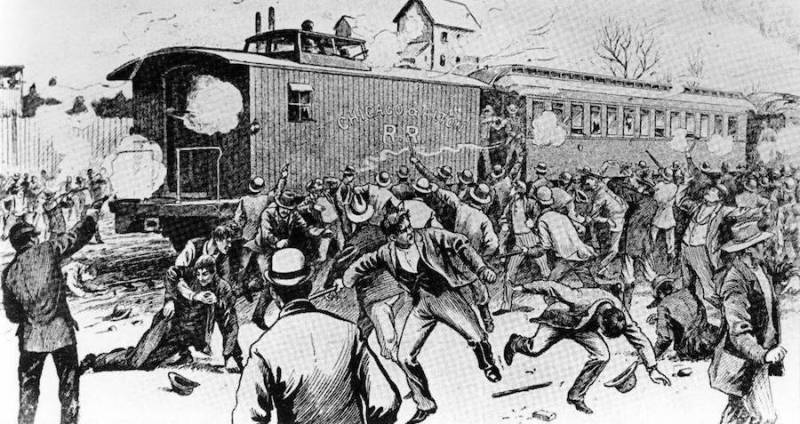
At its core, what was the Pullman strike? It was a rebellion against the monopolistic practices of the Gilded Age, where a single man’s whims could dictate the livelihoods of thousands. The American Railway Union (ARU), led by the charismatic and radical Eugene V. Debs, refused to handle Pullman cars unless wages and conditions were restored. Their defiance spread like wildfire, crippling rail traffic from Chicago to the West Coast. The strike’s brutality—including violent clashes with Pinkerton detectives and federal troops—revealed the lengths to which capital would go to crush organized labor.
The Pullman Strike wasn’t just a labor conflict; it was a cultural reckoning. Newspapers branded Debs a dangerous agitator, while Pullman portrayed himself as a benevolent employer. The public was divided, but the strike’s failure to win immediate concessions didn’t diminish its significance. It laid the groundwork for future labor reforms, from the Clayton Antitrust Act to the Wagner Act, proving that even in defeat, movements could reshape the nation’s economic landscape.
The Complete Overview of the Pullman Strike
The Pullman Strike of 1894 remains one of the most consequential labor actions in U.S. history, a moment when the fragile balance between capital and labor tipped violently. What was the Pullman strike, beyond its immediate context? It was a collision of industrial greed, worker solidarity, and government overreach—a microcosm of the Gilded Age’s contradictions. George Pullman’s company town in Chicago, where workers lived in company-owned housing and were paid in scrip (company currency), was a model of corporate control. When Pullman cut wages after a economic panic but refused to lower rents, the ARU’s strike became a symbol of resistance against exploitative systems.The strike’s scale was unprecedented. By June 1894, 250,000 railroad workers had joined the boycott, halting mail delivery and crippling the economy. The federal government’s swift response—invoking the Sherman Antitrust Act to break the strike—was a legal first, setting a dangerous precedent for using anti-monopoly laws against labor unions. The strike’s suppression didn’t just fail to restore wages; it also cemented the idea that corporate interests could override worker rights when backed by state power.
Historical Background and Evolution
The roots of what was the Pullman strike stretch back to the late 19th century, when industrialization created a vast underclass of railroad workers—mostly immigrants and African Americans—who lived in precarious conditions. Pullman’s company town, with its high rents and company stores, was designed to keep workers indebted to the company. When the economic depression of 1893 hit, Pullman slashed wages by nearly a third, arguing that lower costs would save jobs. But he refused to adjust rents, leaving workers deeper in debt.The American Railway Union, founded by Eugene V. Debs in 1893, was the strike’s driving force. Debs, a former Pullman employee, had built the ARU into a powerful organization with a membership of over 150,000. When Pullman fired three ARU leaders for organizing, Debs called for a boycott of all Pullman cars. The strike began on May 11, 1894, and within weeks, rail traffic from Chicago to the Pacific Coast ground to a halt. The boycott’s success lay in its strategic targeting of Pullman’s supply chain—workers refused to handle Pullman cars, and others joined in solidarity.
Core Mechanisms: How It Works
The strike’s mechanics were both simple and revolutionary. The ARU’s boycott leveraged the interconnectedness of the railroad system: if Pullman cars weren’t moved, the entire network slowed. Debs’s strategy was twofold—direct action (walking off the job) and indirect pressure (convincing other unions to join). By June, the strike had spread to 27 states, with even non-ARU workers refusing to handle Pullman equipment. The federal government’s intervention, however, exposed a critical flaw: without legal protections, labor actions could be crushed by executive force.Table of Contents
- The Complete Overview of the Pullman Strike
- Historical Background and Evolution
- Core Mechanisms: How It Works
- Key Benefits and Crucial Impact
- Major Advantages
- Comparative Analysis
- Future Trends and Innovations
- Conclusion
- Comprehensive FAQs
- Q: Why did George Pullman cut wages but not lower rents?
- Q: How did Eugene V. Debs become involved in the strike?
- Q: Was the Pullman Strike successful in the long run?
- Q: How did the federal government respond to the strike?
- Q: What was the role of African American workers in the Pullman Strike?
- Q: How did the Pullman Strike influence future labor laws?
- Q: Are there modern parallels to the Pullman Strike?
President Grover Cleveland’s response was swift and heavy-handed. He invoked the Sherman Antitrust Act, arguing that the boycott was an illegal restraint of trade. Federal courts issued injunctions, and Cleveland sent in troops to protect mail delivery (a pretext for breaking the strike). The ARU’s defeat wasn’t just military—it was legal. The courts ruled that unions couldn’t boycott employers, and Debs was jailed for six months for violating the injunction. The strike’s failure didn’t diminish its legacy; it forced labor leaders to seek legislative solutions, paving the way for future protections.
Key Benefits and Crucial Impact
The Pullman Strike’s immediate failure masked its long-term impact on American labor law and corporate accountability. What was the Pullman strike, if not a warning of the dangers of unchecked corporate power? It exposed the vulnerabilities of a system where workers had no legal recourse against exploitation. The strike’s suppression also highlighted the government’s role as an enforcer of corporate interests, a trend that would continue until the New Deal era.The strike’s most enduring legacy was its influence on labor organizing. Though the ARU was destroyed, Debs emerged as a national figure, later co-founding the Socialist Party. The strike also accelerated the push for labor reforms, including the Clayton Antitrust Act (1914), which exempted unions from antitrust laws, and the Wagner Act (1935), which guaranteed collective bargaining rights. Without the Pullman Strike, the modern labor movement might never have gained traction.
"The Pullman Strike was the first great battle between capital and labor in America. It showed that the government would side with the powerful, and that labor had to fight harder to win." — Eugene V. Debs, 1912
Major Advantages
Despite its defeat, the Pullman Strike had several transformative advantages:- Exposed corporate exploitation: The strike revealed the abusive practices of company towns, pushing public opinion toward labor rights.
- Strengthened union solidarity: The ARU’s multi-union boycott set a precedent for coordinated labor action.
- Legal precedents: The strike’s suppression led to reforms like the Clayton Act, which protected unions from antitrust laws.
- Political awakening: Debs’s imprisonment turned him into a socialist icon, influencing future labor and political movements.
- Economic lessons: The strike proved that worker power could disrupt entire industries, forcing corporations to negotiate.

Comparative Analysis
| Pullman Strike (1894) | Great Railroad Strike (1877) |
|---|---|
| Led by the American Railway Union (Eugene V. Debs). | Spontaneous, led by Baltimore & Ohio Railroad workers. |
| Focused on wages and company town abuses. | Triggered by wage cuts and economic depression. |
| Federal government used Sherman Antitrust Act to break it. | Federal troops deployed to restore order. |
| Led to long-term labor reforms (Clayton Act, Wagner Act). | No immediate legal changes, but exposed need for labor protections. |
Future Trends and Innovations
The Pullman Strike’s lessons continue to resonate in modern labor movements. Today’s gig economy, with its reliance on independent contractors and algorithmic management, mirrors the exploitative conditions of Pullman’s company town. Workers in tech, delivery, and ride-sharing face similar struggles—low wages, company-controlled housing (via corporate perks), and legal ambiguity about union rights. The strike’s failure to win immediate concessions serves as a cautionary tale: without strong legal protections, even the most organized labor actions can be crushed.Future labor innovations may draw from the Pullman Strike’s strategies. The rise of digital organizing (via apps like Kickstarter for strikes) could revive the boycott tactic, while modern unions might push for legislative changes akin to the Clayton Act. The strike’s legacy also highlights the need for worker cooperatives and alternative economic models that prioritize equity over corporate control.
Conclusion
The Pullman Strike was more than a failed uprising—it was a turning point in American labor history. What was the Pullman strike, in hindsight? It was a clash of ideologies: the belief that workers deserved dignity versus the unchecked power of industrialists. Though the strike ended in defeat, its ripple effects reshaped labor law, political activism, and public perception of corporate responsibility. Without the Pullman Strike, the modern labor movement might not exist as we know it.Today, as workers face new forms of exploitation in the gig economy, the lessons of 1894 remain vital. The strike’s story is a reminder that labor struggles are never isolated—they reflect broader battles for economic justice. Understanding
what was the Pullman strike** isn’t just about history; it’s about recognizing the patterns of oppression and resistance that persist in the 21st century.Comprehensive FAQs
Q: Why did George Pullman cut wages but not lower rents?
A: Pullman argued that wage cuts were necessary to save jobs during the 1893 economic depression. However, he maintained high rents in his company town to keep workers financially dependent on the company. This dual strategy ensured that even with lower wages, workers couldn’t afford to leave, trapping them in a cycle of debt.
Q: How did Eugene V. Debs become involved in the strike?
A: Debs, a former Pullman employee, had founded the American Railway Union (ARU) in 1893. When Pullman fired three ARU organizers for protesting wage cuts, Debs called for a boycott of all Pullman cars. His leadership turned the strike into a nationwide movement, making him a key figure in labor history.
Q: Was the Pullman Strike successful in the long run?
A: While the immediate strike failed, its long-term impact was significant. It exposed corporate abuses, led to legal reforms (like the Clayton Act), and inspired future labor movements. Debs’s imprisonment also turned him into a socialist icon, influencing political activism for decades.
Q: How did the federal government respond to the strike?
A: President Grover Cleveland invoked the Sherman Antitrust Act to break the strike, arguing that the boycott was an illegal restraint of trade. Federal troops were deployed to protect mail delivery, and courts issued injunctions against the ARU. This set a precedent for government intervention in labor disputes.
Q: What was the role of African American workers in the Pullman Strike?
A: African American railroad workers, many of whom were Pullman porters, were heavily affected by the strike. While some joined the boycott, others faced racial discrimination from both the company and the ARU. The strike highlighted the intersection of race and labor rights, a theme that would later shape the civil rights movement.
Q: How did the Pullman Strike influence future labor laws?
A: The strike’s suppression led to calls for stronger labor protections. The Clayton Antitrust Act (1914) exempted unions from antitrust laws, and the Wagner Act (1935) established collective bargaining rights. The strike also demonstrated the need for federal labor regulations, paving the way for the New Deal’s labor reforms.
Q: Are there modern parallels to the Pullman Strike?
A: Yes. The gig economy’s reliance on independent contractors and company-controlled benefits mirrors Pullman’s company town model. Workers in tech, delivery, and ride-sharing face similar struggles—low wages, lack of benefits, and legal ambiguity about union rights—making the Pullman Strike’s lessons relevant today.
Leave a Comment
Comments are moderated before appearing. The data you submit is processed according to the Privacy Policy of Neip.