The Hidden Power of Legacy Mainframe Access Terminal Emulation

The mainframe isn’t dead—it’s simply invisible to most users. Beneath the surface of cloud-native applications and microservices, legacy systems hum along, processing 71% of global transactions. These behemoths, running on decades-old architectures, rely on legacy mainframe access terminal emulation to remain functional in a world obsessed with agility. The irony? The very terminals that once dominated corporate floors—clunky green-screen devices—now operate as emulated interfaces, invisible yet indispensable.
This duality explains why terminal emulation persists despite predictions of its obsolescence. Modern enterprises don’t discard mainframes; they integrate them. The challenge lies in maintaining seamless access to these systems without rewriting core logic. Here, legacy mainframe access terminal emulation becomes the unsung hero: a bridge between the past’s reliability and the present’s demands.
Yet for all its utility, the technology remains shrouded in ambiguity. Many IT professionals treat it as a black box—something that works but isn’t fully understood. The truth is far more nuanced. Terminal emulation isn’t just about replicating a 3270 screen; it’s a sophisticated layer of abstraction that enables secure, high-performance interactions with mainframe applications. To grasp its full potential, one must dissect its mechanics, weigh its advantages, and anticipate its evolution in an era of AI-driven automation.
The Complete Overview of Legacy Mainframe Access Terminal Emulation
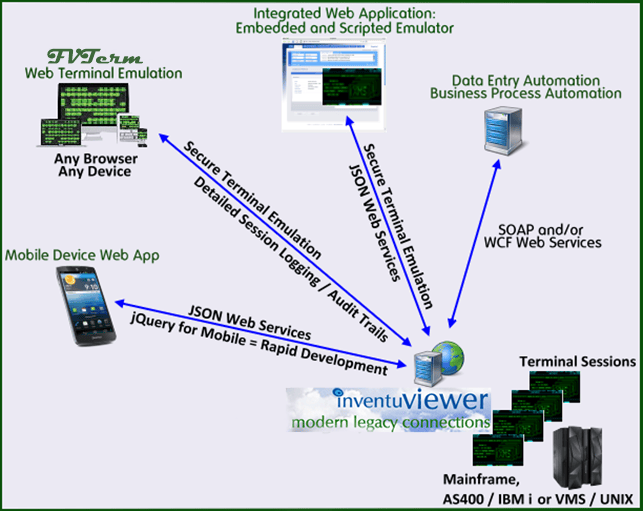
Legacy mainframe access terminal emulation refers to the software-based replication of traditional mainframe terminal interfaces—such as IBM’s 3270 or 5250—within modern operating systems and devices. Unlike physical terminals, these emulators run on PCs, thin clients, or even mobile platforms, preserving the user experience while abstracting the underlying hardware. The technology’s primary function is to maintain compatibility with mission-critical applications that were designed for obsolete hardware, ensuring continuity without forced modernization.What distinguishes this field is its dual role: it serves as both a compatibility layer and a security gateway. Enterprises deploy emulators not just to access legacy systems but to enforce encryption, audit trails, and role-based access controls—features that were nonexistent in the original terminal hardware. This duality makes legacy mainframe access terminal emulation a cornerstone of hybrid IT environments, where mainframes coexist with cloud and distributed systems.
Historical Background and Evolution
The origins of terminal emulation trace back to the 1970s, when IBM’s 3270 terminal became the de facto standard for mainframe interaction. These devices were purpose-built for specific protocols, such as BSC (Binary Synchronous Communication) or SNA (Systems Network Architecture), and lacked the flexibility of modern interfaces. As PCs gained prominence in the 1980s, software vendors developed emulators like Attachmate’s Extra! and IBM’s 3270 PC, allowing users to interact with mainframes via keyboard and monitor.The evolution accelerated in the 1990s with the rise of TCP/IP-based emulation, enabling cross-platform access. Vendors introduced graphical user interfaces (GUIs) to simplify navigation, while enterprises adopted terminal servers to centralize connections. Today, legacy mainframe access terminal emulation has expanded to include web-based interfaces, mobile apps, and even API-driven integrations, reflecting the shift toward digital workplaces.
Table of Contents
- The Complete Overview of Legacy Mainframe Access Terminal Emulation
- Historical Background and Evolution
- Core Mechanisms: How It Works
- Key Benefits and Crucial Impact
- Major Advantages
- Comparative Analysis
- Future Trends and Innovations
- Conclusion
- Comprehensive FAQs
- Q: What is the most common use case for legacy mainframe access terminal emulation?
- Q: Can terminal emulation be secured against modern cyber threats?
- Q: How does terminal emulation differ from screen scraping?
- Q: Are there open-source alternatives to commercial terminal emulators?
- Q: What industries rely most heavily on legacy mainframe access terminal emulation?
- Q: How can businesses future-proof their terminal emulation strategy?
Yet the core challenge remains unchanged: balancing backward compatibility with modern security and performance requirements. The emulation layer must not only replicate the terminal’s behavior but also adapt to evolving threats, such as man-in-the-middle attacks or data leakage risks.
Core Mechanisms: How It Works
At its core, legacy mainframe access terminal emulation operates through a combination of protocol translation and session management. When a user launches an emulator, the software establishes a connection to the mainframe host using protocols like TN3270 (for 3270 emulation) or TN5250 (for AS/400 systems). The emulator then renders the mainframe’s screen output in a format compatible with the client device, while translating user input back into the host’s expected format.The process involves several critical components:
1. Protocol Stack: Handles low-level communication between the client and host, including error correction and data framing.
2. Screen Rendering Engine: Converts mainframe character-based displays into graphical representations, often with customizable fonts and colors.
3. Session Management: Maintains persistent connections, supports multiple concurrent sessions, and handles disconnections gracefully.
4. Security Layer: Implements encryption (e.g., TLS), authentication (e.g., Kerberos), and audit logging to mitigate risks.
Advanced emulators also incorporate features like macro automation, screen scraping, and integration with enterprise resource planning (ERP) systems, blurring the line between terminal emulation and full-fledged application modernization.
Key Benefits and Crucial Impact
The persistence of legacy mainframe access terminal emulation stems from its ability to solve three critical problems: continuity, cost, and control. For enterprises with decades of investment in mainframe applications—often written in COBOL or PL/I—rewriting these systems is prohibitively expensive. Emulation provides a stopgap, allowing businesses to retain functionality while gradually modernizing interfaces. This approach is particularly valuable in industries like banking, insurance, and government, where legacy systems handle core operations.Beyond cost savings, emulation enhances security. Modern emulators include features like single sign-on (SSO), multi-factor authentication (MFA), and session timeouts, which were absent in original terminal hardware. They also enable centralized monitoring, reducing the risk of unauthorized access or data exposure.
> "Terminal emulation isn’t just about keeping old systems alive—it’s about extending their lifespan in a way that aligns with today’s security and compliance standards. The best implementations treat emulation as a strategic layer, not a technical afterthought." — John Smith, CTO of Legacy Systems Integration
Major Advantages
- Backward Compatibility: Ensures seamless access to applications designed for obsolete hardware, without requiring code rewrites.
- Cost Efficiency: Eliminates the need for physical terminals or costly mainframe upgrades, reducing total cost of ownership (TCO).
- Enhanced Security: Modern emulators support encryption, audit trails, and role-based access controls, addressing vulnerabilities in legacy systems.
- Flexibility and Scalability: Allows access from any device—PC, thin client, or mobile—while supporting high volumes of concurrent users.
- Integration Capabilities: Enables connectivity with modern tools like ERP systems, APIs, and cloud services, bridging the gap between old and new architectures.
Comparative Analysis
| Legacy Mainframe Access Terminal Emulation | Modern Web/Mobile Interfaces |
|---|---|
| Preserves original application logic and data formats. | Requires application rewrites or screen scraping for compatibility. |
| Supports high-performance batch processing and real-time transactions. | May introduce latency due to network dependencies. |
| Lower initial cost; no need for application modernization. | Higher upfront costs for development and testing. |
| Limited to mainframe-specific protocols (e.g., TN3270). | Protocol-agnostic but dependent on API availability. |
Future Trends and Innovations
The future of legacy mainframe access terminal emulation lies in its ability to evolve alongside emerging technologies. One key trend is the integration of AI and machine learning to automate repetitive tasks, such as data entry or report generation, within emulated sessions. Vendors are also exploring low-code/no-code platforms that allow business users to customize emulators without deep technical knowledge, reducing dependency on IT teams.Another innovation is the convergence of emulation with cloud services. Hybrid emulation solutions, which run emulators in the cloud while connecting to on-premises mainframes, promise to enhance scalability and disaster recovery. Additionally, the rise of edge computing may enable emulation at the device level, reducing latency for remote workers.
Despite these advancements, the core challenge remains: balancing innovation with the need for backward compatibility. Enterprises must decide whether to incrementally modernize their emulation layers or invest in full-scale application modernization—a choice that will define the next decade of mainframe integration.

Conclusion
Legacy mainframe access terminal emulation is more than a relic of the digital age—it’s a dynamic field that continues to adapt to modern demands. Its strength lies in its ability to preserve critical functionality while enabling gradual evolution. For enterprises, the choice isn’t between emulation and modernization but how to leverage emulation as a stepping stone toward a more agile future.As industries increasingly rely on legacy systems, understanding the mechanics, benefits, and limitations of terminal emulation becomes essential. The technology’s resilience proves that in enterprise IT, the past isn’t just prologue—it’s a foundation upon which innovation is built.
Comprehensive FAQs
Q: What is the most common use case for legacy mainframe access terminal emulation?
A: The primary use case is maintaining access to mission-critical applications—such as banking transaction systems, insurance policy management, or government record-keeping—that were designed for mainframe environments. Emulation allows these systems to remain operational without requiring costly rewrites or hardware replacements.
Q: Can terminal emulation be secured against modern cyber threats?
A: Yes, modern terminal emulators include advanced security features like TLS encryption, multi-factor authentication (MFA), and session auditing. Vendors also offer integration with enterprise security frameworks, such as SIEM (Security Information and Event Management) systems, to monitor and mitigate risks in real time.
Q: How does terminal emulation differ from screen scraping?
A: Terminal emulation replicates the entire terminal session, including protocols and data formats, while screen scraping extracts only the visible data from the mainframe screen. Emulation maintains a direct connection to the host, whereas scraping often introduces latency and dependency on the mainframe’s display logic.
Q: Are there open-source alternatives to commercial terminal emulators?
A: Yes, open-source options like x3270 (for 3270 emulation) and tn5250 (for AS/400) provide basic functionality. However, they lack the enterprise-grade features—such as advanced security, scalability, and integration tools—found in commercial solutions like IBM’s Host Access Transformation Services (HATS) or Attachmate’s Reflection.
Q: What industries rely most heavily on legacy mainframe access terminal emulation?
A: Industries with high regulatory compliance needs and long-standing mainframe investments, such as banking, insurance, healthcare, and government, depend most heavily on terminal emulation. These sectors often process vast amounts of data in batch or real-time transactions, making emulation a cost-effective solution for maintaining legacy system functionality.
Q: How can businesses future-proof their terminal emulation strategy?
A: Future-proofing involves adopting emulators with API capabilities, integrating AI for automation, and exploring hybrid cloud-emulation models. Businesses should also prioritize vendors that offer seamless upgrades and compatibility with emerging protocols, ensuring their emulation layer remains adaptable to evolving IT landscapes.
Leave a Comment
Comments are moderated before appearing. The data you submit is processed according to the Privacy Policy of Neip.