Unraveling nucleotide what is: The Science Behind Life’s Building Blocks
The smallest functional units of life are not atoms or cells, but nucleotides—tiny yet mighty molecules that encode heredity, power metabolism, and even drive evolution. When scientists dissect the question nucleotide what is, they uncover a system so precise that a single misplaced nucleotide can alter an organism’s fate. These chemical building blocks, often overshadowed by the grandeur of DNA’s double helix, are the unsung architects of biological information. Without them, genes would remain silent, proteins would never fold, and the language of heredity would dissolve into static.
The term nucleotide what is first surfaces in 19th-century biochemical research, but its significance only crystallized as scientists pieced together the puzzle of heredity. From the discovery of nucleic acids in 1869 to the 1953 revelation of DNA’s structure, nucleotides emerged as the linchpin of genetic continuity. Today, understanding nucleotide what is isn’t just academic—it’s a gateway to breakthroughs in medicine, synthetic biology, and even artificial intelligence-inspired genetic engineering. Yet for all their importance, these molecules remain mysterious to the general public, buried beneath layers of jargon and oversimplified explanations.
To grasp nucleotide what is fully requires peeling back the layers of biochemistry, genetics, and molecular biology. These aren’t just passive components; they’re dynamic players in cellular processes, from energy transfer (ATP) to genetic expression (messenger RNA). The story of nucleotides is one of precision, adaptability, and an almost poetic elegance—where a sequence of four chemical letters (A, T, C, G) can dictate the traits of a human, a virus, or a bacterium. Below, we dissect their structure, functions, and why the question nucleotide what is matters more than ever in an era of personalized medicine and bioengineering.
The Complete Overview of Nucleotides
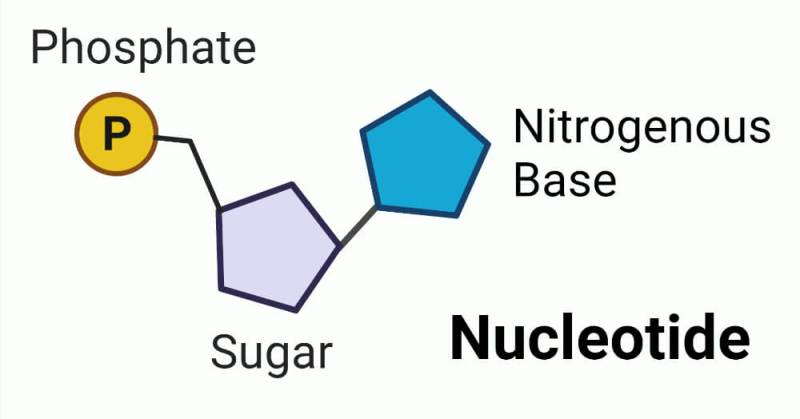
Nucleotides are the fundamental units that compose nucleic acids—DNA and RNA—the molecules responsible for storing and transmitting genetic information. When asking nucleotide what is, one must first recognize that these molecules are not merely static structures but active participants in nearly every biological process. Each nucleotide consists of three key components: a nitrogenous base (adenine, thymine, cytosine, guanine, or uracil), a five-carbon sugar (deoxyribose in DNA, ribose in RNA), and one to three phosphate groups. This tripartite structure enables nucleotides to serve dual roles: as information carriers (via their base sequences) and as energy currencies (via ATP, the cell’s primary energy molecule).The versatility of nucleotide what is extends beyond genetics. Nucleotides are the building blocks of coenzymes like NAD and FAD, which facilitate metabolic reactions, and they play critical roles in cell signaling and immune responses. Even the way nucleotides polymerize into strands—through phosphodiester bonds—illustrates their adaptability. DNA’s double helix relies on complementary base pairing (A-T, C-G) to maintain stability, while RNA’s single-stranded nature allows for folding into complex shapes that regulate gene expression. The question nucleotide what is thus opens a door to understanding not just heredity, but the very mechanics of life at a molecular level.
Historical Background and Evolution
The journey to answer nucleotide what is began with the isolation of nucleic acids in 1869 by Swiss chemist Friedrich Miescher, who extracted "nuclein" from white blood cells. Though Miescher didn’t recognize its significance, his discovery laid the groundwork for later researchers to identify nucleotides as the repeating units within these acids. By the early 20th century, scientists like Phoebus Levene proposed that nucleotides were composed of a sugar, phosphate, and base—but his "tetranucleotide hypothesis" (suggesting a repetitive, non-informational sequence) was later disproven by the work of Oswald Avery, Colin MacLeod, and Maclyn McCarty in 1944. Their experiments demonstrated that DNA, not proteins, carried genetic information, directly implicating nucleotides in heredity.The modern understanding of nucleotide what is crystallized in 1953 with James Watson and Francis Crick’s description of DNA’s double-helical structure, built from nucleotide pairs. This revelation transformed biology, proving that the sequence of nucleotides encoded genetic instructions. Subsequent decades saw nucleotides move from the lab to the clinic: the discovery of mRNA’s role in protein synthesis (1961) and the development of PCR (1983) further cemented their importance. Today, nucleotide what is isn’t just a biological question—it’s a technological one, as CRISPR and synthetic biology harness nucleotide sequences to edit genomes with unprecedented precision.
Core Mechanisms: How It Works
At its core, the functionality of nucleotide what is hinges on two primary mechanisms: base pairing and polymerization. The nitrogenous bases—adenine (A), thymine (T), cytosine (C), and guanine (G) in DNA (with uracil replacing T in RNA)—form hydrogen bonds that dictate how strands align. A always pairs with T (or U in RNA), and C always pairs with G, creating a stable, complementary template for replication and transcription. This specificity ensures that genetic information is faithfully copied during cell division, a process critical to evolution and development.Table of Contents
- The Complete Overview of Nucleotides
- Historical Background and Evolution
- Core Mechanisms: How It Works
- Key Benefits and Crucial Impact
- Major Advantages
- Comparative Analysis
- Future Trends and Innovations
- Conclusion
- Comprehensive FAQs
- Q: Are nucleotides only found in DNA and RNA?
- Q: How do mutations in nucleotides affect health?
- Q: Can nucleotides be artificially synthesized?
- Q: What role do nucleotides play in vaccines?
- Q: How do nucleotides contribute to aging?
- Q: Are there environmental factors that damage nucleotides?
Beyond their role in genetic encoding, nucleotides function as energy carriers through their phosphate groups. Adenosine triphosphate (ATP), for instance, releases energy when hydrolyzed to ADP, powering cellular processes from muscle contraction to neural signaling. RNA nucleotides, meanwhile, form complex structures like ribozymes (enzymatic RNA) and non-coding RNAs that regulate gene expression without ever being translated into protein. The question nucleotide what is thus encompasses not only the static "code" of DNA but the dynamic, metabolic workhorses that keep cells alive.
Key Benefits and Crucial Impact
The implications of nucleotide what is stretch across biology, medicine, and technology. In genetics, nucleotide sequences determine an organism’s traits, from eye color to disease susceptibility. In medicine, understanding these sequences has led to diagnostics for genetic disorders, personalized cancer therapies, and even gene-editing tools like CRISPR-Cas9. The ability to manipulate nucleotides—whether through synthetic biology or epigenetic modifications—holds promise for curing diseases once considered untreatable, such as sickle cell anemia or cystic fibrosis.Yet the impact of nucleotide what is extends beyond the lab. Agricultural biotechnology uses nucleotide sequencing to develop drought-resistant crops, while forensic science relies on DNA nucleotide patterns to solve crimes. Even the COVID-19 pandemic highlighted the urgency of nucleotide research, as mRNA vaccines (like those from Pfizer and Moderna) leveraged nucleotide technology to rapidly produce immunity. The question nucleotide what is is no longer confined to textbooks; it’s a driving force in modern innovation.
"Nucleotides are the alphabet of life. Without them, the language of genetics would be silent, and the machinery of biology would grind to a halt."
— Dr. Elizabeth Blackburn, Nobel Laureate in Physiology or Medicine
Major Advantages
- Genetic Precision: The specific sequence of nucleotides in DNA and RNA allows for exact replication and expression of genetic traits, ensuring stability across generations.
- Energy Transfer: ATP and other nucleotide-based molecules (e.g., GTP) provide the chemical energy necessary for cellular processes, from muscle movement to signal transduction.
- Regulatory Versatility: Non-coding RNAs and modified nucleotides (e.g., methylated cytosines) fine-tune gene expression without altering the underlying DNA sequence, enabling cellular adaptability.
- Medical Applications: Nucleotides are the foundation of PCR, DNA sequencing, and gene therapy, revolutionizing diagnostics, forensics, and treatment of genetic diseases.
- Biotechnological Innovation: Synthetic nucleotides enable the creation of artificial genes, biofuels, and even lab-grown organs, pushing the boundaries of what’s possible in biodesign.

Comparative Analysis
| Parameter | DNA Nucleotides | RNA Nucleotides |
|---|---|---|
| Sugar Component | Deoxyribose (lacks a hydroxyl group at the 2' carbon) | Ribose (contains a hydroxyl group at the 2' carbon) |
| Bases | Adenine (A), Thymine (T), Cytosine (C), Guanine (G) | Adenine (A), Uracil (U), Cytosine (C), Guanine (G) |
| Structure | Double-stranded helix (antiparallel strands) | Single-stranded (can fold into complex 3D shapes) |
| Primary Function | Long-term genetic storage and transmission | Gene expression, protein synthesis, regulation |
Future Trends and Innovations
The field of nucleotide research is on the cusp of transformative advancements. CRISPR-based gene editing, for instance, is refining the precision of nucleotide what is applications, allowing scientists to correct single-nucleotide polymorphisms (SNPs) linked to diseases. Meanwhile, synthetic biology is exploring artificial nucleotides—expanded genetic alphabets—that could encode entirely new biological functions, potentially leading to organisms with novel metabolic pathways or environmental adaptations. The rise of single-cell sequencing and spatial transcriptomics is also illuminating how nucleotide patterns vary across tissues, offering insights into development and disease.Another frontier is epigenetic editing, where modifications to nucleotide bases (e.g., methylation) are directly altered to treat conditions like cancer or neurological disorders. Companies are already developing "epi-drugs" that target these modifications, blurring the line between genetics and pharmacology. As nucleotide what is becomes more accessible through affordable sequencing and gene-editing tools, its applications will likely extend to anti-aging therapies, climate-resilient crops, and even interspecies genetic communication. The future of nucleotides isn’t just about understanding them—it’s about redefining what life itself can be.

Conclusion
The question nucleotide what is is deceptively simple, yet its answers underpin nearly every aspect of modern biology and medicine. From the double helix’s discovery to the mRNA vaccines of today, nucleotides have been the silent heroes of scientific progress. Their dual roles—as genetic blueprints and metabolic fuels—make them indispensable to life as we know it. As research pushes boundaries, the implications of nucleotide what is will only grow, potentially reshaping industries from agriculture to artificial intelligence.For scientists, students, and curious minds alike, nucleotides offer a window into the molecular machinery of existence. They remind us that life’s complexity is built on deceptively small components—each nucleotide a letter in the grand narrative of heredity, energy, and evolution. The more we unravel nucleotide what is, the closer we come to harnessing its power for the betterment of humanity.
Comprehensive FAQs
Q: Are nucleotides only found in DNA and RNA?
A: While DNA and RNA are the most well-known nucleic acids composed of nucleotides, these molecules also exist as standalone units in cells. For example, ATP (adenosine triphosphate) is a nucleotide that serves as the primary energy carrier, and cyclic AMP (cAMP) is a nucleotide-derived signaling molecule. Additionally, nucleotides like NAD+ and FAD are coenzymes essential for metabolism. Thus, nucleotides are far more than just genetic building blocks—they’re ubiquitous in cellular function.
Q: How do mutations in nucleotides affect health?
A: Mutations in nucleotide sequences can have profound health implications. A single-nucleotide polymorphism (SNP) might alter protein function, leading to conditions like sickle cell anemia or cystic fibrosis. Larger mutations, such as insertions or deletions, can disrupt entire genes, causing genetic disorders or increasing cancer risk. Even epigenetic modifications—like the methylation of cytosine nucleotides—can silence genes or trigger diseases if dysregulated. Understanding nucleotide what is at this level is critical for developing targeted therapies.
Q: Can nucleotides be artificially synthesized?
A: Yes, artificial nucleotides have been synthesized for research and biotechnological applications. For instance, scientists have created "unnatural base pairs" (e.g., d5SICS and dNaM) that expand the genetic alphabet beyond A, T, C, and G. These synthetic nucleotides enable the encoding of new amino acids or even entirely new biological functions. Companies like Synthetic Genomics and startups in gene editing are exploring how modified nucleotides could lead to breakthroughs in medicine, materials science, and environmental engineering.
Q: What role do nucleotides play in vaccines?
A: Nucleotides are central to modern vaccine technology, particularly in mRNA vaccines like those for COVID-19. These vaccines use synthetic nucleotide sequences that encode the spike protein of the virus, instructing cells to produce an immune response without causing infection. The stability and efficiency of mRNA depend on nucleotide modifications (e.g., pseudouridine) that reduce immune detection. This approach represents a paradigm shift in immunology, where nucleotide what is directly translates to rapid, scalable vaccine production.
Q: How do nucleotides contribute to aging?
A: Aging is linked to cumulative damage at the nucleotide level, including oxidative stress that causes DNA mutations, telomere shortening (due to nucleotide loss at chromosome ends), and epigenetic drift (changes in nucleotide modifications like methylation). Research into nucleotide what is has revealed that senescent cells often exhibit altered nucleotide repair mechanisms, contributing to age-related diseases. Therapies targeting nucleotide stability—such as telomerase activation or antioxidant treatments—are being explored to slow aging and extend healthspan.
Q: Are there environmental factors that damage nucleotides?
A: Yes, nucleotides are vulnerable to environmental stressors. Ultraviolet (UV) light causes thymine dimers in DNA, leading to mutations and skin cancer. Chemical exposure (e.g., tobacco smoke, benzene) can induce nucleotide modifications or breaks, increasing cancer risk. Even dietary factors—like deficiencies in folate or vitamin B12—can impair nucleotide synthesis and repair, causing genetic instability. Understanding these interactions helps in developing protective measures, from sunscreens to chemopreventive drugs.
Leave a Comment
Comments are moderated before appearing. The data you submit is processed according to the Privacy Policy of Neip.