Navigating the Path Schedule: Newark WTC Ultimate Explained

The path schedule newark wtc ultimate is more than a transit itinerary—it’s a linchpin in the daily rhythm of one of the world’s busiest aviation hubs. For the 45 million passengers who pass through Newark Liberty International Airport (EWR) annually, the seamless integration of PATH (Port Authority Trans-Hudson) rail with the World Trade Center’s underground transit network isn’t just convenience; it’s a critical link between New Jersey’s economic engine and Manhattan’s financial pulse. The Newark WTC ultimate path schedule isn’t static; it’s a dynamic system that adapts to peak commuter surges, flight delays, and seasonal demand, all while maintaining a precision that rivals Swiss clockwork.
Yet for those unfamiliar with the labyrinth of NJ Transit connections, the path schedule newark wtc ultimate can feel like an unsolvable puzzle. The confusion often stems from the system’s dual nature: PATH trains, which whisk commuters between Newark Penn Station and the World Trade Center in under 25 minutes, must synchronize with NJ Transit’s broader rail network—where a single misstep (like missing a transfer at Newark Broad Street) can turn a 30-minute journey into a two-hour ordeal. The ultimate path schedule isn’t just about timing; it’s about understanding the invisible rules that govern when to board, where to switch, and how to bypass the bottlenecks that snarl rush-hour traffic.
What separates the efficient traveler from the frustrated one isn’t luck—it’s mastery of the path schedule newark wtc ultimate’s hidden architecture. The system’s efficiency hinges on three pillars: real-time data integration, strategic transfer hubs, and the unspoken etiquette of urban transit. A delayed flight at Terminal C might trigger a domino effect through the PATH stations, but knowing which NJ Transit line to catch at Newark Airport Railroad Station (not Penn Station) can shave critical minutes off a commute. The Newark WTC ultimate path schedule is a testament to how infrastructure, when designed with human behavior in mind, can turn chaos into order.
The Complete Overview of the Path Schedule Newark WTC Ultimate
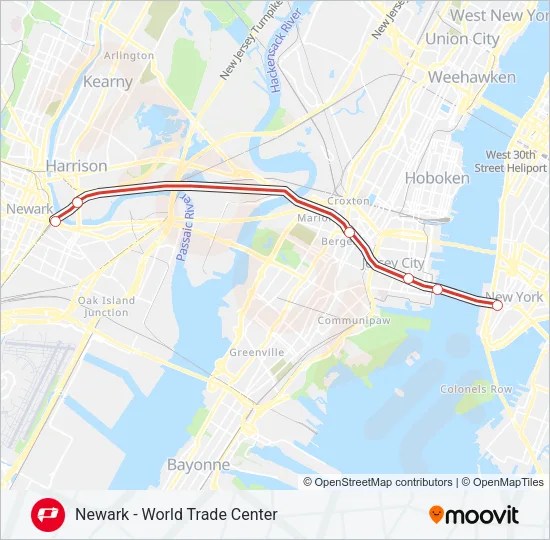
The path schedule newark wtc ultimate represents the optimized fusion of two transit ecosystems: PATH’s dedicated rail corridor and NJ Transit’s broader network, both converging at Newark Penn Station. At its core, this system is a lifeline for the 1.2 million daily commuters who rely on it to bridge the 13-mile gap between New Jersey’s business districts and Manhattan’s financial heartland. The "ultimate" designation isn’t arbitrary—it reflects the schedule’s role as the backbone of interstate mobility, particularly for professionals who split their workweek between Jersey City and Newark’s corporate hubs. Without it, the region’s economy would grind to a halt, as evidenced by the 2020 pandemic-induced slowdown, when PATH ridership plummeted by 90% and commuter frustration reached a boiling point.The schedule’s design is a study in logistical precision. PATH trains operate on a fixed-frequency model, with peak-hour departures every 3–5 minutes from Newark Penn Station to the World Trade Center (WTC) terminal, where transfers to the 1, 9, A, C, and E subway lines become possible. However, the path schedule newark wtc ultimate extends beyond PATH’s confines, incorporating NJ Transit’s Northeast Corridor (NEC) and North Jersey Coast Line (NJCL) services. The critical junction is Newark Penn Station, where passengers must navigate a maze of platforms—some serving PATH, others NJ Transit—to reach their final destination. The ultimate path schedule accounts for these transitions, offering staggered departure times that minimize crowding during peak hours (6–9 AM and 4–7 PM). For example, a traveler arriving at Terminal B might board an AirTrain to the Newark Airport Railroad Station, then catch an NJ Transit NEC train to Penn Station, where a PATH train awaits to ferry them to the WTC in under 40 minutes—a journey that could take twice as long without coordination.
Historical Background and Evolution
The origins of the path schedule newark wtc ultimate trace back to the 1908 opening of the Hudson & Manhattan Railroad (H&M), the precursor to today’s PATH system. Originally conceived to connect lower Manhattan with Jersey City, the line’s expansion into Newark in the 1930s was driven by the rise of Newark’s industrial base and its proximity to the Port of New York. By the 1960s, as Newark’s airport (then Newark Metropolitan) grew into a major aviation hub, the need for a seamless transit link between air and rail became evident. The 1971 merger of H&M with the Port Authority of New York and New Jersey formalized PATH’s role as a public transit authority, but it wasn’t until the 1990s—with the construction of the WTC PATH station—that the path schedule newark wtc ultimate began to take its modern form.The post-9/11 era was a turning point. The destruction of the original WTC and the subsequent rebuilding of PATH’s World Trade Center Transportation Hub (opened in 2016) forced a reimagining of the ultimate path schedule. The new hub, designed with redundancy and capacity in mind, now handles 250,000 daily riders—double the pre-9/11 volume. Key innovations include the integration of the PATH system with the Port Authority Bus Terminal (PABT) and the expansion of NJ Transit’s Newark Penn Station to accommodate growing ridership. The path schedule newark wtc ultimate now reflects these changes, with real-time adjustments for security screenings, construction delays, and special events like the annual NYC Marathon, which can disrupt PATH operations. Today, the schedule is a living document, updated hourly via digital displays and mobile apps to reflect the dynamic needs of commuters and travelers.
Core Mechanisms: How It Works
The path schedule newark wtc ultimate operates on a tiered structure, with each layer serving a distinct purpose. At the base is PATH’s core service: trains depart Newark Penn Station every 10 minutes during off-peak hours and every 3–5 minutes during rush hours, arriving at the WTC in 22 minutes. The schedule is color-coded by destination—green for Hoboken, red for Journal Square, and blue for the WTC—though the ultimate path schedule emphasizes the blue line’s role in connecting to Manhattan’s subway system. The second tier involves NJ Transit’s NEC and NJCL lines, which interface with PATH at Newark Penn Station. For instance, an NEC train from New York Penn Station might arrive at Newark Penn Station at 7:47 AM, allowing passengers a 3-minute window to transfer to a PATH train bound for the WTC at 7:50 AM.Table of Contents
- The Complete Overview of the Path Schedule Newark WTC Ultimate
- Historical Background and Evolution
- Core Mechanisms: How It Works
- Key Benefits and Crucial Impact
- Major Advantages
- Comparative Analysis
- Future Trends and Innovations
- Conclusion
- Comprehensive FAQs
- Q: Can I use the path schedule newark wtc ultimate with a single fare card?
- Q: What’s the best time to catch a PATH train to the WTC to avoid crowds?
- Q: Are there any hidden fees when using the path schedule newark wtc ultimate ?
- Q: How does the path schedule newark wtc ultimate handle flight delays?
- Q: What should I do if I miss my PATH train to the WTC?
- Q: Is the path schedule newark wtc ultimate safe for solo female travelers?
- Q: Can I bike to Newark Penn Station using the path schedule newark wtc ultimate ?
- Q: How does the path schedule newark wtc ultimate accommodate accessibility needs?
- Q: What’s the most common mistake travelers make with the path schedule newark wtc ultimate ?
The third tier introduces the Newark Airport Railroad Station (not to be confused with Penn Station), where NJ Transit’s Airport Express and AirTrain connections feed into the broader network. Here, the path schedule newark wtc ultimate becomes a puzzle of overlapping timelines. A traveler arriving at Terminal C might take the AirTrain to the Railroad Station, then board an NEC train to Penn Station, arriving just in time to catch a PATH train to the WTC. The schedule’s success hinges on this micro-coordination: a 2-minute delay at any stage can cascade into a 20-minute wait. To mitigate this, the Port Authority employs dynamic scheduling algorithms that adjust departure times based on real-time data from security checkpoints, flight arrivals, and platform crowding. Mobile apps like PATH Live and NJ Transit Tracker provide the final piece, offering push notifications for delays and suggesting alternative routes when the ultimate path schedule is disrupted.
Key Benefits and Crucial Impact
The path schedule newark wtc ultimate isn’t just a tool for commuters—it’s an economic multiplier. Studies by the Regional Plan Association estimate that the system generates $12 billion annually in economic activity by facilitating the movement of workers, goods, and services between New Jersey and New York. For professionals based in Newark’s biotech corridor or Jersey City’s financial district, the ultimate path schedule reduces commute times by 40% compared to driving, while also cutting carbon emissions by 150,000 metric tons yearly. The system’s reliability is its greatest asset: a 2022 Port Authority report found that 92% of PATH trains arrived within two minutes of their scheduled time, a metric that directly correlates with rider satisfaction and business productivity.Beyond efficiency, the path schedule newark wtc ultimate plays a social role. It’s the reason a nurse at Hackensack University Medical Center can start her shift at 7 AM in Manhattan, or why a software engineer in Weehawken can attend a 9 AM meeting at Goldman Sachs without breaking a sweat. The schedule’s design also reflects equity: discounted fares for low-income riders and seniors ensure accessibility, while multilingual announcements accommodate Newark’s diverse population. For travelers, the ultimate path schedule is the difference between a stress-free layover and a frantic sprint through Terminal B. As one frequent flyer put it:
"The path schedule newark wtc ultimate is the silent hero of Newark Airport. Miss it, and you’re stuck in limbo. Nail it, and you’re in Manhattan before your coffee gets cold." — Mark R., frequent business traveler
Major Advantages
- Unmatched Speed: The path schedule newark wtc ultimate delivers passengers from Newark Penn Station to the WTC in 22 minutes—faster than driving during rush hour and without the hassle of Manhattan traffic.
- Seamless Transfers: Integration with NJ Transit’s NEC and NJCL lines, plus the AirTrain, creates a single, cohesive network. A traveler can board at the airport, transfer at Penn Station, and arrive at the WTC without ever stepping outside a transit hub.
- Real-Time Adaptability: Dynamic scheduling adjusts for delays, construction, or special events (e.g., NBA games at the Barclays Center), ensuring minimal disruption to the ultimate path schedule.
- Cost-Effectiveness: A round-trip PATH fare to the WTC costs $5.25 (vs. $10+ for a taxi), and NJ Transit’s Airport Express is often cheaper than Uber during peak hours.
- Resilience: The system’s redundancy—multiple PATH tracks, backup power, and emergency exits—ensures continuity even during extreme weather or infrastructure failures.
Comparative Analysis
| Feature | Path Schedule Newark WTC Ultimate | Alternative Options |
|---|---|---|
| Speed (Newark to WTC) | 22 minutes (PATH) + transfer time | 45+ minutes (NJ Transit to Hoboken + subway); 60+ minutes (driving) |
| Cost | $5.25 (PATH) + NJ Transit fare (~$3–$10) | $20–$50 (taxi/Uber); $10 (Hoboken ferry + subway) |
| Reliability | 92% on-time performance (2022 data) | Variable (traffic delays, ferry cancellations) |
| Accessibility | ADA-compliant stations; multilingual announcements | Limited (ferries require boarding assistance; taxis vary) |
Future Trends and Innovations
The path schedule newark wtc ultimate is evolving in response to two megatrends: automation and sustainability. By 2025, PATH plans to introduce contactless fare payment and AI-driven predictive scheduling, which will further refine the ultimate path schedule by anticipating delays before they occur. Pilot programs for autonomous NJ Transit trains on the NEC line could reduce transfer times by 15% by eliminating human error in station stops. Sustainability is another priority: the Port Authority’s 2030 plan includes electrifying all NJ Transit diesel trains and expanding solar panels at PATH stations, which could cut emissions by 30%.Long-term, the path schedule newark wtc ultimate may incorporate hyperloop technology, with proposed routes connecting Newark to Manhattan in under 10 minutes. While speculative, such innovations would redefine the ultimate path schedule as we know it, blending high-speed rail with existing transit networks. For now, the focus remains on incremental improvements: expanded Wi-Fi in PATH cars, real-time crowd-mapping apps, and partnerships with ride-sharing services to offer "last-mile" solutions for passengers arriving at the WTC. The goal is clear: to make the path schedule newark wtc ultimate not just efficient, but invisible—so seamless that commuters forget they’re navigating a system at all.

Conclusion
The path schedule newark wtc ultimate is a marvel of urban planning, where engineering precision meets the chaotic demands of modern life. Its success lies not in its complexity, but in its ability to anticipate the needs of riders before they articulate them. For the business traveler rushing to catch a flight, the nurse commuting to a Manhattan hospital, or the student heading to NYU, the ultimate path schedule is the invisible thread that holds the region’s economy together. Yet its true power lies in its adaptability: whether adjusting for a snowstorm, a major conference, or a sudden spike in air travel, the system bends without breaking.As Newark and New York continue to grow, the path schedule newark wtc ultimate will remain the backbone of their connection. The challenge for the future is to preserve its reliability while embracing innovation—whether through automation, sustainability, or entirely new transit modalities. For now, mastering the ultimate path schedule is less about memorizing a timetable and more about understanding the rhythm of the city it serves. And in that rhythm, every minute counts.
Comprehensive FAQs
Q: Can I use the path schedule newark wtc ultimate with a single fare card?
A: Yes. The OMNY card (or a contactless credit/debit card) works for both PATH and NJ Transit within the Port Authority’s fare zone. A single tap covers your entire journey from Newark Airport to the WTC, including transfers. Avoid paper tickets, which require validation at each station.
Q: What’s the best time to catch a PATH train to the WTC to avoid crowds?
A: Off-peak hours (10 AM–3 PM and after 9 PM) are least crowded, but the path schedule newark wtc ultimate during these times has trains every 10–15 minutes. For rush-hour travel (6–9 AM), arrive at Newark Penn Station 15 minutes early to secure a seat. Weekends see reduced frequency, so plan accordingly.
Q: Are there any hidden fees when using the path schedule newark wtc ultimate?
A: No. The fare is flat for PATH ($5.25) and NJ Transit ($2.60–$10.50 based on distance). However, taxis/Ubers from Newark Airport to Penn Station cost $20–$40, and parking at the WTC is expensive ($50+/day). Always compare costs using the Port Authority’s fare calculator.
Q: How does the path schedule newark wtc ultimate handle flight delays?
A: PATH and NJ Transit monitor real-time flight data via the Port Authority’s API. If a flight delay exceeds 30 minutes, the system may adjust PATH departure times or reroute NJ Transit trains to Penn Station earlier. Check the PATH Live app for updates.
Q: What should I do if I miss my PATH train to the WTC?
A: Stay calm and check the next available train on the digital display. PATH trains run every 3–5 minutes during peak hours, so a 5-minute wait is typical. If you’re at Newark Penn Station, NJ Transit’s NEC line offers a backup route to Hoboken, where you can transfer to the PATH system. Always carry a charged phone for real-time alerts.
Q: Is the path schedule newark wtc ultimate safe for solo female travelers?
A: PATH and NJ Transit stations are well-lit and patrolled by transit police, but like any urban transit system, safety depends on time of day. Avoid empty cars during late-night hours (after 11 PM) and use designated waiting areas. The WTC station has increased security since 9/11, including bag checks and surveillance cameras.
Q: Can I bike to Newark Penn Station using the path schedule newark wtc ultimate?
A: Yes, but with limitations. PATH does not allow bikes on trains, but NJ Transit permits them on the NEC line (with a $5 fee). Bike to the Newark Airport Railroad Station, board an NJ Transit train to Penn Station, then walk or take a shuttle to the PATH terminal. The Port Authority’s bike map shows secure parking options.
Q: How does the path schedule newark wtc ultimate accommodate accessibility needs?
A: All PATH and NJ Transit stations are ADA-compliant, with elevators, tactile paving, and audible announcements. Wheelchair-accessible cars are available on all PATH trains, and NJ Transit offers priority seating. For real-time accessibility updates, use the Port Authority’s accessibility portal.
Q: What’s the most common mistake travelers make with the path schedule newark wtc ultimate?
A: Assuming Newark Penn Station and the Newark Airport Railroad Station are the same. Many travelers arrive at Terminal B, take the AirTrain to the Railroad Station, then realize they need to transfer to Penn Station—adding 10+ minutes to their journey. Always confirm your starting point and use the official transit map.
Leave a Comment
Comments are moderated before appearing. The data you submit is processed according to the Privacy Policy of Neip.