Navigating Peoplesoft Login TA: A Definitive Manual for Users
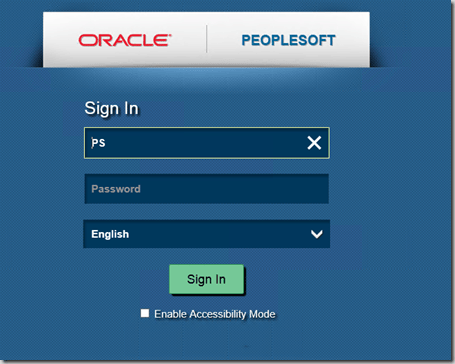
Every enterprise relying on Oracle’s PeopleSoft Talent Acquisition (TA) system knows the frustration of a stalled login process—whether it’s forgotten credentials, misconfigured permissions, or a system glitch that locks users out during critical hiring cycles. The Peoplesoft login TA interface, while robust, demands precision. A single misplaced character in the URL or an outdated browser can derail an entire recruitment workflow, leaving HR teams scrambling to onboard talent while IT scrambles to resolve access issues.
Yet, beneath the surface of these common pain points lies a system designed for scalability, compliance, and integration with broader HR ecosystems. The PeopleSoft Talent Acquisition login portal serves as the gateway to streamlining everything from applicant tracking to offer management, but its effectiveness hinges on user proficiency. Missteps here don’t just delay processes—they can expose vulnerabilities in data security or compliance, especially when dealing with sensitive candidate information under regulations like GDPR or CCPA.
For administrators and end-users alike, mastering the PeopleSoft TA login process isn’t just about memorizing steps—it’s about understanding the architecture behind it. Why does the system redirect users unexpectedly? What triggers a "session expired" error mid-interview? And how can organizations preemptively mitigate these disruptions? The answers lie in dissecting the technical underpinnings, historical context, and evolving best practices that govern this cornerstone of enterprise HR technology.
The Complete Overview of Peoplesoft Login TA
The PeopleSoft Talent Acquisition login is the digital handshake between organizations and their recruitment pipelines, a critical junction where technology meets human resources strategy. At its core, this login system is part of Oracle’s broader PeopleSoft HCM suite, a legacy platform that has undergone significant modernization to adapt to cloud-based, mobile-first workflows. For HR professionals, the login isn’t merely a gateway—it’s the first line of defense in maintaining data integrity, ensuring audit trails, and complying with industry standards. A failed login attempt isn’t just an inconvenience; it’s a potential red flag for deeper systemic issues, such as misconfigured role-based access controls or outdated security protocols.
What distinguishes the PeopleSoft TA login process from other HRIS platforms is its deep integration with Oracle’s database architecture. Unlike standalone applicant tracking systems (ATS), PeopleSoft TA is designed to operate within a unified HR ecosystem, where login credentials often sync with other modules like Time and Labor or Compensation. This interconnectedness means that a login problem in TA can ripple across departments, disrupting everything from payroll processing to performance reviews. For organizations still running on-premise versions, the login process may involve additional layers of VPN or network authentication, adding complexity to troubleshooting.
Historical Background and Evolution
The origins of PeopleSoft’s Talent Acquisition module trace back to the late 1990s, when Oracle acquired the company in 2005, integrating its HR solutions into a broader enterprise suite. Initially, the PeopleSoft login TA was a proprietary, client-server-based system, requiring physical infrastructure and manual updates—a far cry from today’s cloud-native platforms. Early adopters faced significant challenges, including cumbersome login procedures that demanded IT intervention for even minor adjustments. The transition to web-based interfaces in the 2000s marked a turning point, allowing remote access and reducing dependency on local servers, though legacy systems still linger in some enterprises.
Table of Contents
- The Complete Overview of Peoplesoft Login TA
- Historical Background and Evolution
- Core Mechanisms: How It Works
- Key Benefits and Crucial Impact
- Major Advantages
- Comparative Analysis
- Future Trends and Innovations
- Conclusion
- Comprehensive FAQs
- Q: Why does my PeopleSoft TA login keep redirecting me to a different page after entering credentials?
- Q: How can I reset a forgotten PeopleSoft Talent Acquisition login password?
- Q: What should I do if I’m locked out of the PeopleSoft TA login portal after multiple failed attempts?
- Q: Can I access PeopleSoft TA login from a mobile device, and if so, which browsers are supported?
- Q: How do I troubleshoot a "Session Expired" error during the PeopleSoft TA login process ?
- Q: Is there a way to integrate PeopleSoft TA login credentials with external applicant tracking systems (ATS) like Greenhouse or Lever?
Today, the evolution of PeopleSoft TA login reflects broader trends in HR technology: the shift from monolithic systems to modular, API-driven architectures. Oracle’s PeopleSoft Cloud Applications, introduced in the 2010s, introduced single sign-on (SSO) capabilities, reducing password fatigue and improving security. However, organizations with hybrid setups—those still using on-premise TA alongside cloud modules—often encounter login inconsistencies due to disparate authentication protocols. This hybrid complexity is why many IT teams now advocate for a phased migration to Oracle’s Fusion Cloud HCM, which consolidates login processes under a unified identity management framework.
Core Mechanisms: How It Works
The PeopleSoft Talent Acquisition login operates on a role-based access control (RBAC) model, where user permissions are tied to predefined roles such as "Recruiter," "Hiring Manager," or "Admin." When a user attempts to log in, the system verifies their credentials against the PeopleSoft database, then cross-references them with the assigned role to determine accessible features. For example, a recruiter may have full access to candidate profiles but limited visibility into salary negotiations, whereas an HR director might oversee both. This granularity is both a strength and a potential pitfall—misconfigured roles can lead to unauthorized access or, conversely, locked-out users during peak hiring seasons.
Technically, the login process involves multiple layers: the front-end portal (often accessed via a URL like `https://[client].psftpeople.com/ps/careersection/`) communicates with the PeopleSoft application server, which then queries the database for authentication. SSL encryption ensures data transmission security, but vulnerabilities can arise if the system isn’t regularly patched. For organizations using SSO, the login may redirect users to an identity provider like Okta or Azure AD, adding another authentication step. Understanding these mechanics is crucial for troubleshooting—whether it’s a stalled login due to a session timeout or a role assignment error that prevents access to critical TA functions.
Key Benefits and Crucial Impact
The PeopleSoft TA login system is more than a functional necessity—it’s a linchpin for operational efficiency in modern HR departments. By centralizing applicant data, streamlining workflows, and integrating with other HR modules, the login process enables organizations to reduce time-to-hire, improve candidate experience, and maintain compliance with labor laws. For example, a seamless login experience can mean the difference between a candidate accepting an offer within 48 hours or losing them to a competitor with a more agile digital interface. Conversely, login failures during high-volume hiring periods can lead to reputational damage, as frustrated recruiters resort to manual workarounds that introduce errors.
Beyond efficiency, the login system plays a pivotal role in data security. With cyber threats targeting HR systems—particularly those handling sensitive personal data—the PeopleSoft TA login portal must adhere to stringent authentication protocols. Multi-factor authentication (MFA), biometric verification, and IP-based restrictions are increasingly being layered into login processes to mitigate risks. However, the trade-off between security and usability remains a challenge: overly complex login requirements can deter users, leading to shadow IT practices where recruiters bypass official portals for spreadsheets or third-party tools.
"The most secure login system is one that users won’t circumvent. PeopleSoft TA’s strength lies in its balance of robust security and intuitive design—when configured correctly."
— Sarah Chen, Director of HR Technology, Deloitte
Major Advantages
- Unified HR Ecosystem: The PeopleSoft TA login integrates seamlessly with other HCM modules (e.g., Compensation, Time and Labor), eliminating silos and reducing data duplication. For instance, a new hire’s login credentials can auto-provision across systems, streamlining onboarding.
- Compliance and Audit Trails: Every login attempt is logged, providing a timestamped record of user activity. This is critical for compliance with regulations like the Fair Credit Reporting Act (FCRA), which governs background checks conducted via TA.
- Customizable Workflows: Administrators can tailor the login experience—such as adding custom fields for candidate self-service or redirecting users to specific dashboards—without requiring IT intervention.
- Scalability for Enterprise Needs: Whether handling 100 or 10,000 applicants, the system scales without performance degradation, a key advantage for global organizations with decentralized hiring teams.
- Legacy System Support: For organizations still using on-premise PeopleSoft, the login process can be configured to sync with cloud-based TA modules, preserving existing investments while enabling gradual modernization.

Comparative Analysis
| Feature | PeopleSoft TA Login | Workday Recruiting | SAP SuccessFactors |
|---|---|---|---|
| Authentication Method | Role-based RBAC, SSO, MFA (configurable) | Single sign-on with Okta/Google integration | Identity Authentication Service (IAS) with biometric options |
| Integration Capability | Deep Oracle HCM integration; limited third-party APIs | Open API framework; broad ecosystem (e.g., LinkedIn, Greenhouse) | SAP Cloud Platform integration; strong ERP synergy |
| Customization Flexibility | High for on-premise; restricted in cloud versions | Extensive via Workday Studio | Moderate; governed by SAP’s release cycles |
| Cost of Ownership | High for on-premise; cloud pricing varies by module | Subscription-based; scalable pricing | Enterprise licensing with premium support |
Future Trends and Innovations
The future of PeopleSoft TA login is being shaped by two competing forces: Oracle’s push to phase out legacy systems in favor of Fusion Cloud HCM, and the growing demand for AI-driven recruitment tools. Early adopters are already testing adaptive authentication, where login requirements dynamically adjust based on user behavior—such as flagging unusual access times or locations. For example, a recruiter logging in from a new IP address might be prompted for an additional verification step, reducing the risk of credential theft. Meanwhile, Oracle’s investment in PeopleSoft’s AI capabilities could lead to predictive login assistance, where the system anticipates user needs (e.g., auto-filling candidate details during offer letters) based on historical data.
Another emerging trend is the convergence of TA login systems with external talent platforms. Organizations are increasingly using PeopleSoft TA login credentials to authenticate users in third-party tools like LinkedIn Recruiter or Indeed, creating a unified candidate experience. However, this integration introduces new challenges, such as managing consent for data sharing across platforms. As regulations like GDPR tighten, the login process will need to evolve to include explicit user consent mechanisms, such as granular permission toggles for data access. For IT teams, this means rethinking identity governance frameworks to align with both internal and external compliance requirements.

Conclusion
The PeopleSoft Talent Acquisition login is far more than a functional step in the recruitment process—it’s the backbone of an organization’s hiring strategy, security posture, and compliance efforts. While the system’s legacy architecture presents challenges, particularly for organizations still navigating on-premise vs. cloud transitions, its adaptability has kept it relevant in an era dominated by agile, cloud-native alternatives. The key to leveraging its full potential lies in proactive management: regular audits of role assignments, investment in SSO and MFA, and staying ahead of Oracle’s modernization roadmap.
For users, understanding the nuances of the PeopleSoft TA login process—from troubleshooting common errors to optimizing workflows—can mean the difference between a seamless hiring experience and a series of avoidable disruptions. As the system continues to evolve, the focus will shift from merely accessing the portal to harnessing its data for predictive insights, such as identifying bottlenecks in the candidate pipeline or forecasting hiring needs. In this context, the login isn’t just the first step—it’s the foundation upon which the future of talent acquisition is built.
Comprehensive FAQs
Q: Why does my PeopleSoft TA login keep redirecting me to a different page after entering credentials?
A: This typically occurs due to one of three issues:
- An outdated browser cache—clear cookies and try again.
- A misconfigured SSO setting, where the system expects authentication via a third-party identity provider (e.g., Okta). Check with your IT admin for the correct login URL.
- A role assignment error, where your user profile lacks permissions for the TA module. Verify your role in the PeopleSoft Security Console.
Q: How can I reset a forgotten PeopleSoft Talent Acquisition login password?
A: The process varies by deployment:
- Cloud-based TA: Use the "Forgot Password" link on the login page. You’ll receive a reset link via email, which expires after 24 hours.
- On-premise TA: Submit a ticket to your IT department, as password resets require database-level access. Some organizations use a self-service portal with approval workflows.
- SSO-enabled logins: Reset passwords via your identity provider (e.g., Azure AD or Okta) instead of the PeopleSoft portal.
Q: What should I do if I’m locked out of the PeopleSoft TA login portal after multiple failed attempts?
A: PeopleSoft enforces account lockout policies to prevent brute-force attacks. If locked out:
- Wait 15–30 minutes, then try logging in again.
- If locked out permanently, contact your administrator to unlock the account via the `PSACCOUNT` table.
- For SSO users, check if the lockout is tied to the identity provider (e.g., Okta may have separate policies).
Q: Can I access PeopleSoft TA login from a mobile device, and if so, which browsers are supported?
A: Yes, but with limitations:
- Supported browsers: Chrome (latest version), Safari (iOS), or Edge (with compatibility mode enabled). Avoid Firefox due to occasional rendering issues.
- Mobile considerations: The TA portal is not fully responsive; use landscape mode on tablets. For iPhones, enable "Request Desktop Site" in Settings.
- VPN requirement: If your organization uses on-premise TA, connect to the corporate VPN first. Mobile data may trigger geo-blocking.
Q: How do I troubleshoot a "Session Expired" error during the PeopleSoft TA login process?
A: Session timeouts are often caused by inactivity or server-side issues. Try these steps:
- Check session timeout settings: Default is 30 minutes, but admins may adjust this in `PSOPTIONS`. Ask IT for the configured value.
- Disable browser extensions: Ad blockers or privacy tools (e.g., uBlock Origin) can interfere with session cookies.
- Clear temporary files: Delete cookies for `psftpeople.com` and restart the browser.
- Server-side checks: If the issue is widespread, the PeopleSoft application server may be overloaded. Monitor CPU usage via Oracle Enterprise Manager.
Q: Is there a way to integrate PeopleSoft TA login credentials with external applicant tracking systems (ATS) like Greenhouse or Lever?
A: Yes, but integration requires API access and careful configuration:
- Oracle’s Talent Acquisition Cloud (TAC): Offers pre-built connectors for Greenhouse, Workday, and others via the Oracle Integration Cloud (OIC).
- Custom API development: PeopleSoft’s RESTful web services can be used to sync candidate data, but this requires SQL expertise and may violate licensing terms.
- SSO pass-through: If using Azure AD or Okta, configure SAML-based SSO to allow single sign-on between systems.
Leave a Comment
Comments are moderated before appearing. The data you submit is processed according to the Privacy Policy of Neip.