How What Does Systematic Mean Shapes Logic, Science, and Daily Life

The word systematic carries weight—it signals intention, precision, and a refusal of chaos. When someone asks, "What does systematic mean?", they’re probing deeper than mere organization. They’re asking about the framework that turns randomness into predictability, intuition into evidence, and guesswork into strategy. This isn’t just about tidiness; it’s about embedding rigor into every process, from laboratory experiments to corporate workflows.
At its core, a systematic approach is the antithesis of ad-hoc. It demands structure—not because order is inherently good, but because without it, progress stalls. Consider the difference between a chef improvising a recipe and one following a meticulously tested method. The latter ensures consistency, scalability, and reproducibility. That’s the power of systematicity: it transforms human effort into a science.
Yet the term is often misapplied. Many conflate "systematic" with "methodical," assuming both imply rigid, bureaucratic processes. But true systematic thinking is adaptive—it’s a dynamic interplay of rules, feedback loops, and iterative refinement. It’s why a botanist classifying plant species uses a taxonomy, why a software engineer writes modular code, and why a therapist applies evidence-based protocols. Each field leverages systematic principles to minimize error and maximize insight.
The Complete Overview of What Does Systematic Mean
The question "what does systematic mean" cuts across disciplines, revealing a universal truth: systems thrive on rules. Whether in natural sciences, artificial intelligence, or personal productivity, systematic methods reduce complexity by breaking problems into manageable components. This isn’t just theoretical—it’s observable. A clinical trial’s success hinges on systematic protocols; a stock trader’s algorithm relies on systematic risk models. Even everyday habits, like meal prepping or time-blocking, are systematic in nature—they replace spontaneity with deliberate structure.What distinguishes systematic thinking is its intentionality. It’s not passive; it’s a conscious rejection of trial-and-error in favor of tested frameworks. This doesn’t mean systems are infallible—far from it. Systematic errors (like bias in data collection) are a well-documented flaw, proving that even the most rigorous methods require vigilance. The key lies in the balance: structure without rigidity, precision without dogma.
Historical Background and Evolution
The concept of systematic thinking traces back to ancient civilizations, where early scholars like Aristotle systematized logic into syllogisms. His Organon wasn’t just a text—it was the first blueprint for structured reasoning. Fast-forward to the 17th century, and René Descartes’ Discourse on Method formalized systematic doubt as a path to truth. These weren’t isolated ideas; they were the seeds of modern methodology.The Industrial Revolution accelerated the demand for systematic approaches. Factories needed standardized processes to scale production; engineers required repeatable measurements to build bridges and machines. Karl Marx’s critique of capitalism, for instance, wasn’t just economic—it was a systematic analysis of labor exploitation, exposing flaws in the prevailing order. Meanwhile, Charles Darwin’s On the Origin of Species demonstrated how systematic observation of natural variations could revolutionize biology. Each era reinforced one truth: what does systematic mean is evolving, but its essence—structured inquiry—remains constant.
Core Mechanisms: How It Works
Systematic methods operate on three pillars: definition, repetition, and validation. First, problems are defined with clarity—ambiguity is the enemy of systematic thinking. Second, processes are repeated under controlled conditions to isolate variables. Third, results are validated against benchmarks or peer review. This triad ensures reliability, whether in a lab or a boardroom.Table of Contents
- The Complete Overview of What Does Systematic Mean
- Historical Background and Evolution
- Core Mechanisms: How It Works
- Key Benefits and Crucial Impact
- Major Advantages
- Comparative Analysis
- Future Trends and Innovations
- Conclusion
- Comprehensive FAQs
- Q: Can systematic approaches ever be too rigid?
- Q: How does systematic thinking differ from critical thinking?
- Q: Are there industries where systematic approaches are less important?
- Q: How can individuals apply systematic thinking to personal goals?
- Q: What’s the relationship between systematic error and bias?
- Q: Can AI be truly systematic, or does it introduce new chaos?
The beauty of systematic approaches lies in their scalability. A chef’s recipe can feed one person or a thousand; a software patch can fix a bug in one system or a global network. The framework adapts, but the principles endure. Even in creative fields, systematicity thrives—think of how musicians use scales to improvise or writers outline stories before drafting. The "system" here isn’t restrictive; it’s a toolkit for creativity.
Key Benefits and Crucial Impact
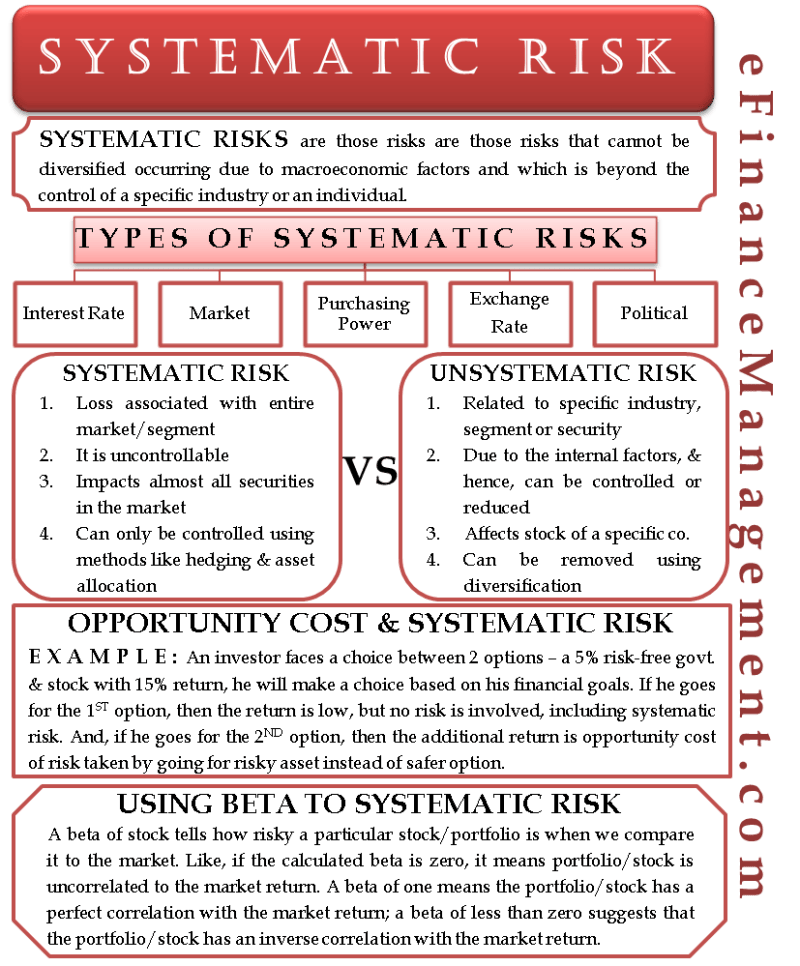
Asking "what does systematic mean" in practical terms reveals its transformative potential. Systematic approaches eliminate guesswork, replacing it with data-driven decisions. In medicine, systematic reviews of clinical trials save lives by distilling decades of research into actionable guidelines. In business, systematic risk assessment prevents catastrophic losses. The impact isn’t just efficiency—it’s trust. When processes are systematic, stakeholders—whether patients, investors, or customers—can rely on consistency.The flip side is equally telling: unsystematic chaos leads to waste, error, and failure. Consider the 2008 financial crisis, where unchecked speculation lacked systematic safeguards. Or the replication crisis in psychology, where flawed methodologies produced unreliable results. These failures underscore a harsh truth: what does systematic mean isn’t just about order—it’s about survival.
"Systematic error is the silent killer of progress. It doesn’t announce itself with fanfare; it creeps in through overlooked variables, assumptions, and biases." — Karl Popper, philosopher of science
Major Advantages
- Reproducibility: Systematic methods ensure experiments, analyses, or procedures can be replicated by others, validating findings and building collective knowledge.
- Error Minimization: By isolating variables and controlling conditions, systematic approaches reduce human error and external interference.
- Scalability: A well-designed system—whether a manufacturing line or a digital algorithm—can expand without proportional increases in complexity.
- Adaptability: Systematic frameworks aren’t static; they evolve through feedback loops, allowing them to address new challenges without losing coherence.
- Accountability: Clear, documented processes create audit trails, making it easier to trace decisions, identify flaws, and assign responsibility.
Comparative Analysis
| Systematic Approach | Ad-Hoc Approach |
|---|---|
| Relies on predefined rules, protocols, and benchmarks. | Operates on intuition, improvisation, and experience. |
| Highly reproducible; results can be verified by others. | Results vary based on context and individual judgment. |
| Ideal for large-scale, complex, or high-stakes scenarios (e.g., aerospace, healthcare). | Better suited for one-time, low-risk, or highly creative tasks (e.g., brainstorming, art). |
| Requires upfront investment in design and documentation. | Demands expertise and quick adaptability from individuals. |
Future Trends and Innovations
The future of systematic thinking is being reshaped by technology. Machine learning, for instance, automates systematic pattern recognition, but it also introduces new risks—like algorithmic bias if training data is unsystematic. Meanwhile, fields like systems biology and complex systems theory are pushing boundaries by modeling interactions across scales, from molecules to societies.Another frontier is human-system integration. As AI and automation handle repetitive tasks, humans must focus on designing meta-systems—frameworks that govern how systems interact with each other and with people. The challenge? Ensuring these systems remain transparent, ethical, and adaptable. What does systematic mean in this era? It means building resilience into complexity itself.

Conclusion
The question "what does systematic mean" isn’t just academic—it’s a lens through which we examine progress. From the rigor of scientific method to the efficiency of modern logistics, systematic approaches underpin nearly every advancement. Yet their power isn’t absolute; they demand humility. Even the most systematic models fail when fed flawed assumptions or ignored edge cases.The takeaway? Systematic thinking isn’t about eliminating human judgment—it’s about channeling it. It’s the difference between a pilot flying by instinct and one using checklists to avoid disaster. In an age of information overload, the ability to ask "what does systematic mean" and apply it thoughtfully may be the most valuable skill of all.
Comprehensive FAQs
Q: Can systematic approaches ever be too rigid?
A: Yes. Overly rigid systems stifle innovation and fail to adapt to unforeseen variables. The key is adaptive systematicity—designing frameworks flexible enough to evolve while maintaining core principles. Fields like agile methodology balance structure with responsiveness.
Q: How does systematic thinking differ from critical thinking?
A: Systematic thinking focuses on structure—defining steps, controlling variables, and ensuring reproducibility. Critical thinking, meanwhile, evaluates assumptions, challenges biases, and seeks deeper truths. Both are complementary; systematic methods provide the "how," while critical thinking questions the "why."
Q: Are there industries where systematic approaches are less important?
A: While systematic methods dominate high-stakes fields (e.g., medicine, engineering), creative industries like art or comedy rely more on spontaneity. However, even here, systematic elements exist—think of a comedian’s structured joke-writing process or a painter’s color theory.
Q: How can individuals apply systematic thinking to personal goals?
A: Start by breaking goals into actionable steps (e.g., SMART goals). Use templates for recurring tasks (e.g., meal plans, workout routines). Track progress systematically—data reveals patterns, not just effort. Finally, review and refine your methods iteratively.
Q: What’s the relationship between systematic error and bias?
A: Systematic error occurs when a flaw consistently skews results (e.g., a miscalibrated scale). Bias is a broader concept—it can be systematic (e.g., algorithmic bias in hiring tools) or random. Both undermine reliability, but while error is often technical, bias is often cultural or psychological.
Q: Can AI be truly systematic, or does it introduce new chaos?
A: AI emulates systematic processes (e.g., training data → model → output), but its "systematicity" depends on human design. Poorly structured datasets or opaque algorithms can introduce chaos. The challenge is ensuring AI systems are inherently systematic—or at least auditable.
Leave a Comment
Comments are moderated before appearing. The data you submit is processed according to the Privacy Policy of Neip.