The Art of Erasure: Mastering How to Remove a Person from a Photo
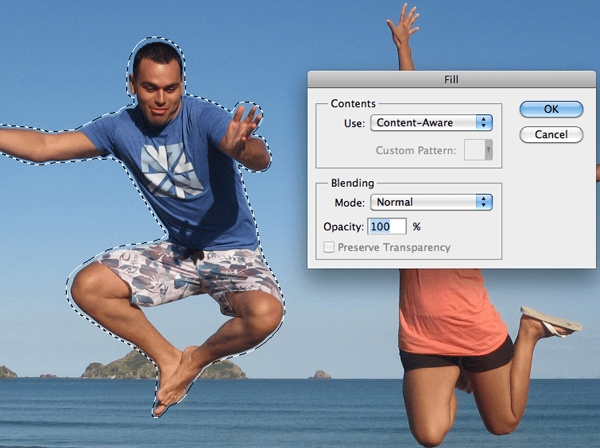
The first time you stare at a photograph and realize someone’s presence ruins the composition, the urge to edit it out isn’t just impulsive—it’s a testament to the power of visual storytelling. Whether it’s an accidental intruder in a family portrait, a misplaced colleague in a corporate headshot, or a privacy concern in a candid shot, the question arises: How do you remove a person from a photo without leaving traces? The answer lies in a blend of technical precision and creative judgment, where the tools you choose can make the difference between a seamless edit and an obvious digital crime scene.
Yet the process isn’t just about erasing flesh and fabric—it’s about understanding the mechanics of digital reconstruction. Modern software doesn’t just delete; it rebuilds the missing pixels using algorithms trained on millions of images. The challenge? Balancing speed with quality. A rushed edit might leave artifacts, while over-polishing can strip away the photo’s authenticity. The stakes are higher than ever, as deepfake technology and AI upscaling push the boundaries of what’s possible—and what’s ethically acceptable.
From the early days of manual cloning tools to today’s AI-driven solutions, the evolution of how to remove a person from a photo reflects broader shifts in technology and ethics. What was once a niche skill for professional retouchers is now accessible to anyone with a smartphone and an app. But with accessibility comes responsibility: Should you edit out a person entirely, or is there a middle ground? The tools exist, but the decisions carry weight.
The Complete Overview of How to Remove a Person from a Photo
The process of removing a person from an image has evolved from a labor-intensive task requiring advanced Photoshop skills to a streamlined workflow accessible via user-friendly applications. At its core, the method hinges on two primary techniques: content-aware filling and AI-based inpainting. The former relies on algorithms to analyze surrounding pixels and "fill in" the gap left by the removed subject, while the latter leverages machine learning to generate realistic textures and structures. Both approaches share a common goal—minimizing visual discrepancies—but differ in execution speed, accuracy, and the level of manual intervention required.
For beginners, the barrier to entry has never been lower. Free tools like Photopea or GIMP offer basic cloning and healing brushes, while paid software such as Adobe Photoshop and Affinity Photo provide advanced features like Content-Aware Fill and Generative Fill. Meanwhile, AI-powered platforms like Remini, Topaz Gigapixel AI, and Remove.bg (for background-focused edits) automate much of the work, though they often require post-processing to refine edges and textures. The choice of tool depends on the complexity of the image, the skill level of the editor, and the intended use of the final output.
Historical Background and Evolution
The concept of digitally altering images dates back to the 1980s, when early photo-editing software like Photoshop 1.0 introduced rudimentary cloning tools. These allowed users to manually duplicate and blend pixels, but the results were often jagged and unnatural. The breakthrough came in the 2000s with content-aware scaling and healing brushes, which used pattern recognition to seamlessly fill gaps. However, removing a person—especially in a crowded scene—remained a Herculean task, requiring hours of meticulous work.
Table of Contents
- The Complete Overview of How to Remove a Person from a Photo
- Historical Background and Evolution
- Core Mechanisms: How It Works
- Key Benefits and Crucial Impact
- Major Advantages
- Comparative Analysis
- Future Trends and Innovations
- Conclusion
- Comprehensive FAQs
- Q: Can I remove a person from a photo without leaving visible traces?
- Q: Are there free tools that work well for removing people?
- Q: Will removing a person affect the photo’s resolution?
- Q: Is it ethical to remove a person from a photo without their consent?
- Q: Can I use these techniques to restore old or damaged photos?
- Q: How do I ensure the edited photo looks natural?
Today, AI has revolutionized the field. Tools like Adobe Firefly and MidJourney can now generate entirely new content to replace missing sections, while DeepLab and LaMa (Large Masked Autoencoder) models excel at inpainting complex textures. The shift from manual labor to algorithmic assistance hasn’t just sped up the process; it’s also democratized it. What once required a professional retoucher’s expertise can now be accomplished with a few clicks—though the risk of over-editing or introducing inconsistencies remains.
Core Mechanisms: How It Works
At the heart of how to remove a person from a photo lies the principle of contextual reconstruction. When you delete a subject, the software doesn’t just erase pixels—it analyzes the surrounding area to determine the most plausible way to "fill" the void. For example, if you remove a person standing in front of a tree, the algorithm will attempt to blend the tree’s branches and foliage to create a continuous background. This relies on two key processes: feature detection (identifying edges, colors, and patterns) and texture synthesis (generating new pixels that match the existing scene).
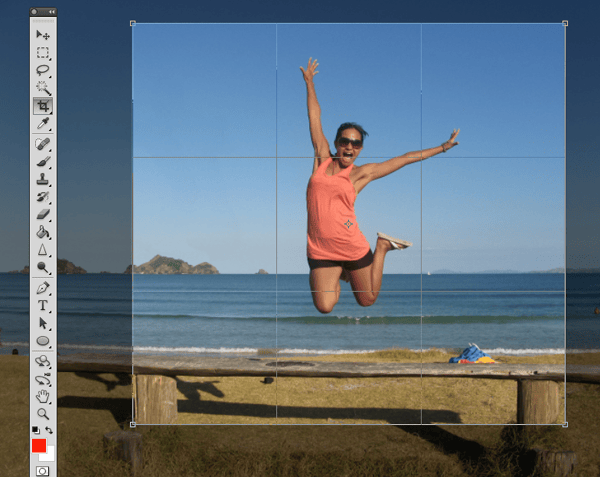
The accuracy of the result depends on the tool’s ability to distinguish between foreground and background elements. AI models trained on vast datasets can better predict how light, shadows, and reflections should interact in the edited area. However, even the most advanced tools struggle with complex scenes—such as a person partially obscured by other objects—or when the removed subject casts dynamic shadows. In such cases, manual refinements with tools like the Spot Healing Brush or Patch Tool become essential to maintain realism.
Key Benefits and Crucial Impact
The ability to remove a person from a photo serves both practical and creative purposes. Professionally, it’s indispensable for photographers, marketers, and social media managers who need to clean up images for branding, advertising, or archival purposes. Ethically, it can address privacy concerns—such as blurring out bystanders in street photography—or correct historical inaccuracies in old photographs. Yet, the power to edit comes with ethical dilemmas: Should you alter reality for aesthetic or commercial gain? The line between enhancement and deception is thinner than ever.
Beyond individual use, the technology has broader implications. In journalism, it can be used to redact sensitive information without compromising the integrity of a news image. In law enforcement, it aids in anonymizing surveillance footage. Even in personal contexts, the ability to remove an unwanted individual from a photo can preserve memories without the emotional baggage. The impact is undeniable, but the responsibility to use such tools judiciously cannot be overstated.
"Digital editing is not about erasing truth—it’s about telling a story with intentionality. The challenge lies in recognizing when to wield the eraser and when to leave the past untouched."
— Annie Leibovitz, Photographer
Major Advantages
- Non-Destructive Editing: Modern tools preserve the original image file, allowing for adjustments without permanent alterations.
- Time Efficiency: AI-powered solutions can process edits in seconds, compared to hours of manual work.
- Versatility: Works across platforms—from professional-grade software to mobile apps like Snapseed or Fotor.
- Privacy Protection: Ideal for anonymizing individuals in public or sensitive contexts.
- Creative Freedom: Enables experimentation with composition, such as removing a distracting element to refocus the viewer’s attention.

Comparative Analysis
| Tool/Method | Key Features |
|---|---|
| Adobe Photoshop (Content-Aware Fill) | High precision, manual control, supports layers. Best for complex edits but requires a learning curve. |
| GIMP (Healing Tool) | Free and open-source, but labor-intensive. Suitable for basic removals with manual adjustments. |
| Remove.bg (AI Background Removal) | Instant background extraction, but limited to isolating subjects—not ideal for full-body removals. |
| Topaz Gigapixel AI | Specializes in upscaling and inpainting, but better for small gaps than large subject removals. |
Future Trends and Innovations
The next frontier in how to remove a person from a photo lies in generative AI and neural networks. Current models like Stable Diffusion and DALL·E 3 are already capable of reconstructing missing parts of an image with remarkable fidelity, but future iterations will likely incorporate real-time editing capabilities. Imagine a tool that not only removes a person but also dynamically adjusts lighting, reflections, and even the behavior of surrounding objects to maintain consistency. This could redefine photo manipulation, blurring the line between editing and creation.
Ethical considerations will also shape the future. As deepfake technology advances, the potential for misuse grows—raising questions about digital forensics, consent, and authenticity. Platforms like Instagram and Facebook may need to implement stricter guidelines for edited content, while photographers could adopt watermarking or metadata to verify image integrity. The balance between innovation and ethics will determine whether these tools empower or exploit.
Conclusion
The art of removing a person from a photo is no longer the domain of specialists—it’s a skill within reach of anyone with a device and an internet connection. Yet, the ease of execution shouldn’t overshadow the responsibility that comes with it. Whether you’re restoring a vintage portrait, cleaning up a corporate headshot, or addressing privacy concerns, the key lies in striking a balance between technical prowess and ethical awareness. The tools are advancing at a breakneck pace, but the principles of integrity and intention remain timeless.
As you experiment with these techniques, remember: every edit is a story. And like any narrative, it deserves to be told with honesty and care.
Comprehensive FAQs
Q: Can I remove a person from a photo without leaving visible traces?
A: Yes, but it depends on the complexity of the scene and the tool used. AI-powered inpainting (e.g., Adobe Firefly) and advanced Photoshop techniques can produce near-flawless results for simple backgrounds. However, intricate details—like intricate patterns or dynamic lighting—may still require manual touch-ups to avoid artifacts.
Q: Are there free tools that work well for removing people?
A: Absolutely. GIMP (with its Healing Tool) and Photopea offer free alternatives to Photoshop, while Remove.bg provides basic background removal. For AI-driven solutions, Canva and Fotor have free tiers with limited features.
Q: Will removing a person affect the photo’s resolution?
A: Not necessarily. Tools like Topaz Gigapixel AI can upscale images while editing, but most standard software (e.g., Photoshop) preserves resolution. However, aggressive edits in low-resolution images may still introduce pixelation.
Q: Is it ethical to remove a person from a photo without their consent?
A: This depends on context. For personal use (e.g., family photos), it’s generally acceptable if the edit serves a legitimate purpose (e.g., privacy). However, altering images for deception—such as removing a person from a news photo—raises ethical and legal concerns, especially in professional or public domains.
Q: Can I use these techniques to restore old or damaged photos?
A: Yes, but with limitations. While tools like Adobe Photoshop’s Content-Aware Fill can reconstruct missing sections, heavily damaged photos may require specialized software like DxO DeepPrio or professional restoration services for optimal results.
Q: How do I ensure the edited photo looks natural?
A: Pay attention to:
- Edge blending: Use the Refine Edge tool in Photoshop to smooth transitions.
- Lighting consistency: Adjust shadows and highlights to match the surrounding area.
- Texture matching: Manually paint over discrepancies with a Clone Stamp or Patch Tool.
- Realism check: Zoom in to inspect fine details like reflections or fabric patterns.
Leave a Comment
Comments are moderated before appearing. The data you submit is processed according to the Privacy Policy of Neip.