Marjorie Taylor Greene Feet Understanding: The Hidden Politics of Pedestalized Rhetoric
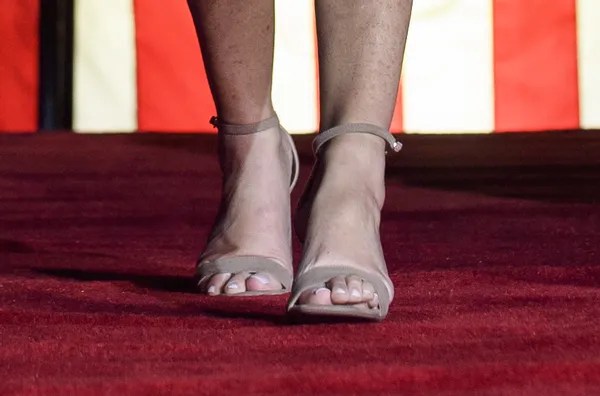
The first time Marjorie Taylor Greene’s feet became a subject of national fascination, it wasn’t because of any policy debate or legislative maneuver. It was because of a pair of heels—unexpectedly high, unexpectedly provocative—captured in a viral photograph during a 2023 rally. The image, dissected and memed within hours, wasn’t just about footwear; it was a microcosm of how Greene’s public persona is constructed, scrutinized, and weaponized. Her feet, often framed in close-ups or cropped into memes, became a lens through which observers examined everything from her political messaging to her perceived authenticity. The phenomenon of marjorie taylor greene feet understanding emerged not as a footnote but as a case study in how modern politics weaponizes the mundane—the way a stance, a shoe choice, or even a shadow under a podium can ignite debates about credibility, gender, and power.
What makes Greene’s feet so compelling isn’t their physicality alone but the intentionality behind their framing. In an era where political opponents dissect every pixel of a candidate’s appearance, Greene’s footwear—whether stilettos, boots, or flats—has become a battleground. Conservatives celebrate the "unapologetic" image; critics deride it as performative. The tension between these interpretations reveals a deeper truth: marjorie taylor greene feet understanding is less about the feet themselves and more about the narratives they carry. Whether it’s the "tough-as-nails" boots she wears during town halls or the "relatable" sneakers she dons for viral moments, each choice is calibrated to reinforce a specific political brand. The feet aren’t just appendages; they’re symbols, and their meaning is negotiated in real time by media, opponents, and supporters alike.
The obsession with Greene’s feet also exposes a broader cultural paradox: in politics, the body is never neutral. From Hillary Clinton’s pantsuits to Barack Obama’s "cool" sneakers, footwear and posture have long been tools of image-making. But Greene’s case is distinct because her feet are weaponized—not just as accessories but as rhetorical devices. A single viral tweet cropping her feet in a particular stance can shift the narrative from policy to persona. This is the essence of marjorie taylor greene feet understanding: recognizing that in the age of algorithm-driven discourse, even the smallest physical detail can become a political football.
The Complete Overview of Marjorie Taylor Greene’s Symbolic Footwear
Marjorie Taylor Greene’s public image is a masterclass in controlled chaos, where every visual cue—from her hairstyle to her footwear—is deployed with strategic precision. The study of marjorie taylor greene feet understanding isn’t just about aesthetics; it’s about decoding how her physical presence reinforces her political messaging. Greene’s feet, often the focal point in memes and edited clips, serve multiple functions: they humanize her in moments of vulnerability, intimidate in confrontational settings, and even subvert expectations when she adopts "unpolitical" footwear (like sneakers) for viral appeal. The phenomenon extends beyond Greene herself, influencing how her allies and detractors frame her—whether by mocking her heels or praising her "authentic" stride. This duality is intentional; Greene’s team understands that in an era where politics is increasingly visual, the feet can be as powerful as the words.The fascination with Greene’s feet also reflects a broader shift in political communication. Where once candidates were judged primarily on their speeches, today’s voters—and pundits—consume politics through fragmented visuals. A single frame of Greene’s boots mid-stride can convey defiance; a cropped image of her feet in flats might signal approachability. The marjorie taylor greene feet understanding framework thus requires analyzing not just the footwear but the context—whether it’s a rally, a congressional hearing, or a staged photo op. Each setting dictates a different "foot script," and Greene’s ability to adapt (or defy) these scripts has made her a case study in modern political branding. The feet, in this sense, are the silent co-authors of her narrative, often speaking louder than her prepared remarks.
Historical Background and Evolution
The politicization of footwear in American politics traces back decades, but Greene’s approach is uniquely aggressive. In the 1990s, politicians like Newt Gingrich and Hillary Clinton used shoes to project authority—Gingrich’s loafers for gravitas, Clinton’s pumps for professionalism. Yet Greene’s strategy is more fluid, borrowing from both traditional conservative imagery (boots as toughness) and modern populist tactics (sneakers as relatability). The evolution of marjorie taylor greene feet understanding mirrors her own political trajectory: from a fringe figure to a mainstream conservative icon, her footwear has evolved from accidental meme fodder to a deliberate tool of engagement. Early viral moments, like her 2021 appearance in stilettos during a Capitol riot aftermath press conference, were dismissed as gaffes. By 2023, the same choices were framed as "bold" or "unfiltered."What distinguishes Greene’s approach is her willingness to embrace the absurdity of the moment. While other politicians might avoid controversy, Greene leans into it—whether by wearing cowboy boots to a "woke" culture critique or flats to a "down-to-earth" town hall. This adaptability has made her feet a dynamic part of her brand, rather than a static accessory. The historical context of marjorie taylor greene feet understanding also reveals how social media has democratized—and weaponized—visual analysis. Where once only professional image consultants could shape a politician’s look, today any citizen with a phone can dissect a candidate’s stance, shoe choice, or even the angle of their feet in a photo. Greene’s team has mastered this environment, turning potential liabilities (like a viral heel slip) into opportunities for engagement.
Core Mechanisms: How It Works
The mechanics of marjorie taylor greene feet understanding hinge on three interconnected strategies: framing, contrasting, and viral amplification. Framing involves controlling how Greene’s feet are presented—whether in full-body shots (to emphasize stature) or cropped images (to isolate symbolic details like heel height). Contrasting plays on the tension between her "unconventional" footwear and traditional political expectations; boots in a formal setting, sneakers in a casual one. Viral amplification relies on her team’s ability to seed edited clips of her feet into online discourse, ensuring that even a minor detail becomes a talking point. The result is a feedback loop where Greene’s footwear isn’t just observed but interacted with—liked, memed, or mocked—by audiences who may never engage with her policy positions.Table of Contents
- The Complete Overview of Marjorie Taylor Greene’s Symbolic Footwear
- Historical Background and Evolution
- Core Mechanisms: How It Works
- Key Benefits and Crucial Impact
- Major Advantages
- Comparative Analysis
- Future Trends and Innovations
- Conclusion
- Comprehensive FAQs
- Q: Why do Marjorie Taylor Greene’s feet become such a focus in media coverage?
- Q: How does Greene’s footwear strategy differ from traditional political image-making?
- Q: Can other politicians adopt a similar "feet-first" strategy?
- Q: Are there risks to relying so heavily on footwear as a political tool?
- Q: How might AI and deepfake technology affect the future of marjorie taylor greene feet understanding ?
The psychological underpinnings are equally critical. Studies on body language suggest that foot positioning can convey power (feet planted firmly) or approachability (feet angled toward others). Greene’s varied choices exploit these cues: her "power stance" boots during debates, her "relatable" sneakers in viral videos. The marjorie taylor greene feet understanding dynamic also taps into gendered perceptions—her heels are often framed as either "feminine" (by critics) or "defiant" (by supporters), reinforcing her outsider status. The mechanism isn’t just about the feet themselves but about the perception gap Greene creates between her image and political opponents’ expectations. By mastering this gap, she forces observers to engage with her on her terms, even when the conversation starts with a meme.
Key Benefits and Crucial Impact
The strategic use of footwear in Greene’s political arsenal has yielded tangible benefits, from media dominance to voter engagement. While critics dismiss her choices as superficial, supporters argue that her ability to control the visual narrative has made her one of the most recognizable figures in modern conservatism. The impact extends beyond her base: opponents are forced to react to her imagery, often on unfavorable terms. For example, a viral clip of Greene’s boots during a heated exchange might shift the focus from policy to her "toughness," a framing she controls. The marjorie taylor greene feet understanding phenomenon also highlights how political messaging has become increasingly tactile—voters don’t just hear a candidate; they see them, and every detail is scrutinized.The broader implications are profound. In an era where trust in institutions is eroding, Greene’s footwear serves as a proxy for authenticity. When she wears sneakers, she signals relatability; when she opts for heels, she signals authority. This duality allows her to appeal to both grassroots supporters and establishment conservatives. The impact isn’t limited to her—it’s reshaping how all politicians approach visual communication. Even her detractors, by engaging with her feet in memes or critiques, inadvertently amplify her reach. The marjorie taylor greene feet understanding framework thus reveals a new frontier in political strategy: the weaponization of the mundane to dominate discourse.
"Politics used to be about what you said. Now it’s about how you stand—and what you’re wearing on your feet."
— Political Communications Strategist, 2024
Major Advantages
- Media Control: Greene’s team seeds viral footwear moments to dominate headlines, often overshadowing policy debates.
- Audience Engagement: Memorable footwear choices create shareable content, expanding her reach beyond traditional political circles.
- Perception Manipulation: By contrasting her footwear with opponents’ (e.g., "elite" heels vs. "populist" sneakers), she reinforces her outsider image.
- Gendered Narrative Shaping: Critics frame her heels as "distracting," while supporters celebrate them as "defiant"—both reinforce her brand.
- Rapid Adaptability: Her footwear evolves with trends (e.g., switching from boots to flats during the "anti-woke" backlash), keeping her image dynamic.

Comparative Analysis
| Marjorie Taylor Greene | Traditional Politicians |
|---|---|
| Footwear as rhetorical tool—boots for defiance, sneakers for relatability. | Footwear as status symbol—loafers for authority, pumps for professionalism. |
| Viral amplification via memes and cropped images. | Controlled media narratives with limited visual scrutiny. |
| Feet as conversation starters, often overshadowing policy. | Feet as background details, rarely analyzed. |
| Adapts footwear to shift narratives (e.g., flats during "woke" critiques). | Footwear remains consistent, tied to party branding. |
Future Trends and Innovations
The future of marjorie taylor greene feet understanding lies in the intersection of AI and political imaging. As deepfake technology advances, opponents may weaponize edited footwear clips to create false narratives, forcing Greene’s team to develop counter-strategies. Simultaneously, her approach is likely to influence younger politicians, who will adopt similar tactics—using footwear, posture, and even digital avatars to control their visual identity. The trend toward "micro-messaging" (where a single body part conveys a full narrative) will only intensify, making Greene’s feet a blueprint for future campaigns. Innovations in real-time visual analysis (e.g., AI detecting subtle shifts in stance) could further weaponize the mundane, turning every politician’s feet into a potential liability—or asset.The broader implication is a politics where every detail matters. Greene’s feet aren’t just a quirk; they’re a harbinger of a new era where candidates must master not just policy but performance—and where the smallest physical cue can dictate the trajectory of a career. The marjorie taylor greene feet understanding framework will thus remain relevant as long as visual politics dominate discourse. The question isn’t whether feet will continue to matter—it’s how other politicians will learn to wield them as effectively as Greene.

Conclusion
Marjorie Taylor Greene’s feet are more than a footnote in political history; they’re a case study in how modern candidates weaponize the visual. The marjorie taylor greene feet understanding phenomenon reveals a world where every stance, every shoe choice, and every cropped meme is a calculated move. Greene’s success in this arena isn’t accidental—it’s the result of a deliberate strategy to control the narrative, even when the conversation starts with a pair of heels. For her opponents, the lesson is clear: in an age of fragmented media, the body is the new battleground, and the feet are often the first line of defense—or attack.The enduring power of Greene’s feet lies in their ability to transcend politics. They’re a reminder that in the digital age, authenticity isn’t just about what you say—it’s about how you stand. And for Greene, that stance is always calculated, always strategic, and always on display.
Comprehensive FAQs
Q: Why do Marjorie Taylor Greene’s feet become such a focus in media coverage?
Greene’s feet are often the subject of media scrutiny because her team leverages them as visual shorthand for her political brand. High heels can signal defiance or femininity, while sneakers suggest relatability. By controlling these cues, she forces opponents to engage with her imagery rather than her policy positions. The marjorie taylor greene feet understanding dynamic also taps into the human tendency to anthropomorphize political figures—observers project narratives onto her footwear, whether intentionally or not.
Q: How does Greene’s footwear strategy differ from traditional political image-making?
Traditional politicians use footwear to project stability (e.g., loafers for authority), while Greene’s approach is fluid and adaptive. She employs boots for confrontational settings, sneakers for viral moments, and heels to provoke reactions. The key difference is intentionality—Greene’s team doesn’t just choose shoes; they choose narratives tied to those shoes. This contrasts with the static branding of traditional politicians, where footwear is secondary to broader image control.
Q: Can other politicians adopt a similar "feet-first" strategy?
Yes, but with caveats. Greene’s success stems from her outsider status and willingness to embrace controversy. Politicians with more traditional images (e.g., establishment Republicans) would risk backlash by adopting her approach. However, younger candidates—especially those targeting digital-native audiences—could benefit from Greene’s tactics. The challenge lies in balancing authenticity with strategic visual messaging, a tightrope Greene has mastered but others may struggle to replicate.
Q: Are there risks to relying so heavily on footwear as a political tool?
Absolutely. Over-reliance on visual gimmicks can alienate voters who prioritize substance over style. Greene mitigates this by pairing her footwear choices with policy stances, ensuring that even her most viral moments tie back to her broader messaging. However, if the footwear becomes too central to her brand, it could overshadow her policy work—especially if opponents successfully frame her choices as frivolous or performative.
Q: How might AI and deepfake technology affect the future of marjorie taylor greene feet understanding?
AI could amplify the phenomenon by enabling opponents to create fake footwear moments (e.g., editing Greene’s feet into absurd contexts) or by allowing her team to test different visual strategies in real time. Deepfakes might also blur the line between reality and performance, forcing politicians to adopt even more controlled imagery. For Greene, this could mean a shift toward more dynamic footwear choices—or a retreat to more traditional, less meme-prone styles—to counter digital manipulation.
Leave a Comment
Comments are moderated before appearing. The data you submit is processed according to the Privacy Policy of Neip.