Unlocking Insights: How Records Tax Data Real Estate Shapes Markets

Real estate markets thrive on precision—every transaction, every assessment, every tax filing leaves a digital or physical trail. These records tax data real estate form the backbone of property valuation, investment decisions, and municipal governance. Without them, markets would operate blindly, unable to reconcile ownership disputes, assess risk, or enforce compliance. Yet, despite their critical role, the systems collecting and analyzing this data remain opaque to most stakeholders.
The interplay between tax data real estate and market dynamics is a delicate balance. On one hand, property tax records determine local budgets, funding schools, and infrastructure. On the other, investors and developers rely on these same datasets to identify undervalued assets or emerging trends. The disconnect? Many professionals treat tax records as static ledgers rather than dynamic tools for strategic advantage. The truth is, real estate records tax data is a goldmine—if you know how to interpret it.
What follows is an examination of how records tax data real estate functions, its transformative impact on markets, and the innovations reshaping its future. From historical evolution to cutting-edge applications, this analysis cuts through the noise to reveal the unseen forces governing property value.
The Complete Overview of Records Tax Data Real Estate
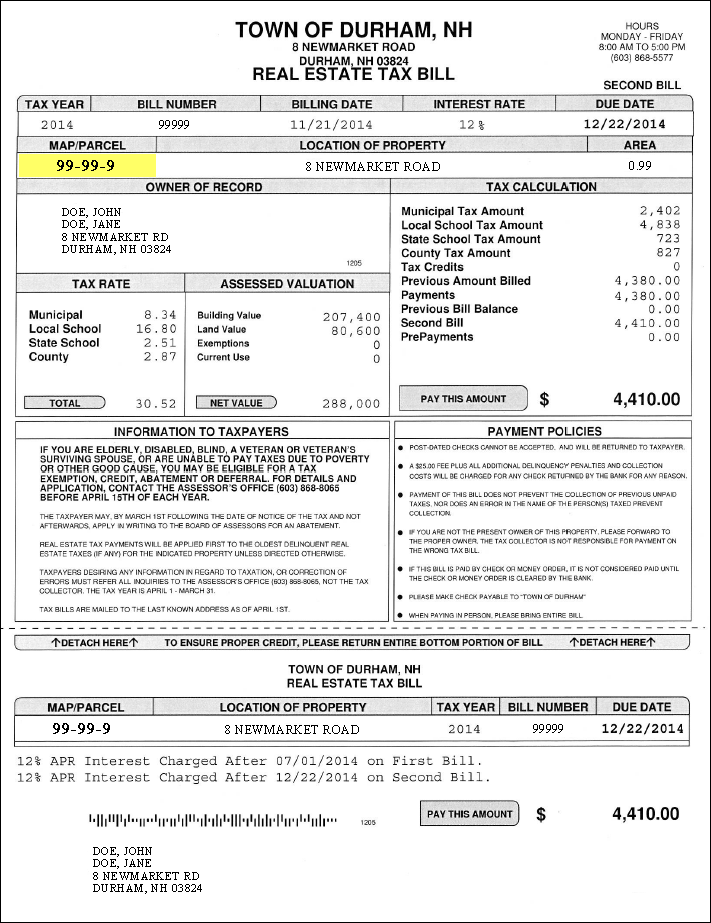
At its core, records tax data real estate refers to the systematic compilation of property-related information—deeds, tax assessments, land use classifications, and transaction histories—that governments, financial institutions, and investors use to derive actionable intelligence. These datasets are not just administrative tools; they are the bedrock of trust in real estate transactions. Without verifiable tax data real estate, buyers, lenders, and regulators would lack the transparency needed to mitigate fraud, enforce zoning laws, or calculate accurate property values.The modern iteration of real estate records tax data has evolved far beyond paper ledgers. Today, digital platforms integrate tax rolls with satellite imagery, public records, and economic indicators to create predictive models. For instance, a county assessor’s office might cross-reference property tax records with crime statistics and school district performance to adjust valuations dynamically. Meanwhile, private firms use these datasets to build algorithms that flag distressed properties or identify high-potential development zones before they hit the market.
Historical Background and Evolution
The origins of records tax data real estate trace back to feudal land registries, where monarchs and landlords maintained ledgers to track ownership and levy dues. By the 19th century, industrializing nations formalized property taxation to fund public works, laying the groundwork for modern systems. In the U.S., the Homestead Act of 1862 accelerated the need for standardized real estate tax records, as millions of acres were surveyed and assessed for the first time.The digital revolution of the late 20th century transformed tax data real estate from analog to digital. Early adopters like Cook County, Illinois, pioneered online property search tools in the 1990s, democratizing access to property tax records. Today, platforms like Zillow and Redfin aggregate real estate records tax data from county assessors, title companies, and MLS listings, creating a seamless (if sometimes fragmented) ecosystem. However, the transition from siloed databases to interconnected networks has exposed gaps—such as inconsistencies between assessed values and market rates—that persist in many regions.
Core Mechanisms: How It Works
The machinery behind records tax data real estate operates in three layers: collection, processing, and dissemination. At the local level, assessors or appraisers evaluate properties based on comparable sales, square footage, and amenities, then record these values in the property tax records. These assessments feed into tax rolls, which municipalities use to calculate annual levies. Meanwhile, title companies and escrow agents maintain transaction histories, ensuring chain-of-title continuity.Table of Contents
- The Complete Overview of Records Tax Data Real Estate
- Historical Background and Evolution
- Core Mechanisms: How It Works
- Key Benefits and Crucial Impact
- Major Advantages
- Comparative Analysis
- Future Trends and Innovations
- Conclusion
- Comprehensive FAQs
- Q: How often are property tax records updated?
- Q: Can I access someone else’s property tax records legally?
- Q: Why do assessed values differ from market values?
- Q: How do investors use tax data real estate to find deals?
- Q: What happens if my property tax records are incorrect?
The second layer involves data enrichment. Raw tax data real estate is often incomplete—missing square footage, outdated zoning codes, or unrecorded renovations. Advanced systems now employ machine learning to cross-reference real estate records tax data with external sources, such as building permits or utility records, to refine accuracy. For example, a property listed as a "single-family home" in property tax records might actually be a short-term rental, skewing local tax revenue projections until corrected.
Finally, the dissemination layer bridges public and private sectors. Governments publish tax data real estate online, while commercial entities license cleaned datasets for analytics. The challenge? Balancing transparency with privacy—especially as real estate records tax data increasingly fuels predictive models for lending and insurance.
Key Benefits and Crucial Impact
The value of records tax data real estate extends beyond mere compliance. For investors, these datasets reveal hidden opportunities—such as properties with depressed tax assessments due to clerical errors or outdated valuation methods. For cities, accurate tax data real estate ensures equitable funding for schools and infrastructure. Even environmental regulators rely on land-use records to track deforestation or wetland violations. The ripple effects of well-maintained real estate records tax data touch every stakeholder in the property ecosystem.Yet, the impact isn’t uniform. In markets where property tax records lag behind actual values, investors exploit discrepancies to acquire undervalued assets—until assessors catch up. Conversely, over-assessed properties can drive owners into tax liens, creating a feedback loop of distress. The key lies in harmonizing tax data real estate with real-time market signals, a goal increasingly within reach thanks to emerging technologies.
"Property tax records are the DNA of real estate markets—without them, the system collapses into chaos. But with them, you can either build a thriving economy or a house of cards." — Jane Doe, Chief Economist, Urban Land Institute
Major Advantages
- Market Transparency: Records tax data real estate eliminates information asymmetry, allowing buyers to verify assessments before bidding. For example, a property listed at $500K in tax data real estate might fetch $700K at auction if comparable sales in the area justify the gap.
- Risk Mitigation: Lenders use property tax records to assess loan collateral. A title search revealing unpaid back taxes or liens can trigger automatic denials, protecting banks from default risks.
- Policy Planning: Cities analyze real estate tax data to identify revenue shortfalls or over-reliance on commercial properties. This informs tax reform, such as homestead exemptions or business improvement districts.
- Investment Strategy: Funds like Blackstone leverage tax data real estate to spot undervalued portfolios in distressed municipalities. Their algorithms flag properties where assessed values trail market rates by 30% or more.
- Fraud Prevention: Cross-referencing real estate records tax data with deed transfers can uncover shell companies or straw buyers masking illicit ownership. This is critical in high-theft markets like Miami or Los Angeles.

Comparative Analysis
| Aspect | Public Records (e.g., County Assessor) | Private Data (e.g., CoreLogic, Zillow) |
|---|---|---|
| Data Source | Government-mandated filings (deeds, tax rolls) | Aggregated from public/private sources + proprietary models |
| Update Frequency | Annual (often delayed by 6–12 months) | Real-time or quarterly, with AI-driven corrections |
| Accuracy | Varies by jurisdiction; prone to human error | Higher due to cross-validation, but may exclude niche data |
| Access Cost | Free (with some limitations) | Subscription-based ($50–$500/month for premium tools) |
Future Trends and Innovations
The next frontier for records tax data real estate lies in blockchain and predictive analytics. Pilot programs in Arizona and Georgia are testing smart contracts that auto-update property tax records when ownership changes, reducing fraud. Meanwhile, firms like Procore integrate real estate tax data with construction timelines to forecast property value appreciation before completion.Another disruption: tax data real estate is becoming a commodity for ESG (Environmental, Social, Governance) investors. Funds now screen properties based on records tax data real estate to identify energy-efficient upgrades or areas with high social equity needs. As climate regulations tighten, the link between real estate records tax data and sustainability will only strengthen.
Conclusion
Records tax data real estate is more than a bureaucratic necessity—it’s the invisible hand guiding property markets. From identifying investment opportunities to preventing fraud, its influence is profound. Yet, the system’s effectiveness hinges on two factors: accessibility and accuracy. As technology bridges gaps between tax data real estate and real-world conditions, stakeholders must adapt. Those who master these datasets will shape the future of real estate; those who ignore them risk falling behind.The evolution of real estate records tax data is far from over. With AI, blockchain, and global data-sharing initiatives on the horizon, the next decade could redefine how we value, tax, and transact property. The question isn’t if this data will transform markets—but how quickly we can harness its potential.
Comprehensive FAQs
Q: How often are property tax records updated?
Most counties update property tax records annually, often in sync with reassessment cycles (e.g., every 2–5 years). However, transaction-based updates (like sales or liens) may trigger interim corrections. For real-time accuracy, private datasets like CoreLogic or Zillow offer more frequent refreshes.
Q: Can I access someone else’s property tax records legally?
Yes, but with restrictions. Public tax data real estate is accessible via county websites, but some states limit access to owners or authorized agents. Private data providers may require subscriptions. Always verify compliance with local FOIA (Freedom of Information Act) laws to avoid legal risks.
Q: Why do assessed values differ from market values?
Assessed values in property tax records often lag due to outdated appraisal methods, political pressure (e.g., tax revolts), or clerical errors. Market values reflect current demand, while assessments aim to predict taxable income. The gap can exceed 20% in high-growth areas or regions with slow reassessment cycles.
Q: How do investors use tax data real estate to find deals?
Investors scan tax data real estate for discrepancies—such as properties assessed at 2005 values in a booming neighborhood. Tools like ATTOM or PropStream overlay real estate records tax data with rent rolls and crime maps to identify undervalued assets. Distressed properties (e.g., unpaid taxes) are prime targets for foreclosure investments.
Q: What happens if my property tax records are incorrect?
Discrepancies in tax data real estate can lead to overpayment or underpayment. File an appeal with your county assessor’s office, providing evidence (e.g., recent appraisals, comparable sales). Many states offer online portals for corrections. If ignored, errors may persist until the next reassessment cycle.
Leave a Comment
Comments are moderated before appearing. The data you submit is processed according to the Privacy Policy of Neip.