Retirement 2025: Your Complete Guide to Planning Ahead
Retirement isn’t just about stopping work—it’s about reinventing life. By 2025, traditional models will have shifted dramatically, with automation reshaping careers, longevity redefining timelines, and global economic instability forcing smarter financial moves. The question isn’t if you’ll retire, but how you’ll do it without compromise. This guide cuts through the noise to focus on actionable steps, from tax-efficient withdrawals to leveraging AI for portfolio management.
The biggest mistake retirees make today is treating 2025 as an extension of 2020. Inflation, healthcare costs, and workplace automation will demand adaptability. Whether you’re decades away or counting down the months, understanding the mechanics of modern retirement—from Social Security adjustments to flexible work transitions—will determine whether your golden years are golden or just expensive. The data is clear: those who plan for 2025’s realities will thrive; those who don’t risk outliving their savings.
The Complete Overview of Retirement in 2025
Retirement in 2025 is no longer a one-size-fits-all concept. The traditional 401(k)-pension model is fading, replaced by hybrid approaches that blend part-time work, passive income, and dynamic asset allocation. The average retirement age has already crept past 65, and by mid-decade, it’s projected to hover around 68—driven by longer lifespans and the need for extended earning power. This shift forces a reevaluation of savings benchmarks: the old "70% of pre-retirement income" rule now requires recalibration, especially with healthcare costs projected to rise 5-7% annually.The landscape is further complicated by generational divides. Millennials, the largest generation entering retirement, face student debt burdens and stagnant wages, while Boomers benefit from decades of compounding but grapple with market volatility. Meanwhile, Gen Z’s entry into the workforce means employers will increasingly offer phased retirement programs—blurring the line between full-time employment and leisure. The key takeaway? Rigidity is the enemy. Your 2025 your complete guide retirement strategy must account for flexibility in income streams, healthcare access, and even geographic mobility.
Historical Background and Evolution
The modern retirement framework was born in the 1930s with the Social Security Act, but its foundations lie in the industrial era’s promise of stability: work until 65, then coast on savings. Fast-forward to 2025, and that model is obsolete. The Great Recession of 2008 exposed vulnerabilities in defined-benefit plans, accelerating the shift to defined-contribution accounts like 401(k)s. Today, only 15% of private-sector workers have pensions, and that number is dropping. Meanwhile, the rise of gig economy platforms has normalized side hustles in retirement, turning what was once a taboo into a necessity for many.Policy changes will further reshape retirement in 2025. The SECURE Act 2.0 (2022) already raised the RMD age to 73, and by mid-decade, expect more adjustments to catch-up contributions and spousal benefits. Internationally, countries like Japan and Sweden are pioneering universal basic income pilots for seniors, while the EU’s "Silver Economy" initiative aims to integrate older workers into tech-driven roles. Domestically, states like Florida and Texas are becoming retirement havens due to tax policies, while others face budget crises that may strain public pension funds. The lesson? Retirement is no longer a personal finance issue—it’s a macroeconomic one.
Core Mechanisms: How It Works
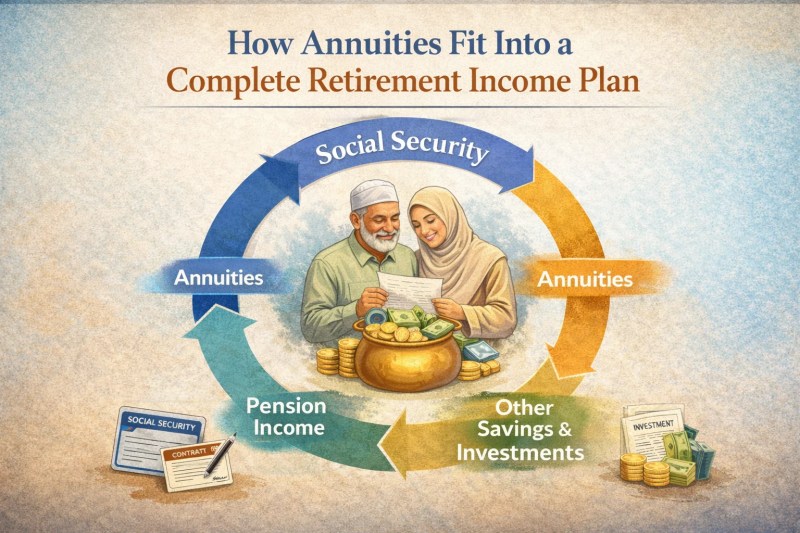
At its core, retirement in 2025 operates on three pillars: financial sustainability, healthcare resilience, and lifestyle design. Financial sustainability hinges on diversified income sources—Social Security (adjusted for inflation), annuities, rental properties, and even crypto-based retirement funds (though with higher risk). Healthcare resilience requires strategic planning: Medicare eligibility at 65 remains, but supplemental plans (like Medigap or Advantage) will see premium hikes. Lifestyle design, often overlooked, involves geographic arbitrage (e.g., retiring to a lower-cost state) and purpose-driven living, whether through volunteering, entrepreneurship, or "encore careers."The mechanics of withdrawal are critical. The 4% rule (withdrawing 4% annually from savings) is being challenged by lower bond yields and higher inflation. In 2025, dynamic withdrawal strategies—adjusting based on market performance—will dominate. Tools like robo-advisors (e.g., Betterment, Wealthfront) and AI-driven portfolio managers will automate rebalancing, but human oversight remains essential. Tax-lot harvesting and Roth conversions will also play bigger roles, as tax brackets evolve with inflation adjustments. The bottom line? Retirement isn’t a static endpoint; it’s a dynamic phase requiring real-time adjustments.
Key Benefits and Crucial Impact
Retirement in 2025 offers unprecedented freedom—but only if planned correctly. The biggest benefit is financial autonomy: no more paycheck-to-paycheck cycles, no more answering to managers. For those who optimize their strategy, this means traveling, pursuing hobbies, or even launching a second career without the pressure of a 9-to-5. The psychological impact is profound: studies show retirees with clear financial plans experience lower stress and higher life satisfaction. However, the flip side is risk—market downturns, longevity surprises, and unexpected healthcare costs can derail even the best-laid plans.Table of Contents
- The Complete Overview of Retirement in 2025
- Historical Background and Evolution
- Core Mechanisms: How It Works
- Key Benefits and Crucial Impact
- Major Advantages
- Comparative Analysis
- Future Trends and Innovations
- Conclusion
- Comprehensive FAQs
- Q: How much should I save by 2025 to retire comfortably?
- Q: Will Social Security still exist in 2025, and how will benefits change?
- Q: Can I retire early in 2025, and what are the risks?
- Q: How will healthcare costs affect my retirement in 2025?
- Q: What role will AI and automation play in retirement planning?
- Q: Should I consider retiring abroad in 2025, and which countries are best?
The economic impact is equally significant. Retirees in 2025 will wield trillions in spending power, influencing industries from real estate to healthcare. Cities like Austin and Nashville are already seeing booms in "retirement migration," while rural areas offer tax incentives to attract seniors. On a societal level, an aging population will strain Social Security and Medicare, potentially leading to benefit cuts or higher payroll taxes. The message is clear: 2025 your complete guide retirement isn’t just personal—it’s a blueprint for economic resilience.
"Retirement is the first chapter of the second half of your life. The difference between success and struggle in that chapter isn’t luck—it’s preparation." — William Bernstein, The Four Pillars of Investing
Major Advantages
- Flexible Income Streams: Combining pensions, part-time work, and passive income (dividends, royalties) creates a safety net against market volatility. Platforms like Upwork and Fiverr will make side gigs more accessible than ever.
- Healthcare Optimization: Advances in telemedicine and longevity science (e.g., senolytic drugs) will reduce out-of-pocket costs, while Medicare Advantage plans offer bundled services at lower premiums.
- Geographic Arbitrage: States with no income tax (e.g., Texas, Florida) and lower cost of living (e.g., Alabama, Mississippi) will attract retirees, while urban centers like Denver and Portland offer vibrant communities.
- Legacy Planning: Digital estates (cryptocurrency, NFTs, social media accounts) will require updated wills, while charitable giving strategies (donor-advised funds, qualified charitable distributions) offer tax benefits.
- Purpose-Driven Living: Retirement isn’t about doing nothing—it’s about doing what matters. Whether through mentorship, social entrepreneurship, or creative pursuits, those who design meaningful post-work lives report higher well-being.

Comparative Analysis
| Traditional Retirement (Pre-2025) | Modern Retirement (2025 Model) |
|---|---|
|
|
Future Trends and Innovations
By 2025, retirement will be shaped by three megatrends: automation, longevity science, and global mobility. Automation will eliminate many manual jobs, pushing retirement ages higher but also creating new opportunities in tech-adjacent fields (e.g., AI training, cybersecurity). Longevity science—from CRISPR therapies to anti-aging drugs—could extend healthy lifespans by 10-15 years, but it will also require retirees to plan for 30+ years of post-work life. Meanwhile, global mobility will rise as retirees seek tax-friendly havens (e.g., Portugal’s D7 visa, Malaysia’s MM2H program), though political instability in some regions may offset this trend.Innovations like tokenized real estate (fractional ownership via blockchain) and AI-driven financial planning will democratize retirement strategies. Robo-advisors will handle day-to-day portfolio management, while human advisors focus on high-level goals. Expect also a surge in "retirement as a service" platforms—companies offering bundled solutions for housing, healthcare, and leisure. The biggest wild card? Universal Basic Income (UBI) pilots, which could redefine retirement entirely by providing a baseline income regardless of savings.

Conclusion
Retirement in 2025 isn’t a destination—it’s a reinvention. The old playbook of saving, stopping, and spending won’t cut it. Success demands a 2025 your complete guide retirement approach that balances financial rigor with lifestyle flexibility. Start now by auditing your savings rate, exploring hybrid work options, and stress-testing your healthcare plan. The retirees who thrive will be those who treat retirement not as an endpoint but as the beginning of a new chapter—one written with intention, adaptability, and a keen eye on the future.The clock is ticking. Whether you’re 30 or 60, the principles remain the same: diversify, adapt, and design. The rest is up to you.
Comprehensive FAQs
Q: How much should I save by 2025 to retire comfortably?
A: The "comfortable" threshold depends on your lifestyle, but financial advisors typically recommend saving 10-12 times your annual expenses by retirement. For example, if you spend $60,000/year, aim for $600,000–$720,000. However, factor in inflation (3-4% annually) and healthcare costs ($285,000 for a 65-year-old couple, per Fidelity). Dynamic savings rates (e.g., 15-20% of income) and tax-efficient accounts (Roth IRAs, HSAs) will be critical.
Q: Will Social Security still exist in 2025, and how will benefits change?
A: Social Security will exist, but its structure may evolve. As of 2024, the trust fund is projected to be solvent until 2034, after which benefits could be cut by 20-25% unless reforms (e.g., higher payroll taxes, later eligibility) are passed. By 2025, expect adjustments like higher full retirement ages (FRA)—possibly 68 or 69—and means-testing for higher earners. Claiming strategies (e.g., delaying benefits until 70) will become even more valuable.
Q: Can I retire early in 2025, and what are the risks?
A: Early retirement (before 62) is possible but requires aggressive savings (25%+ of income), tax diversification (e.g., Roth conversions), and healthcare coverage (COBRA, private plans). Risks include sequence-of-returns risk (market downturns early in retirement can devastate savings) and longevity risk (living 30+ years post-retirement). The "FIRE" (Financial Independence, Retire Early) movement will grow, but most early retirees rely on multiple income streams (rental income, consulting) to mitigate risks.
Q: How will healthcare costs affect my retirement in 2025?
A: Healthcare will be the #1 expense for retirees in 2025, with premiums for Medicare Part B/D rising ~5-7% annually. A 65-year-old couple today spends ~$315,000 on healthcare in retirement (Fidelity). Solutions include:
- Medicare Advantage plans (bundled coverage at lower costs).
- Health Savings Accounts (HSAs) for tax-free medical expenses.
- Long-term care insurance (critical for those with family history).
- Telemedicine and preventive care to reduce out-of-pocket costs.
Q: What role will AI and automation play in retirement planning?
A: AI will revolutionize retirement in three ways:
- Personalized Financial Management: AI tools (e.g., Wealthfront, Ellevest) will optimize withdrawals, tax-lot harvesting, and rebalancing in real time.
- Healthcare Optimization: AI-driven diagnostics and personalized medicine (e.g., IBM Watson Health) will reduce costs and improve longevity.
- Workforce Adaptation: Automation may eliminate some jobs, but it will also create new opportunities in tech support, AI training, and remote consulting—ideal for phased retirees.
Q: Should I consider retiring abroad in 2025, and which countries are best?
A: Retiring abroad is viable but requires legal, tax, and healthcare due diligence. Top 2025 destinations include:
- Portugal: Non-habit tax regime (10% flat rate for foreign income), strong healthcare.
- Malaysia (MM2H Visa): Low cost of living, tropical climate, English widely spoken.
- Costa Rica: "Pura Vida" lifestyle, affordable healthcare, no capital gains tax.
- Spain: Digital nomad visa, high quality of life, EU healthcare access.
- Panama: Friendly tax laws, Colon Free Zone (tax exemptions), modern infrastructure.
Leave a Comment
Comments are moderated before appearing. The data you submit is processed according to the Privacy Policy of Neip.