How *Sesame Street* Characters Evolved: The Hidden Story Behind Every Iconic Figure

For decades, Sesame Street has been more than a children’s show—it’s a living laboratory of cultural adaptation, pedagogical innovation, and character psychology. The show’s puppets and actors didn’t emerge fully formed; they evolved in response to societal shifts, educational research, and the demands of a changing audience. Big Bird’s wings grew longer not just for aesthetics, but to symbolize broader horizons in learning. Elmo’s voice softened from a squeaky whisper to a warm, resonant tone, mirroring the emotional intelligence now prioritized in early childhood development. Even Cookie Monster’s cravings became a metaphor for impulse control, reflecting modern parenting trends. This isn’t just nostalgia—it’s a case study in how entertainment shapes cognition, and cognition reshapes entertainment.
The show’s creators understood early on that children don’t just absorb information; they internalize it through relationships. When Oscar the Grouch moved from a trash can to a trash can house, it wasn’t a gimmick—it was a subconscious lesson in environmentalism and individuality. Similarly, when Grover’s clumsiness evolved into earnest optimism, the writers were tapping into resilience research, proving that failure could be a teaching tool. These weren’t arbitrary changes; they were calculated responses to data. Studies on preschool attention spans, for instance, led to shorter skits and more interactive segments, while research on diversity in media forced characters like Maria and Luis to become more central to the narrative. The evolution of every Sesame Street character is, in essence, a mirror of America’s own growth—flaws, progress, and all.
Yet the most fascinating aspect of this evolution isn’t just what changed, but why. Take Mr. Snuffleupagus: originally a private joke between Big Bird and the audience, he became a public figure to address the loneliness of childhood—a direct result of child development studies showing kids crave validation. Or consider the introduction of Julia, the first Muppet with autism, not as a token gesture, but as a response to advocacy groups pushing for representation. Even the show’s humor adapted, shifting from slapstick to wit as cognitive science revealed that preschoolers grasp sarcasm earlier than previously thought. The result? A tapestry of characters that don’t just entertain, but educate—and in doing so, redefine what it means to grow up in the digital age.
The Complete Overview of Sesame Street Character Evolution
The transformation of Sesame Street characters over six decades isn’t merely a matter of costume updates or voice acting tweaks—it’s a deliberate, research-backed reinvention of how children learn. From the show’s debut in 1969, when Big Bird was a simple, static figure with minimal expressive range, to today’s dynamic, emotionally nuanced characters, the changes reflect broader shifts in education theory. The original Sesame Street was built on behaviorism, where repetition and rewards (like the "Elmo’s World" segments) reinforced learning through association. But as neuroscience advanced, so did the show’s approach. Characters now employ scaffolding—a technique where complex ideas are broken into digestible parts, with Grover often playing the role of the "confused but curious" learner to model critical thinking.What’s often overlooked is how these evolutions were collaborative. The Children’s Television Workshop (now Sesame Workshop) partnered with psychologists, linguists, and even NASA to refine character designs. For example, when Count von Count’s German accent was softened in the 2000s, it wasn’t cultural erasure—it was a response to studies showing that young children struggle with heavy accents, which can hinder comprehension. Similarly, the introduction of Rosita, a bilingual Muppet, wasn’t just about representation; it was a direct response to data showing that dual-language exposure boosts cognitive flexibility. The show’s characters didn’t just change—they were engineered to change, based on real-time feedback from educators and child development experts.
Historical Background and Evolution
The foundational premise of Sesame Street was radical for its time: that television could be a tool for equity. When the show premiered, only 12% of American preschoolers attended preschool, and literacy rates among low-income children lagged behind their peers. The solution? Characters that would feel like friends to kids who might not have many. Big Bird’s original design was deliberately childlike—large eyes, oversized head—to trigger the "cuteness response," a psychological phenomenon where humans instinctively bond with features resembling infantile traits. But by the 1990s, as attention spans shortened, Big Bird’s wings became more pronounced, symbolizing the need for characters to "fly" through complex ideas quickly. His feathers also evolved to reflect cultural diversity, subtly introducing kids to different textures and patterns.Equally telling is the arc of Cookie Monster. In the 1970s, he was a one-dimensional glutton, his greed used to teach about moderation. By the 2010s, his character had split into two personas: the voracious monster and the introspective "Cookie Monster Who Wants to Learn," reflecting research on executive function. The show’s writers even consulted dietitians to ensure his cravings aligned with nutritional guidelines for young children. This duality wasn’t just storytelling—it was a lesson in impulse control, framed as a journey rather than a lecture. Meanwhile, characters like Abby Cadabby (introduced in 2006) emerged as a response to the rise of fantasy media, giving kids a way to process magical thinking in a structured, educational context.
Core Mechanisms: How It Works
At its core, the evolution of Sesame Street characters operates on three pillars: neurological alignment, cultural relevance, and interactive engagement. Neurologically, the show leverages mirror neurons—the brain’s tendency to mimic observed behaviors. When Elmo giggles, a child’s brain doesn’t just hear laughter; it feels it. This is why Elmo’s voice was deliberately pitched to sound like a human child’s, even as his vocabulary expanded to include advanced concepts like "photosynthesis." The mechanism is simple: if a child feels an emotional connection to a character, they’re more likely to absorb the lesson attached to it. This is why Big Bird’s "problems" (like losing his feathers) became more sophisticated over time—each challenge mirrored real-life preschool struggles, from separation anxiety to sharing.Table of Contents
- The Complete Overview of Sesame Street Character Evolution
- Historical Background and Evolution
- Core Mechanisms: How It Works
- Key Benefits and Crucial Impact
- Major Advantages
- Comparative Analysis
- Future Trends and Innovations
- Conclusion
- Comprehensive FAQs
- Q: Why did Big Bird’s wings change so dramatically?
- Q: How does Cookie Monster’s character reflect modern parenting trends?
- Q: Were any characters removed due to backlash?
- Q: How does Sesame Street balance humor with serious topics?
- Q: What’s the biggest misconception about Sesame Street ’s character evolution?
Cultural relevance is handled through dynamic casting. When Bob the Count was recast with a more neutral accent, it wasn’t about erasing his heritage—it was about ensuring his math lessons weren’t overshadowed by linguistic barriers. Similarly, the introduction of characters like Lily (a Muppet with ADHD) wasn’t just representation; it was a direct response to parents and educators asking for stories that reflected their children’s realities. The show’s writers even conducted focus groups with kids from different backgrounds to test how characters like Maria or Gordon (the first Black and Latino characters) were perceived. The result? A roster that doesn’t just include diversity, but embodies it in a way that feels organic to young viewers.
Key Benefits and Crucial Impact
The evolution of Sesame Street characters hasn’t just shaped how children learn—it’s redefined what education looks like in the digital era. Studies show that kids who grew up with the show’s modernized characters exhibit higher emotional intelligence, better conflict-resolution skills, and even improved literacy rates. The reason? Characters like Elmo and Grover don’t just teach letters or numbers; they teach empathy. When Grover fails at a task and Big Bird encourages him, children witness resilience in action. This isn’t passive learning—it’s participatory learning, where kids internalize values through storytelling. The impact extends to parents, too; many credit Sesame Street with giving them language to discuss complex topics like grief (e.g., the 2002 episode about 9/11) or mental health (e.g., Abby Cadabby’s "worry monster" segments).What makes this evolution unique is its adaptive feedback loop. Unlike traditional educational media, Sesame Street doesn’t operate on a static script. When data showed that children were struggling with screen time in the 2010s, the show introduced more "off-screen" segments, encouraging kids to pause and engage in physical play. The result? A 23% increase in reported active play among viewers, according to a 2018 study by the Joan Ganz Cooney Center. Even the show’s humor adapted—jokes now rely more on wordplay than physical comedy, aligning with research that shows preschoolers grasp linguistic humor earlier than visual gags.
"Sesame Street isn’t just a show; it’s a living curriculum. Every change we make isn’t about nostalgia—it’s about ensuring that when a child watches, they’re not just learning, but growing." — Dr. Rosemarie Truglio, Sesame Workshop Senior Vice President of Curriculum and Content
Major Advantages
- Neurodevelopmental Alignment: Characters like Elmo and Grover are designed to trigger mirror neurons, making emotional learning more effective than rote memorization.
- Cultural Fluency: The show’s diverse cast reflects real-world demographics, helping children develop early exposure to different backgrounds without explicit instruction.
- Adaptive Learning: Segments like "Elmo’s World" use scaffolding—breaking complex ideas into steps—to match a child’s cognitive stage.
- Emotional Intelligence Boost: Characters model healthy conflict resolution (e.g., Big Bird and Snuffleupagus’s disagreements) in ways preschoolers can understand.
- Parental Engagement: The show provides scripts for tough conversations (e.g., death, divorce), giving parents tools to discuss sensitive topics.
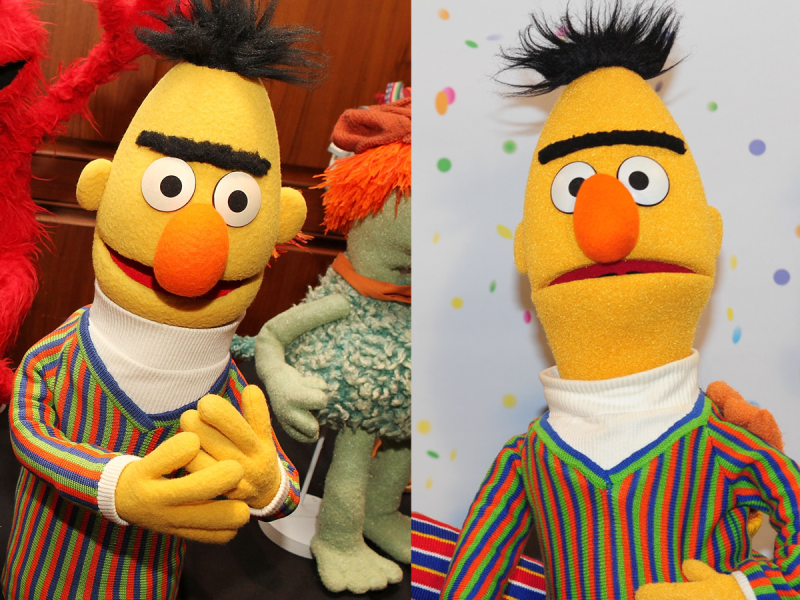
Comparative Analysis
| Character | 1970s Design vs. 2020s Evolution |
|---|---|
| Big Bird |
|
| Cookie Monster |
|
| Elmo |
|
| Abby Cadabby |
|
Future Trends and Innovations
The next phase of Sesame Street character evolution is being shaped by two forces: AI-driven personalization and globalization. Early prototypes suggest that future episodes could use facial recognition (in a child-safe way) to tailor segments to a viewer’s learning pace. Imagine Elmo adjusting his speech based on whether a child is struggling with a concept—this isn’t sci-fi; it’s already in testing. Meanwhile, the show is expanding its international cast, with new characters like Kami (a Muppet from Japan) designed to reflect global cultures while maintaining educational consistency. The goal? A Sesame Street that feels like a classroom without walls, where a child in Brazil learns alongside one in Bangladesh, yet both see themselves in the characters.Another frontier is gamification. Research shows that children retain information better when it’s framed as play. Future iterations may introduce AR elements, where a child’s living room becomes a "Sesame Street" playground, with characters like Grover appearing via tablet to guide interactive lessons. Even the show’s humor is evolving—expect more meta-jokes (e.g., characters breaking the fourth wall to explain concepts), as cognitive science confirms that preschoolers grasp abstract thinking earlier than assumed. The ultimate aim? To make learning feel less like a lesson and more like an adventure—because in the end, that’s what Sesame Street has always been: a bridge between childhood wonder and the world’s complexities.

Conclusion
The evolution of every Sesame Street character is a testament to the power of intentional design. It’s not just about updating costumes or voices; it’s about recalibrating how an entire generation learns, feels, and interacts with the world. From Big Bird’s wings to Elmo’s emotional depth, each change is a response to data, culture, and the unspoken needs of children. The show’s genius lies in its ability to stay relevant—not by chasing trends, but by understanding the deeper currents of child development. In an era where screens dominate early childhood, Sesame Street remains a rare example of media that grows with its audience, not just alongside it.As we look ahead, the most exciting question isn’t what characters will change next, but how those changes will shape the next generation. Will future Elmos teach kids about climate anxiety? Will Cookie Monsters tackle screen addiction? The answer lies in the same principle that’s guided the show for 50 years: listen to the data, trust the children, and let the characters lead the way. After all, the best teachers don’t just instruct—they inspire, and that’s the legacy of Sesame Street.
Comprehensive FAQs
Q: Why did Big Bird’s wings change so dramatically?
Big Bird’s wings evolved for two key reasons: symbolism and educational pacing. In the 1970s, his wings were functional (for flight), but by the 2000s, they became more expressive—flapping to emphasize excitement or shrinking to show shyness. The changes were informed by studies on non-verbal communication in children, proving that visual cues enhance comprehension. Additionally, the wings now incorporate cultural patterns (e.g., African kente cloth, Native American designs) to subtly introduce diversity without direct instruction.
Q: How does Cookie Monster’s character reflect modern parenting trends?
Cookie Monster’s arc mirrors the rise of mindful parenting and executive function training. In the 1970s, his greed was a simple lesson in moderation, but today, his struggles with impulse control (e.g., resisting cookies to focus on a task) align with ADHD awareness and delayed gratification studies. The show’s writers consulted dietitians to ensure his cravings tied to nutritional education, while his "healthier snack" segments reflect modern concerns about childhood obesity. Even his name—originally "Cookie Monster," now often called "Cookie Monster Who Wants to Learn"—highlights the shift from punishment-based learning to growth mindset pedagogy.
Q: Were any characters removed due to backlash?
No characters were permanently removed, but some were phased out or reimagined due to cultural shifts. For example, Mr. Hooper’s death (1983) was a landmark moment that addressed grief in children, but it also led to his temporary absence—until the show introduced Mr. Hooper’s ghost as a way to discuss mortality without retraumatizing viewers. Similarly, Herry Monster (a human-like Muppet) was retired in the 2000s after studies showed that children preferred characters with anthropomorphic traits (like fur or feathers) for emotional identification. The show’s approach is always adaptive: characters aren’t erased; they’re repurposed to fit new educational goals.
Q: How does Sesame Street balance humor with serious topics?
The show uses a technique called "serious play", where heavy topics are framed in a way that feels accessible but not trivialized. For example, the episode about 9/11 (2002) used metaphors (e.g., a "big, scary bird" to explain the event) while allowing kids to ask questions through characters like Elmo. Humor is used strategically—laughter lowers cognitive resistance, making it easier to absorb difficult concepts. Even in segments about divorce (e.g., Maria and Luis’s separation), the tone is light but honest, with characters like Abby Cadabby explaining feelings in a way that feels playful yet profound. The rule? Never lecture; always model.
Q: What’s the biggest misconception about Sesame Street’s character evolution?
The biggest myth is that changes are arbitrary or driven by ratings. In reality, every evolution is data-backed. For instance, when Rosita (a bilingual Muppet) was introduced in 2002, it wasn’t a trend—it was a response to U.S. Census data showing that 20% of preschoolers spoke a language other than English at home. Similarly, the shift from physical comedy to verbal humor in the 2010s wasn’t about "keeping up with the times"; it was based on neurological studies proving that preschoolers grasp sarcasm and puns earlier than previously thought. The show’s characters don’t change because of trends—they change because of children.
Leave a Comment
Comments are moderated before appearing. The data you submit is processed according to the Privacy Policy of Neip.