How Facebook Events Reshaped Social Gathering—And What’s Next
Facebook Events didn’t just appear—they emerged from a quiet need. In 2011, when the platform quietly rolled out its event creation tool, few anticipated how it would evolve into a cornerstone of modern social coordination. What started as a way to organize birthday parties or local meetups became the backbone of global activism, corporate launches, and even pandemic-era virtual conferences. The feature’s adaptability turned it into more than a calendar; it became a cultural force, bridging physical and digital divides in ways no one predicted.
Yet its power lies in its simplicity. Unlike specialized event platforms burdened by complexity, Facebook Events thrives on familiarity. Users don’t need to learn new interfaces; they leverage the same profiles, notifications, and networks they already trust. This seamless integration explains why over 1 billion people now interact with Facebook Events annually—whether they’re RSVPing to a friend’s wedding or tuning into a livestreamed product reveal. The platform’s algorithmic nudges (think "Your friend is going—join them!") further amplify its reach, turning passive observers into active participants.
The feature’s longevity also stems from its role as a social contract. In an era where trust in digital spaces is fragile, Facebook Events offers tangible proof: a visible guest list, real-time updates, and the psychological reassurance of shared commitments. Whether it’s a 5K run or a political rally, the act of publicly marking "Attending" creates accountability—something traditional event tools often lack. This blend of utility and social pressure has cemented Facebook Events as the default for organizers who prioritize both efficiency and engagement.
The Complete Overview of Facebook Events
Facebook Events operates as a hybrid between a digital calendar and a social graph, where every invitation, RSVP, and reminder serves dual purposes: logistical coordination and community reinforcement. At its core, the system leverages Facebook’s existing infrastructure—user profiles, friend networks, and news feeds—to streamline event creation. Organizers can set dates, times, locations (physical or virtual), and even ticketing links, while attendees receive automated reminders and updates. The platform’s integration with Messenger and Stories further extends its functionality, allowing for real-time Q&As, live polls, or even embedded video content. This ecosystem transforms passive event listings into dynamic, interactive experiences.
What sets Facebook Events apart is its scalability. A local book club can use it just as effectively as a multinational corporation promoting a product launch. The tool adapts to the organizer’s needs: small groups rely on private event links, while large-scale hosts leverage Facebook’s advertising tools to boost visibility. Additionally, the platform’s analytics—tracking RSVPs, attendance rates, and engagement metrics—provides organizers with actionable data, bridging the gap between intuition and strategy. For businesses and nonprofits, this means turning events into measurable marketing assets, not just logistical hurdles.
Historical Background and Evolution
The origins of Facebook Events trace back to 2011, when the platform introduced a basic event-creation feature as part of its broader push to monetize user interactions. Initially, it was a modest tool, designed to compete with standalone event sites like Eventbrite but with the advantage of built-in social validation. Early adopters—primarily college students and small community groups—used it to organize parties, study sessions, and local meetups. The feature’s growth was slow but steady, fueled by Facebook’s expanding user base and the platform’s knack for turning niche functionalities into mainstream habits.
Table of Contents
- The Complete Overview of Facebook Events
- Historical Background and Evolution
- Core Mechanisms: How It Works
- Key Benefits and Crucial Impact
- Major Advantages
- Comparative Analysis
- Future Trends and Innovations
- Conclusion
- Comprehensive FAQs
- Q: Can I charge for tickets through Facebook Events?
- Q: How do I boost attendance for a Facebook Event?
- Q: Are Facebook Events secure for private gatherings?
- Q: Can I track who attended my Facebook Event?
- Q: What’s the difference between a Facebook Event and a Group?
- Q: How do I make my Facebook Event stand out in a crowded feed?
- Q: Are there any hidden fees for using Facebook Events?
- Q: Can I edit a Facebook Event after it’s been created?
- Q: How do I handle no-shows for my Facebook Event?
- Q: What’s the best way to follow up after a Facebook Event?
By 2015, Facebook Events had undergone significant upgrades, including the addition of ticketing integrations (via third-party partners) and the ability to host live video within events. The platform also introduced "Going" and "Interested" statuses, which tapped into FOMO (fear of missing out) psychology to drive higher engagement. A pivotal moment came in 2017, when Facebook expanded Events to include virtual reality (VR) support, allowing users to attend events in immersive 3D spaces. This move positioned Facebook Events as a pioneer in the burgeoning virtual event space, long before the pandemic forced the world online. The feature’s evolution reflects a broader trend: digital tools are no longer just supplements to real-world experiences but integral components of them.
Core Mechanisms: How It Works
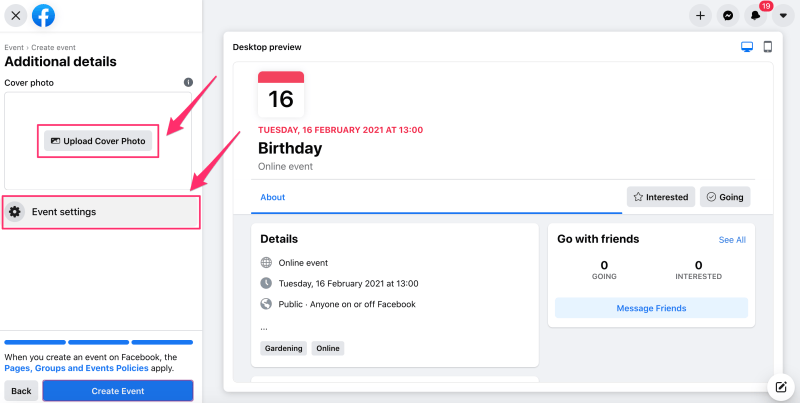
Creating a Facebook Event begins with a few clicks: select "Create Event" from the platform’s menu, choose between a public or private setting, and fill in details like date, location, and description. Organizers can then invite attendees via email or by pulling from their Facebook friend lists. The platform’s algorithm suggests similar events to non-invited users based on interests, further expanding reach. Once live, the event page becomes a hub for interaction—attendees can post updates, share photos, or join group chats. For virtual events, Facebook offers tools like screen-sharing, breakout rooms, and live captions, mirroring the functionality of dedicated webinar platforms.
The real magic happens in the backend. Facebook’s event system relies on a combination of real-time notifications and predictive analytics. For instance, if an attendee marks "Maybe" but hasn’t engaged with the event for a week, the platform may send a personalized reminder or highlight similar events their friends are attending. Meanwhile, organizers receive dashboards showing RSVP trends, drop-off rates, and even post-event feedback. This data-driven approach allows for dynamic adjustments—such as extending deadlines for tickets or promoting the event to cold audiences—without leaving the platform. The seamless flow between creation, promotion, and execution is what makes Facebook Events a one-stop solution for modern organizers.
Key Benefits and Crucial Impact
Facebook Events didn’t just fill a gap; it redefined how people conceptualize gatherings. Before its rise, event planning was either overly bureaucratic (requiring spreadsheets and email chains) or fragmented (relying on disparate apps for tickets, reminders, and updates). Facebook’s solution was to centralize everything under one roof, leveraging the trust users already placed in the platform. This shift had ripple effects across industries: nonprofits used it to mobilize volunteers, businesses to launch products, and educators to host virtual classrooms. The tool’s success also highlighted a cultural shift—people no longer saw digital and physical events as mutually exclusive but as complementary experiences.
The platform’s impact extends beyond logistics. By embedding events within Facebook’s social fabric, it turned attendance into a form of social capital. The act of RSVPing isn’t just a logistical checkbox; it’s a public declaration of affiliation. This dynamic has been particularly influential in activism, where Facebook Events have become tools for mobilizing protests, fundraisers, and awareness campaigns. For example, the #BlackLivesMatter movement used Facebook Events to coordinate marches, while global climate strikes leveraged the platform to track attendance across continents. In essence, Facebook Events transformed passive scrolling into active participation, blurring the lines between online and offline engagement.
"Facebook Events turned the act of planning into a shared experience. It’s not just about the event itself but the collective anticipation leading up to it—the comments, the memes, the inside jokes. That’s the real value."
— Sarah Chen, Digital Community Strategist at Meta
Major Advantages
- Unified Ecosystem: No need for third-party tools. Ticketing, reminders, and social sharing are all integrated, reducing friction for both organizers and attendees.
- Built-in Audience: Events are automatically promoted to friends and suggested to relevant users, eliminating the need for external marketing in many cases.
- Real-Time Engagement: Features like live reactions, photo albums, and group chats keep momentum alive before, during, and after the event.
- Data-Driven Insights: Organizers access analytics on RSVPs, attendance, and engagement, enabling data-backed decisions for future events.
- Accessibility: Virtual event tools (like live streaming and breakout rooms) make participation possible for global audiences, regardless of physical location.

Comparative Analysis
| Feature | Facebook Events | Eventbrite | Meetup |
|---|---|---|---|
| Primary Audience | General public, businesses, nonprofits (social-first focus) | Professionals, large-scale organizers (ticketing-first) | Local communities, niche interest groups (in-person focus) |
| Strengths | Social integration, low barrier to entry, built-in promotion | Robust ticketing, analytics, and payment processing | Hyper-local networking, verified organizers, offline meetups |
| Weaknesses | Limited customization for complex events, ad-heavy interface | Higher costs for small organizers, less social engagement | Less scalable for virtual events, manual verification process |
| Best For | Casual gatherings, viral campaigns, community-driven events | Paid conferences, large-scale ticketed events | Small groups, local networking, in-person meetups |
Future Trends and Innovations
The next phase of Facebook Events will likely focus on two fronts: deeper integration with the metaverse and AI-driven personalization. As virtual reality and augmented reality become more accessible, Facebook (now Meta) is positioning Events as a gateway to immersive experiences. Imagine attending a concert where you can interact with artists in 3D space or a corporate training session with holographic instructors. The platform’s investments in VR headsets like the Quest suggest this isn’t just speculative—it’s a strategic pivot. Meanwhile, AI could revolutionize event discovery by predicting which gatherings align with a user’s interests before they even search for them, turning passive browsing into proactive recommendations.
Another trend is the blurring of lines between public and private events. With growing concerns over digital privacy, Facebook Events may introduce more granular controls—such as anonymous RSVP options or encrypted group chats—to appeal to professional networks and sensitive discussions. Additionally, as hybrid events (combining physical and virtual attendance) become the norm, Facebook Events could evolve into a hub for live-streaming tools, interactive polls, and even real-time translation services. The platform’s ability to adapt to these shifts will determine whether it remains the default for digital gatherings—or if newer, more specialized tools overtake it.

Conclusion
Facebook Events is more than a feature; it’s a reflection of how digital and social behaviors have merged. What began as a simple calendar tool has grown into a cultural phenomenon, reshaping how we plan, promote, and participate in gatherings. Its success lies in its ability to balance utility with social engagement—a rare feat in an era of fragmented digital experiences. For organizers, it offers an all-in-one solution; for attendees, it provides a sense of belonging. As the platform continues to evolve, its impact will likely extend beyond events themselves, influencing how we conceive of community in the digital age.
The key takeaway? Facebook Events isn’t just keeping up with the times—it’s setting the pace. Whether you’re a small business, a nonprofit, or an individual hosting a friend’s birthday, the tool’s adaptability ensures it will remain relevant. The question isn’t if it will change further, but how deeply it will embed itself into the fabric of modern social interaction. One thing is certain: the era of static event listings is over. The future belongs to dynamic, connected, and immersive gatherings—and Facebook Events is leading the charge.
Comprehensive FAQs
Q: Can I charge for tickets through Facebook Events?
A: Yes, but with limitations. Facebook Events itself doesn’t support direct ticket sales, but organizers can integrate third-party ticketing services (like Eventbrite or Brown Paper Tickets) via a link. For virtual events, Facebook’s built-in ticketing for live videos is an option, though it’s primarily designed for paid livestreams rather than traditional events.
Q: How do I boost attendance for a Facebook Event?
A: Leverage Facebook’s built-in promotion tools: share the event to your Timeline, join relevant Facebook Groups to cross-promote, and use targeted ads to reach lookalike audiences. Encourage attendees to invite friends by offering incentives (e.g., "Bring a guest, get a freebie"). Posting reminders in Stories and engaging with comments can also create urgency. For virtual events, go live on the event page to generate buzz.
Q: Are Facebook Events secure for private gatherings?
A: Privacy settings allow organizers to restrict events to friends-only or specific groups, but security depends on user behavior. For sensitive discussions, consider hosting the event in a private Facebook Group instead. Avoid sharing event details (like passwords or meeting links) publicly, even if the event itself is private. For high-stakes gatherings (e.g., legal or financial discussions), external platforms with end-to-end encryption may be safer.
Q: Can I track who attended my Facebook Event?
A: Facebook provides basic attendance data for virtual events (via live video analytics) but lacks real-time check-ins for in-person gatherings. For physical events, you’ll need to rely on manual methods (e.g., sign-in sheets) or third-party tools like QR code check-ins. Post-event, you can see who marked "Attending" or engaged with the event page, but this isn’t a definitive attendance record.
Q: What’s the difference between a Facebook Event and a Group?
A: A Facebook Event is time-bound and focused on a specific gathering (e.g., a conference or party), while a Group is an ongoing community space (e.g., a fan club or professional network). Events have start/end dates and RSVPs; Groups are persistent and allow continuous discussion. However, you can use a Group to organize an event by creating a dedicated event post within the Group’s feed, combining the two functionalities.
Q: How do I make my Facebook Event stand out in a crowded feed?
A: Optimize your event’s visibility with a compelling cover photo (high-resolution, on-brand), a clear and concise description, and keywords in the title (e.g., "Virtual Workshop: AI for Beginners"). Use Facebook’s event categories to improve discoverability, and pin the event to your profile. Engage early by responding to comments and encouraging shares. For virtual events, enable live video previews or teaser content to generate anticipation.
Q: Are there any hidden fees for using Facebook Events?
A: No direct fees from Facebook, but costs may arise from third-party integrations (e.g., ticketing services or payment processing fees). Virtual events hosted via Facebook Live may incur charges if monetized (e.g., for paid livestreams). Always review terms for external tools linked to your event to avoid surprises.
Q: Can I edit a Facebook Event after it’s been created?
A: Yes, but changes are limited to certain fields (e.g., date, time, description) and may affect existing RSVPs. Major edits (like moving the event to a different date) require notifying attendees manually. Avoid last-minute changes to avoid confusion; use the "Save as Draft" option if you need to revise details before finalizing.
Q: How do I handle no-shows for my Facebook Event?
A: There’s no automated way to penalize no-shows, but you can deter them by requiring RSVPs or deposits (via third-party ticketing). For recurring events (e.g., monthly meetups), note repeat offenders in a private Group or via Messenger. For one-time events, assume some drop-offs are inevitable and focus on maximizing engagement with confirmed attendees.
Q: What’s the best way to follow up after a Facebook Event?
A: Use Facebook’s event page to post a recap (photos, highlights, thank-yous). For virtual events, share the recording (if applicable) and encourage attendees to join a follow-up Group or comment with feedback. Send personalized thank-you messages to key participants via Messenger. Surveys (via Google Forms or Facebook Polls) can gather insights for future events.
Leave a Comment
Comments are moderated before appearing. The data you submit is processed according to the Privacy Policy of Neip.