How the StateFarm Pay Bill Works: A Deep Dive Into Insurance Payments

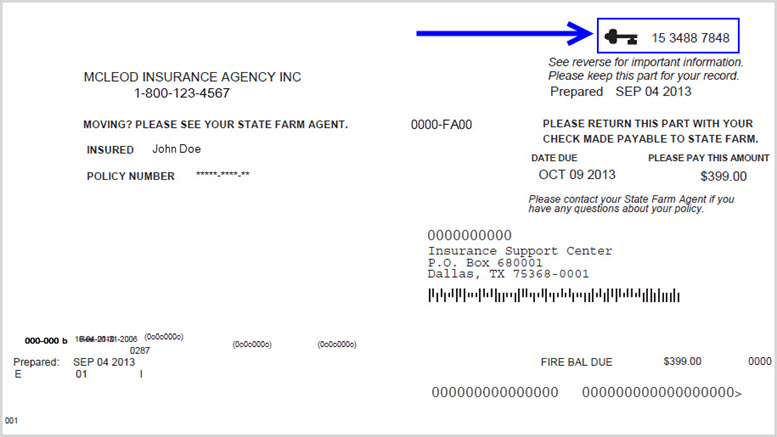
StateFarm’s billing system is more than a monthly deduction—it’s a structured process that balances transparency with efficiency. For millions of policyholders, the StateFarm pay bill represents the financial commitment tied to their insurance coverage, whether for auto, home, or renters policies. Yet, behind the simplicity of automated payments lies a complex interplay of premium calculations, claim adjustments, and billing cycles that can significantly impact a household’s budget.
The StateFarm pay bill isn’t static; it evolves with policy changes, risk assessments, and even external economic factors. A sudden spike in your premium notice might stem from a traffic violation, a home renovation, or even a broader industry shift in underwriting standards. Understanding these dynamics isn’t just about managing expenses—it’s about leveraging your policy to its fullest potential while avoiding costly surprises.
For those who’ve ever questioned why their StateFarm pay bill fluctuates or how claims affect their monthly payments, the answers lie in the company’s billing mechanisms, historical practices, and competitive positioning. This exploration breaks down the system’s core components, its advantages, and how it stacks up against alternatives—along with what’s next for insurance payments in an era of digital transformation.
The Complete Overview of the StateFarm Pay Bill
The StateFarm pay bill is the financial backbone of one of the largest insurance providers in the U.S., serving over 90 million policies annually. Unlike generic insurance billing, StateFarm’s system integrates real-time risk data, customer service interactions, and automated fraud detection to tailor payments to individual policyholder profiles. This isn’t just about collecting premiums; it’s a dynamic process that adjusts based on driving records, property assessments, and even weather-related risks in your area.What sets StateFarm apart is its emphasis on predictive billing—a feature that uses historical claim data to estimate future payouts and adjust premiums accordingly. For example, if your neighborhood experiences an uptick in hail damage claims, your homeowners StateFarm pay bill might reflect a temporary increase until the trend stabilizes. This proactive approach contrasts with traditional insurers that rely solely on fixed-rate policies, often leaving customers in the dark about why their bills change.
Historical Background and Evolution
StateFarm’s billing practices trace back to its founding in 1922, when the company prioritized transparency in pay bills as a way to build trust in an industry notorious for opaque pricing. Early policies included detailed breakdowns of premiums, deductibles, and even discounts for safe driving—a rarity at the time. By the 1980s, the rise of computerization allowed StateFarm to introduce automated billing cycles, reducing human error and speeding up claim processing.The real inflection point came in the 2000s with the advent of big data analytics. StateFarm began cross-referencing policyholder information with external datasets—such as credit scores, traffic violation databases, and even social media trends—to refine risk assessments. This shift didn’t just improve accuracy; it also enabled personalized pay bills, where discounts or surcharges were applied based on individual behavior rather than broad demographic assumptions. Today, the StateFarm pay bill is a hybrid of legacy precision and cutting-edge technology, blending manual underwriter reviews with AI-driven adjustments.
Core Mechanisms: How It Works
At its core, the StateFarm pay bill operates on a quarterly or semi-annual billing cycle, depending on the policy type. For auto insurance, payments are typically calculated monthly based on a 12-month projection, while homeowners policies often use a level billing method to spread annual premiums evenly. The key variables in your StateFarm pay bill include:Table of Contents
- The Complete Overview of the StateFarm Pay Bill
- Historical Background and Evolution
- Core Mechanisms: How It Works
- Key Benefits and Crucial Impact
- Major Advantages
- Comparative Analysis
- Future Trends and Innovations
- Conclusion
- Comprehensive FAQs
- Q: Why did my StateFarm pay bill increase after a minor fender bender?
- Q: Can I dispute a charge on my StateFarm pay bill?
- Q: Does bundling policies always lower my StateFarm pay bill?
- Q: How often does StateFarm review my pay bill for potential discounts?
- Q: What happens if I miss a StateFarm pay bill payment?
- Q: Can I switch from monthly to annual billing to reduce my StateFarm pay bill?
Behind the scenes, StateFarm’s billing engine pulls data from multiple sources: your policy’s initial underwriting, real-time telematics (for auto policies), and even third-party risk models. For instance, if your StateFarm pay bill for auto insurance spikes after a speeding ticket, the system flags the violation within 30 days and recalculates your monthly payment—often with a phased increase to avoid financial shock.
Key Benefits and Crucial Impact
The StateFarm pay bill isn’t just a line item on your bank statement; it’s a reflection of the company’s commitment to predictable, fair pricing. For policyholders, this means fewer surprises and more control over their insurance expenses. Unlike competitors that bury fees in fine print, StateFarm’s billing transparency extends to itemized statements, online portals where you can track adjustments, and customer service representatives who explain changes in real time.This approach has tangible benefits beyond the bottom line. Policyholders report higher satisfaction rates with StateFarm’s pay bill clarity, particularly when compared to insurers that lump all charges into a single "premium" figure. The system also reduces administrative overhead—fewer disputes over billing errors and faster resolutions when issues arise.
> "StateFarm’s billing model is a masterclass in balancing automation with human oversight. When a customer calls to question a $50 increase in their homeowners pay bill, they don’t just get a generic response—they hear, ‘Your roof inspection flagged minor wear, and we’ve adjusted your deductible by $25 to offset the cost.’ That level of detail builds trust." — Industry Analyst, J.D. Power
Major Advantages
- Real-Time Adjustments: Your StateFarm pay bill updates dynamically based on new risk data, ensuring you’re never overpaying for coverage that no longer reflects your circumstances.
- Flexible Payment Plans: Options like level billing or pay-in-full discounts allow policyholders to align payments with their cash flow, reducing financial strain.
- Claim Impact Transparency: After filing a claim, StateFarm provides a pay bill impact statement detailing how the incident will affect future premiums, with options to mitigate increases (e.g., completing a defensive driving course).
- Multi-Policy Synergies: Bundling auto, home, and life insurance under one StateFarm pay bill often yields discounts that aren’t available with standalone policies.
- Digital Accessibility: The StateFarm mobile app and online portal let you view, download, and even dispute pay bill entries instantly, eliminating the need for phone calls or mail delays.
Comparative Analysis
While StateFarm’s pay bill system is robust, it’s not without competitors. Below is a side-by-side comparison of how StateFarm stacks up against industry leaders in billing transparency, claim processing, and customer flexibility.| Feature | StateFarm | Geico | Allstate | Progressive |
|---|---|---|---|---|
| Billing Frequency | Monthly/Quarterly (customizable) | Monthly (fixed) | Monthly (with annual review) | Monthly (with bi-annual rate checks) |
| Pay Bill Transparency | Itemized breakdowns, real-time adjustments | Basic premium + fees, minimal explanations | Detailed but requires agent calls for changes | Snapshot view; adjustments require online chat |
| Claim Impact on Pay Bill | Immediate notification + mitigation options | Delayed updates, generic rate hikes | 30-day notice with no alternatives | Automated increases with no human review |
| Discount Flexibility | Dynamic discounts (e.g., safe driver credits) | Static discounts (e.g., bundling) | Limited to policy type (e.g., new roof = lower premium) | Usage-based discounts (e.g., Snapshot program) |
Future Trends and Innovations
The StateFarm pay bill is evolving alongside broader insurance industry shifts. One emerging trend is subscription-based billing, where policyholders pay a fixed monthly fee for coverage tiers—similar to how streaming services operate. StateFarm has already piloted this model for commercial clients, and analysts predict it will extend to personal lines within the next five years. This could mean your StateFarm pay bill becomes more like a Netflix subscription: predictable, scalable, and tied to usage.Another innovation on the horizon is AI-driven pay bill personalization. By integrating wearables (e.g., Apple Watch for health insurance) or smart home devices (e.g., leak detectors for homeowners), StateFarm could adjust your pay bill in real time based on behavior. For example, if your smart thermostat shows you’re reducing energy use, your homeowners premium might dip slightly—without manual intervention. While privacy concerns remain, the potential for hyper-personalized billing could redefine how insurers interact with customers.

Conclusion
The StateFarm pay bill is more than a transaction—it’s a reflection of how insurance is becoming smarter, more responsive, and increasingly tailored to individual lives. For policyholders, this means fewer billing mysteries and more opportunities to optimize costs. For the industry, it signals a move away from one-size-fits-all pricing toward dynamic, data-informed financial commitments.As technology advances, the StateFarm pay bill will likely continue to blur the lines between insurance and financial services, offering features like embedded claims processing or instant refunds for unused coverage. The key for consumers is to stay informed: review your pay bill regularly, ask questions about adjustments, and leverage tools like StateFarm’s app to maximize savings. In an era where every dollar counts, understanding your StateFarm pay bill isn’t just smart—it’s essential.
Comprehensive FAQs
Q: Why did my StateFarm pay bill increase after a minor fender bender?
A: StateFarm’s billing system treats at-fault accidents as risk indicators, even for minor claims. The increase typically reflects the company’s assessment of your future claim likelihood. However, you can often mitigate the hike by completing a defensive driving course or installing anti-theft devices, which may offset the premium adjustment within 6–12 months.
Q: Can I dispute a charge on my StateFarm pay bill?
A: Yes. If you spot an error—such as a duplicate fee or incorrect discount application—log into your StateFarm account, navigate to the "Payments & Billing" section, and select "Dispute a Charge." You’ll need to provide documentation (e.g., a screenshot of your policy details or a receipt for a claimed discount). StateFarm aims to resolve disputes within 15 business days.
Q: Does bundling policies always lower my StateFarm pay bill?
A: Bundling typically reduces your pay bill by 10–20%, but the savings depend on your existing discounts. For example, if you already have a safe driver discount, the bundling benefit might be smaller. Use StateFarm’s "Bundle Builder" tool to compare scenarios before committing. Some policyholders find that adding life insurance to their auto/home bundle yields better savings than combining just two lines.
Q: How often does StateFarm review my pay bill for potential discounts?
A: StateFarm’s system performs automated discount checks quarterly, but you can trigger a manual review anytime by calling customer service or using the "Discount Finder" in your online account. For instance, if you install a security system after your policy starts, StateFarm may retroactively apply a discount to your next pay bill cycle.
Q: What happens if I miss a StateFarm pay bill payment?
A: Late payments incur a 1.5% monthly late fee (capped at $25) and may trigger a temporary suspension of coverage until the amount is paid. StateFarm offers hardship programs for policyholders facing financial difficulties—contact them within 30 days of the due date to explore options like payment plans or temporary waivers. Avoiding lapses is critical, as reinstating coverage after a cancellation can lead to higher premiums.
Q: Can I switch from monthly to annual billing to reduce my StateFarm pay bill?
A: Yes, StateFarm offers a pay-in-full discount (typically 5–7%) for annual payments. To switch, log into your account, go to "Billing Settings," and select "Change Payment Frequency." Note that while this lowers your pay bill upfront, it requires a larger lump-sum payment. Weigh the discount against your cash flow needs before opting for annual billing.
Leave a Comment
Comments are moderated before appearing. The data you submit is processed according to the Privacy Policy of Neip.