The Hidden Story Behind When Was the Suez Canal Built and Why It Still Shapes Global Trade

The Suez Canal wasn’t just dug—it was carved from the ambitions of a French diplomat, the sweat of 30,000 laborers, and the blood of a war that nearly buried its existence before it even opened. When was the Suez Canal built? The answer isn’t a single date but a decade-long saga (1859–1869) punctuated by financial ruin, diplomatic intrigue, and a daring gamble that transformed the world’s economy. The canal’s opening in 1869 didn’t just connect the Mediterranean to the Red Sea; it severed the need for ships to circumnavigate Africa, slashing voyage times from months to weeks and birthing the era of modern globalization.
Yet the canal’s story begins long before the first shovel struck Egyptian soil. Centuries earlier, pharaohs dreamed of a waterway linking their empire to the Indian Ocean, but it was Ferdinand de Lesseps—a man with no engineering experience but boundless confidence—who turned that dream into a reality. His vision, however, came at a cost: the lives of thousands, the bankruptcy of his company, and a near-miss with British military intervention. The canal’s construction wasn’t just about digging dirt; it was a high-stakes geopolitical chessboard where France, Britain, and Egypt played for control of the world’s trade arteries.
Today, when the question "when was the Suez Canal built" arises, it’s rarely about dates alone. It’s about understanding how this 193-kilometer waterway became the lifeline of 12% of global trade, why its blockages still send shockwaves through markets, and how its history mirrors the rise and fall of empires. The canal’s legacy isn’t static—it’s a living testament to how human ingenuity, power struggles, and economic necessity collide to reshape civilization.
The Complete Overview of When the Suez Canal Was Built
The Suez Canal’s construction spanned a tumultuous decade, from 1859 to 1869, but its origins trace back to ancient visions and 19th-century imperialism. The project’s inception was driven by Ferdinand de Lesseps, a French diplomat who secured a concession from Egypt’s Khedive Said Pasha in 1854 to build a canal linking the Mediterranean to the Red Sea. The timing was critical: the Crimean War (1853–1856) had exposed the vulnerability of overland supply routes, and the discovery of the Suez Isthmus as a viable path—rather than the failed attempt at the Corinth Canal—made the project feasible. By 1858, Lesseps had formed the Suez Canal Company, raising capital from European investors, though the financial risks were staggering.
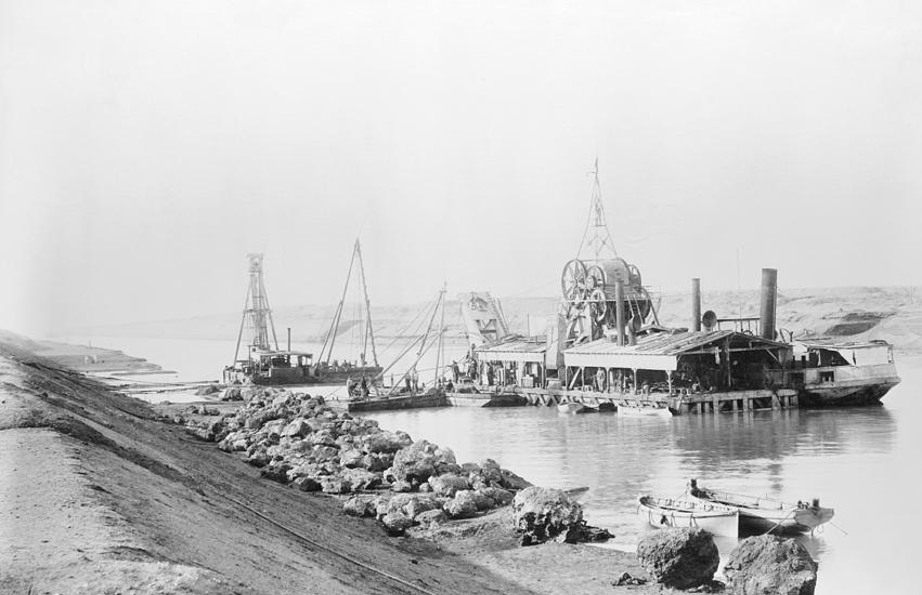
Work began in April 1859 with a ceremonial groundbreaking, but the reality was far grimmer. The terrain was treacherous: the canal had to cut through limestone, sand, and marshland while battling malaria, cholera, and the physical toll of manual labor. Lesseps’ initial plan relied on manual excavation, but as costs ballooned and deaths mounted, he was forced to import steam dredgers and recruit laborers from across the Mediterranean and Asia. The project’s scale was unprecedented—equivalent to digging the Panama Canal three times over—and by 1867, with the canal nearly complete, Egypt’s economy was on the brink of collapse, forcing the government to sell its shares to Britain. The final breakthrough came in November 1869, when the last section was opened, and Empress Eugenie of France officially inaugurated the waterway with a lavish ceremony aboard the Aziza.
Historical Background and Evolution
The idea of a Suez Canal predates modern history. Pharaoh Necho II of Egypt reportedly commissioned a survey in the 7th century BCE, but it was abandoned due to the sheer difficulty of the task. By the 19th century, however, technological advancements and the scramble for colonial resources made the project viable. The French, led by Lesseps, saw it as a way to bypass the British-controlled Cape of Good Hope route, which dominated maritime trade. The British, initially skeptical, later recognized the canal’s strategic value—so much so that they occupied Egypt in 1882 to "protect" their interests, a move that would entangle the region in colonial politics for decades.
Table of Contents
- The Complete Overview of When the Suez Canal Was Built
- Historical Background and Evolution
- Core Mechanisms: How It Works
- Key Benefits and Crucial Impact
- Major Advantages
- Comparative Analysis
- Future Trends and Innovations
- Conclusion
- Comprehensive FAQs
- Q: How long did it take to build the Suez Canal?
- Q: Who funded the construction of the Suez Canal?
- Q: Why was the Suez Canal built at that location?
- Q: How many people died during the Suez Canal’s construction?
- Q: What was the Suez Crisis of 1956, and how did it relate to the canal?
- Q: Can the Suez Canal be blocked again, and what are the risks?
- Q: How does the Suez Canal affect oil prices?
- Q: Is the Suez Canal still profitable today?
- Q: Are there plans to expand the Suez Canal further?
- Q: How does the Suez Canal compare to the Panama Canal in terms of shipping?
The canal’s design was revolutionary for its time. Unlike natural waterways, it required precise engineering: locks were avoided to maintain a consistent sea-level route, and the canal’s width was standardized to accommodate the largest ships of the era. The project’s completion in 1869 wasn’t just a triumph of engineering but a geopolitical victory. The canal’s ownership structure—with shares held by European investors and Egypt—set the stage for future conflicts, including the 1882 British occupation and the 1956 Suez Crisis, when Egypt’s President Nasser nationalized the canal, sparking an international crisis. Even today, the question of who controls the Suez Canal remains a flashpoint in global diplomacy.
Core Mechanisms: How It Works
The Suez Canal operates on a simple yet brilliant principle: it’s a sea-level waterway, meaning it doesn’t rely on locks or dams to raise or lower ships. Instead, it’s a narrow, artificial river that stretches 193 kilometers from Port Said in the north to the Great Bitter Lake in the south, before emptying into the Red Sea. Ships transit the canal in a single direction at a time, guided by a complex system of traffic management to prevent collisions. The canal’s width varies—from 205 meters at its narrowest point to 335 meters at its widest—but it’s deep enough (20–24 meters) to accommodate modern container ships, though larger vessels like the Ever Given must navigate carefully.
One of the canal’s most critical features is its ballast system, which allows ships to adjust their draft (depth) to avoid running aground in shallow sections. The canal’s operators, the Suez Canal Authority (SCA), also employ a sophisticated tugboat escort system to guide vessels through the most hazardous stretches, particularly around the Bitter Lakes, where strong currents and shifting sands pose risks. The entire transit, from entry to exit, typically takes 12–16 hours, but delays—such as those caused by the 2021 Ever Given blockage—can halt global shipping for days. The canal’s efficiency is measured in transit time saved: a ship traveling from Europe to Asia cuts its journey by roughly 8,000 kilometers, saving weeks of sailing and millions in fuel costs.
Key Benefits and Crucial Impact
The Suez Canal’s completion in 1869 didn’t just change shipping—it redefined the economic and military calculus of the modern world. Before its opening, ships had to sail around Africa, adding thousands of kilometers and months to voyages. The canal’s impact was immediate: freight costs plummeted, colonial empires expanded faster, and new trade routes flourished. By the early 20th century, the canal handled over 50% of global maritime traffic, and today, it remains a critical artery for oil, container ships, and bulk commodities. Its strategic value is undeniable; control over the canal has been a battleground in nearly every major conflict since its inception.
The canal’s influence extends beyond economics. It accelerated the decline of the Ottoman Empire by enabling European powers to project force more efficiently into the Middle East. It also democratized global trade, allowing smaller nations to compete with colonial powers by reducing shipping costs. Even today, when disruptions occur—such as the 2021 blockage—the ripple effects are felt in stock markets, supply chains, and geopolitical tensions. The canal’s legacy is a reminder that infrastructure isn’t just about concrete and steel; it’s about power, access, and the invisible threads that connect nations.
"The Suez Canal is not merely a waterway; it is the lifeblood of international commerce. Its closure is not an event—it is a declaration of war on the global economy."
— Jean-Pierre Pernaut, French journalist and geopolitical analyst
Major Advantages
- Reduced Transit Times: Ships save up to 8,000 kilometers by avoiding the Cape of Good Hope, cutting voyage durations by weeks and slashing fuel costs by 30%.
- Economic Hub: The canal generates billions annually in tolls (over $5.5 billion in 2022) and supports Egypt’s economy, which relies on it for 3% of its GDP.
- Strategic Military Value: Control over the canal has been a flashpoint in wars, from the 1882 British occupation to the 1956 Suez Crisis and the 1967 Six-Day War.
- Environmental Leverage: The canal’s construction altered local ecosystems, creating saline lakes and disrupting migration patterns, but it also enabled desalination projects in the region.
- Global Trade Accelerator: Over 12% of world trade by volume passes through the canal, including oil tankers from the Persian Gulf and containers from Asia to Europe.
Comparative Analysis
| Suez Canal (1859–1869) | Panama Canal (1904–1914) |
|---|---|
| Length: 193 km (sea-level, no locks) | Length: 82 km (lock-based, connects Atlantic to Pacific) |
| Key Challenge: Geopolitical resistance (Britain, Egypt’s financial collapse) | Key Challenge: Engineering (landslides, disease, U.S. labor disputes) |
| Economic Impact: Cut European-Asian trade time by 50% | Economic Impact: Facilitated U.S. West Coast expansion and global shipping dominance |
| Modern Role: Critical for oil and container ships | Modern Role: Expanding to accommodate larger "New Panamax" vessels |
Future Trends and Innovations
The Suez Canal’s future is being shaped by two competing forces: the need to accommodate larger ships and the threat of climate change. The canal’s current width limits the size of vessels that can pass, but plans are underway to expand it to handle "New Panamax" ships—similar to the Panama Canal’s 2016 upgrade. This would require deepening and widening sections, particularly around the Bitter Lakes, at a cost estimated at $10 billion. However, climate change poses a greater long-term risk: rising sea levels could increase the salinity of the Mediterranean, threatening the canal’s ecological balance, while more frequent storms may disrupt operations.
Another innovation on the horizon is the potential for autonomous shipping along the canal. The Suez Canal Authority has already tested AI-driven traffic management systems to optimize vessel flow, and some analysts predict fully autonomous ships could transit the canal within a decade. Additionally, the canal’s role in green shipping is being scrutinized: as global emissions regulations tighten, the canal’s efficiency in reducing long-haul voyages could make it a key player in the transition to low-carbon logistics. Yet, the biggest wildcard remains geopolitics—any shift in control, whether through Egyptian nationalization or foreign intervention, could once again turn the canal into a pawn in global power struggles.

Conclusion
The question "when was the Suez Canal built" is more than a historical footnote—it’s a gateway to understanding how the modern world was forged. The canal’s construction was a high-stakes gamble that paid off in ways its architects could scarcely imagine. It didn’t just connect two seas; it connected continents, empires, and economies in a way that continues to define global trade. Today, as we grapple with supply chain crises and geopolitical tensions, the Suez Canal remains a symbol of humanity’s ability to reshape the planet—but also of the unintended consequences when power, money, and ambition collide.
Yet the canal’s story isn’t over. From its expansion projects to its role in the future of green shipping, the Suez Canal will remain a critical node in the world’s infrastructure. Its history teaches us that the most enduring legacies aren’t just about what was built, but about who controls it—and what happens when that control is challenged. In an era of rising nationalism and climate uncertainty, the lessons of the Suez Canal are more relevant than ever.
Comprehensive FAQs
Q: How long did it take to build the Suez Canal?
A: Construction officially lasted from 1859 to 1869, but the planning and political negotiations began decades earlier. The most intensive digging occurred between 1861 and 1867, with the final section opened in November 1869. However, the project’s financial and logistical struggles extended well beyond these dates, including the 1875 sale of Egyptian shares to Britain to avert bankruptcy.
Q: Who funded the construction of the Suez Canal?
A: The Suez Canal Company, led by Ferdinand de Lesseps, raised capital primarily from French and other European investors. The Egyptian government initially owned 44% of the shares but was forced to sell them to Britain in 1875 due to financial strain. The project’s total cost is estimated at around $100 million in 19th-century dollars (equivalent to ~$10 billion today), with much of it coming from private subscriptions.
Q: Why was the Suez Canal built at that location?
A: The Suez Isthmus was chosen because it offered the shortest and most practical route between the Mediterranean and the Red Sea. Earlier attempts, like the Corinth Canal in Greece, failed due to geological challenges, while the Suez path avoided mountainous terrain. Additionally, the region had existing trade routes and a relatively stable climate compared to other proposed locations.
Q: How many people died during the Suez Canal’s construction?
A: Estimates vary, but historical records suggest that between 30,000 and 50,000 laborers—many of them conscripted or poorly paid—died during construction due to disease (malaria, cholera), accidents, or exhaustion. The conditions were so brutal that Lesseps was criticized for prioritizing speed over worker safety, leading to strikes and protests.
Q: What was the Suez Crisis of 1956, and how did it relate to the canal?
A: The Suez Crisis erupted when Egypt’s President Gamal Abdel Nasser nationalized the Suez Canal in July 1956, declaring it a sovereign asset. Britain, France, and Israel responded with a military invasion to retake control, but U.S. and Soviet pressure forced their withdrawal. The crisis marked the decline of European colonialism and solidified Egypt’s control over the canal, which remains under the Suez Canal Authority to this day.
Q: Can the Suez Canal be blocked again, and what are the risks?
A: Yes. The 2021 Ever Given blockage demonstrated how easily a single large vessel can halt global shipping. Risks include human error, mechanical failures, or even deliberate acts like protests or military actions. The canal’s narrowest sections (e.g., the Ballah Bypass) are particularly vulnerable. To mitigate risks, the Suez Canal Authority has invested in wider dredging, better traffic management, and emergency response teams.
Q: How does the Suez Canal affect oil prices?
A: The canal is a critical route for oil tankers transporting crude from the Persian Gulf to Europe and the U.S. East Coast. A disruption—like the 2021 blockage—can force tankers to reroute around Africa, adding weeks to voyages and driving up shipping costs. Since oil prices are sensitive to supply chain disruptions, even temporary closures can trigger market volatility. For example, the 2021 incident contributed to a spike in fuel prices worldwide.
Q: Is the Suez Canal still profitable today?
A: Absolutely. The Suez Canal Authority generates billions annually from tolls, which are calculated based on ship size, cargo, and distance traveled. In 2022, it earned over $5.5 billion, making it one of Egypt’s most lucrative state-owned enterprises. The canal’s profitability is tied to global trade volumes, but its strategic importance ensures it remains a financial powerhouse even during economic downturns.
Q: Are there plans to expand the Suez Canal further?
A: Yes. The Suez Canal Authority has proposed a $10 billion expansion project to accommodate larger "New Panamax" ships and deepen the canal to 24 meters. The project, called the "New Suez Canal," would include widening the Ballah Bypass and improving navigation systems. However, funding and environmental concerns have delayed progress, with some analysts suggesting a phased approach may be more feasible.
Q: How does the Suez Canal compare to the Panama Canal in terms of shipping?
A: While both canals drastically reduce voyage times, they serve different regions. The Suez Canal connects Europe/Asia, while the Panama Canal links North/South America. The Suez is sea-level with no locks, making it faster for compatible ships, but its narrow width limits vessel sizes. The Panama Canal uses locks to elevate ships 26 meters, allowing larger ships to pass but adding transit time. Together, they handle ~40% of global maritime trade.
Leave a Comment
Comments are moderated before appearing. The data you submit is processed according to the Privacy Policy of Neip.