The Hidden Empire: How America’s Most Wealthy Family Shaped Modern Power

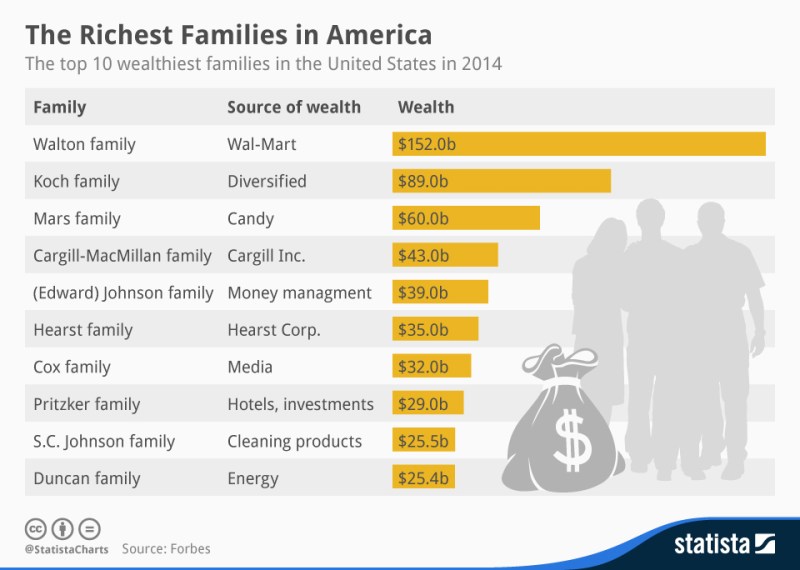
The Walmart fortune isn’t just the largest privately held wealth in America—it’s a financial ecosystem that redefines what it means to control an economy. While the public fixates on the Forbes 400 or Silicon Valley titans, the most wealthy family in America operates in near-total obscurity, their influence woven into the fabric of everyday commerce. The Walton family, owners of Walmart, hold a net worth exceeding $250 billion—more than the GDP of 13 U.S. states combined. Their empire isn’t built on a single company but on a web of trusts, private holdings, and strategic investments that have outlasted economic crashes, political shifts, and even the rise of Amazon. What separates them from other dynastic fortunes isn’t just their wealth, but their ability to remain invisible while shaping consumer behavior, real estate markets, and even presidential elections through dark money.
The story of how this family amassed its fortune begins not with a single stroke of genius but with a calculated bet on small-town America. In 1962, Sam Walton opened the first Walmart in Rogers, Arkansas, with a vision: discount retail would dominate the South, then the nation. What followed wasn’t just the growth of a corporation but the creation of a financial dynasty. Today, the Waltons control not only Walmart’s $600 billion revenue but also vast real estate portfolios, private equity stakes, and a network of trusts that ensure their wealth remains untouchable by taxes or lawsuits. Theirs is a case study in how modern wealth evades traditional measures of power—no public listings, no scandalous headlines, just quiet accumulation. The most wealthy family in America doesn’t flaunt its riches; it embeds them into the systems that sustain them.
Yet for all their success, the Waltons face a paradox: their wealth is both their greatest asset and their most vulnerable point. As Walmart’s market share erodes to e-commerce giants, the family must innovate without diluting control. Their solution? A mix of aggressive expansion into healthcare (through VillageMD), groceries (with the acquisition of Flipkart in India), and even space (a $1 billion investment in rocket launches). Meanwhile, their tax strategies—including a $1.1 billion settlement with the IRS in 2018—have drawn scrutiny, revealing how the ultra-wealthy navigate legal loopholes with precision. The question isn’t whether the Waltons will remain the most wealthy family in America, but how long they can maintain their grip on an economy increasingly dominated by tech and global capital.
The Complete Overview of the Most Wealthy Family in America
The Walton dynasty isn’t just about retail—it’s a masterclass in financial engineering. At its core, the family’s wealth is structured through a holding company, Walton Enterprises, which owns 50% of Walmart stock but operates outside public scrutiny. This setup allows the Waltons to avoid corporate taxes while controlling the company’s direction. Their net worth is estimated at $250 billion, surpassing even the Rockefeller or Vanderbilt fortunes in adjusted dollars. What makes them unique is their ability to diversify risk: while Walmart’s stock fluctuates, the family’s real estate holdings (including the largest private landowner in the U.S.) and private investments in sectors like logistics and energy provide stability. Their wealth isn’t concentrated in one asset but distributed across a network of entities that insulate them from market volatility.The family’s influence extends beyond balance sheets. The Waltons are major donors to conservative causes, with the Walton Family Foundation funding think tanks that oppose labor unions and environmental regulations—policies that benefit Walmart’s low-wage model. Their political clout is matched by their cultural reach: Walmart’s private label brands (like Great Value) dominate supermarket shelves, while their real estate ventures (including the $23 billion purchase of the Bon-Ton department store chain) reshape urban landscapes. The most wealthy family in America doesn’t just accumulate capital; they redefine the rules of the game, from labor laws to zoning ordinances. Their power lies in their ability to operate below the radar, where policy and profit intersect.
Historical Background and Evolution
The Walton fortune traces its roots to Sam Walton’s early career as a J.C. Penney manager in the 1940s, where he learned the art of retail efficiency. His breakthrough came in 1962 with the first Walmart in Arkansas, a store that undercut competitors by slashing overhead costs. But the real genius was in the family’s ability to institutionalize wealth across generations. Sam’s sons—Rob, Jim, Alice, and John—were groomed to take over, but their leadership styles diverged: Rob became the public face of Walmart, while Jim and Alice focused on philanthropy and real estate. The family’s wealth exploded in the 1990s as Walmart went global, but it was the 2000s that cemented their dominance through tax strategies that turned Walmart stock into a tax-free vehicle.The evolution of the Walton fortune is a study in generational adaptation. While Sam Walton built the retail empire, his heirs expanded into private equity, venture capital, and even space tourism. The family’s wealth is now managed by a trust structure that ensures no single heir can wield too much control—a safeguard against internal power struggles. Their real estate holdings, managed by Walton Properties, include shopping centers, office parks, and even a stake in the Las Vegas Strip. The most wealthy family in America has transitioned from retail pioneers to silent architects of modern capitalism, their influence felt in boardrooms and ballot boxes alike.
Core Mechanisms: How It Works
The Walton family’s financial model relies on three pillars: tax optimization, diversification, and control. Their use of trusts and private holdings allows them to defer billions in taxes, a strategy that has drawn criticism but remains legally sound. For example, the family’s $1.1 billion IRS settlement in 2018 revealed how they structured Walmart stock transfers to minimize liabilities. Diversification is key—while Walmart’s stock is their largest asset, their real estate and private investments spread risk. Control is maintained through Walton Enterprises, which holds the majority stake in Walmart without public oversight. This setup ensures that even if Walmart’s stock price dips, the family’s wealth remains intact.Table of Contents
- The Complete Overview of the Most Wealthy Family in America
- Historical Background and Evolution
- Core Mechanisms: How It Works
- Key Benefits and Crucial Impact
- Major Advantages
- Comparative Analysis
- Future Trends and Innovations
- Conclusion
- Comprehensive FAQs
- Q: Who are the members of the most wealthy family in America?
- Q: How does the Walton family avoid taxes?
- Q: What industries does the Walton family invest in beyond retail?
- Q: How does the Walton Family Foundation influence politics?
- Q: Could the Walton family lose their status as the most wealthy family in America?
- Q: What is the Walton family’s net worth?
The family’s political and philanthropic arms further reinforce their power. The Walton Family Foundation, with $1.5 billion in assets, funds conservative think tanks that push for deregulation—benefiting Walmart’s business model. Their real estate ventures, including the $23 billion Bon-Ton acquisition, allow them to shape urban development while keeping assets private. The most wealthy family in America operates like a sovereign entity, with its own legal, financial, and political strategies. Their success lies in their ability to remain flexible, adapting to economic shifts while maintaining iron-clad control over their empire.
Key Benefits and Crucial Impact
The Walton family’s wealth isn’t just a personal achievement—it’s a blueprint for how modern dynasties preserve power. Their ability to diversify across sectors (retail, real estate, tech) ensures resilience against market downturns. Their tax strategies, while controversial, highlight how the ultra-wealthy exploit legal loopholes to protect their fortunes. The family’s influence extends beyond finance: their political donations and foundation work shape policy debates on labor, healthcare, and education. The most wealthy family in America demonstrates how wealth can be weaponized—not just to accumulate more, but to reshape the systems that govern society.Their impact is also cultural. Walmart’s private label brands dominate shelves, while their real estate projects redefine cityscapes. The family’s philanthropy, though substantial, is often tied to conservative causes that align with their business interests. This dual role—as both corporate leaders and civic influencers—gives them a level of soft power few can match. Their story is a cautionary tale about the concentration of wealth and its consequences, but also a testament to the ingenuity required to sustain it across generations.
"The Waltons didn’t just build a company—they built a financial fortress. Their wealth isn’t an accident of market forces but the result of deliberate, multi-generational strategy." — Forbes Billionaires Analyst, 2023
Major Advantages
- Tax Optimization: The family uses trusts and private holdings to defer billions in taxes, a strategy that has withstood legal challenges.
- Diversification: Beyond Walmart, they invest in real estate, private equity, and emerging sectors like space tourism.
- Political Influence: The Walton Family Foundation funds conservative think tanks, shaping policy debates on labor and regulation.
- Real Estate Dominance: Walton Properties is one of the largest private landowners in the U.S., controlling shopping centers and urban developments.
- Generational Control: Their trust structure ensures wealth remains within the family, avoiding public scrutiny or dilution.

Comparative Analysis
| Walton Family | Rockefeller Dynasty |
|---|---|
| Wealth: $250B (private) | Wealth: $100B (public/private) |
| Primary Industry: Retail/Real Estate | Primary Industry: Oil/Finance |
| Tax Strategy: Trusts & Private Holdings | Tax Strategy: Philanthropic Deductions |
| Political Lean: Conservative | Political Lean: Libertarian |
Future Trends and Innovations
The Walton family’s next challenge is adapting to the rise of e-commerce and automation. While Walmart has invested heavily in online retail, the family’s long-term strategy may involve further diversification into tech and logistics. Their real estate holdings could expand into smart cities or renewable energy projects, aligning with shifting consumer trends. Politically, their influence may grow as they leverage their wealth to shape debates on AI regulation and global trade. The most wealthy family in America is poised to remain dominant, but their ability to innovate without losing control will determine their legacy.One wild card is space. The Waltons’ $1 billion investment in rocket launches signals a bet on the future of private space travel and satellite technology. If successful, this could become another pillar of their empire, much like their early dominance in retail. Their philanthropy may also evolve, with more focus on climate adaptation given their real estate exposure. The family’s greatest asset has always been their ability to anticipate change—whether through tax law shifts or consumer behavior. Their future will likely be defined by how well they navigate these disruptions while maintaining their core advantage: control.
Conclusion
The Walton family’s story is more than a tale of retail success—it’s a masterclass in how wealth is preserved across generations. Their ability to diversify, optimize taxes, and influence policy sets them apart from other dynastic fortunes. The most wealthy family in America operates in the shadows, yet their impact is undeniable, from the products on supermarket shelves to the laws governing labor. Their legacy isn’t just about money; it’s about power, and how it can be wielded quietly yet effectively.As the economy evolves, the Waltons will need to adapt, but their core strengths—diversification, control, and political influence—remain unmatched. Their story serves as both a cautionary tale and a roadmap for how wealth can be sustained in an era of rapid change. For now, they remain America’s most formidable financial dynasty, a testament to the enduring power of strategic wealth management.
Comprehensive FAQs
Q: Who are the members of the most wealthy family in America?
A: The Walton family includes heirs of Sam Walton, such as Rob Walton (former Walmart CEO), Jim Walton (largest individual shareholder), Alice Walton (art collector and philanthropist), and John Walton (investor in space and tech). Their wealth is managed collectively through trusts and Walton Enterprises.
Q: How does the Walton family avoid taxes?
A: The Waltons use a combination of trusts, private holdings, and strategic stock transfers to defer billions in taxes. Their $1.1 billion IRS settlement in 2018 revealed how they structured Walmart stock transfers to minimize liabilities, a tactic that remains legally sound under current tax laws.
Q: What industries does the Walton family invest in beyond retail?
A: Beyond Walmart, the family invests in real estate (shopping centers, urban developments), private equity, space tourism (rocket launches), and emerging tech sectors. Their Walton Properties arm is one of the largest private landowners in the U.S.
Q: How does the Walton Family Foundation influence politics?
A: The foundation funds conservative think tanks that advocate for deregulation, free-market policies, and opposition to labor unions—issues that align with Walmart’s business model. Their political donations have made them a key player in shaping U.S. policy debates.
Q: Could the Walton family lose their status as the most wealthy family in America?
A: While their wealth is immense, risks include Walmart’s declining market share to Amazon, economic downturns, or shifts in tax laws. However, their diversification and control mechanisms make a sudden fall unlikely. Their long-term dominance depends on adapting to tech and global trends.
Q: What is the Walton family’s net worth?
A: As of 2024, the Walton family’s net worth exceeds $250 billion, making them the wealthiest family in America. Their fortune is concentrated in Walmart stock, real estate, and private investments, with no single heir controlling the majority.
Leave a Comment
Comments are moderated before appearing. The data you submit is processed according to the Privacy Policy of Neip.