Navigating Georgia Tech’s myPrintCenter: The Insider’s Playbook

Georgia Tech’s printing ecosystem is a high-stakes operation for students, researchers, and faculty. One misstep—like ignoring balance alerts or misconfiguring default settings—can turn a simple print job into a logistical nightmare. The platform’s seamless integration with campus life belies its complexity: from multi-campus printing queues to department-specific policies, navigating it efficiently requires insider knowledge. Yet, most users treat it as a transactional tool, unaware of its hidden features—like batch printing for large documents or the ability to release jobs from any campus printer.
The real efficiency gains lie in mastering myPrintCenter’s workflows, not just its buttons. For instance, did you know your print balance can be topped up via third-party services, bypassing the default $100 cap? Or that certain labs offer subsidized printing for approved projects? These nuances separate the time-wasters from the power users. The system’s design favors those who understand its underlying logic: how job priorities work, why some printers jam more often, and which file formats trigger the fewest errors.
Below, we dissect the platform’s mechanics, highlight its often-overlooked advantages, and compare it to alternatives—so you can print like a pro, not a novice.
The Complete Overview of myPrintCenter at Georgia Tech
myPrintCenter is Georgia Tech’s centralized printing portal, serving as the backbone for document management across all campuses. Launched to streamline printing services, it consolidates queues, balances, and release stations into a single interface—eliminating the chaos of physical print shops. The system supports black-and-white, color, and specialty printing (e.g., large-format posters for research), with tiered pricing that reflects usage intensity. For students, it’s a necessity; for faculty, it’s a tool for collaborative projects; and for staff, it’s a cost-tracking system tied to departmental budgets.Behind the scenes, myPrintCenter operates on a credit-based model, where users fund their accounts via direct deposit, third-party vendors, or departmental allocations. Each print job is assigned a unique ID, which must be entered at a release station to retrieve physical copies. This security measure prevents unauthorized access but can become a bottleneck if not managed proactively. The platform also integrates with Google Drive and OneDrive, allowing users to upload files directly—though compatibility issues with certain file types (e.g., PDFs with embedded fonts) remain a persistent pain point.
Historical Background and Evolution
The origins of Georgia Tech’s printing infrastructure trace back to the early 2000s, when standalone print shops on each campus led to inefficiencies—duplicated equipment, inconsistent pricing, and long wait times. The transition to a unified system began in 2010 with the rollout of myPrintCenter, initially as a pilot for undergraduate students. Early versions lacked the current level of automation, requiring manual job submission and in-person release. Feedback from users highlighted two critical flaws: the absence of mobile access and the inability to track spending across multiple campuses.By 2015, the platform underwent a major overhaul, introducing cloud-based job management and a mobile app (myPrintCenter Mobile) that allowed users to release prints from anywhere on campus. This shift mirrored broader trends in higher education, where digital-first solutions were replacing physical infrastructure. Today, the system processes over 500,000 print jobs annually, with peak usage during exam periods and research deadlines. The evolution reflects Georgia Tech’s commitment to balancing cost efficiency with user convenience—a delicate act that continues to shape its development.
Core Mechanisms: How It Works
At its core, myPrintCenter functions as a three-step process: upload, queue, and release. Users begin by logging into the portal via their Georgia Tech credentials (GT Accounts) and selecting a print option (e.g., "Black & White" or "Color"). Files are uploaded directly or linked from cloud storage, with a preview feature to avoid formatting errors. Once submitted, jobs enter a campus-specific queue, where priority is determined by submission time and paper type (e.g., color prints typically take longer).Table of Contents
- The Complete Overview of myPrintCenter at Georgia Tech
- Historical Background and Evolution
- Core Mechanisms: How It Works
- Key Benefits and Crucial Impact
- Major Advantages
- Comparative Analysis
- Future Trends and Innovations
- Conclusion
- Comprehensive FAQs
- Q: How do I check my remaining print balance?
- Q: Can I print from a USB drive without uploading to the portal?
- Q: Why does my color print job take longer than black-and-white?
- Q: Are there any free printing options for students?
- Q: What should I do if my print job is stuck in the queue?
- Q: How can I reduce my printing costs?
- Q: Can I release someone else’s print job?
- Q: What file formats does myPrintCenter support?
- Q: Is there a way to print without a Georgia Tech account?
- Q: How do I report a malfunctioning printer?
The release phase is where most users encounter friction. After printing, documents are held at a release station until the user enters their job ID and PIN. Stations are strategically placed near high-traffic areas (e.g., library entrances, student centers), but during busy periods, queues can stretch for hours. Pro users mitigate this by monitoring job statuses in real-time via the app or by selecting "Express" printing for an additional fee—though this option is often overshadowed by the default "Economy" setting.
Key Benefits and Crucial Impact
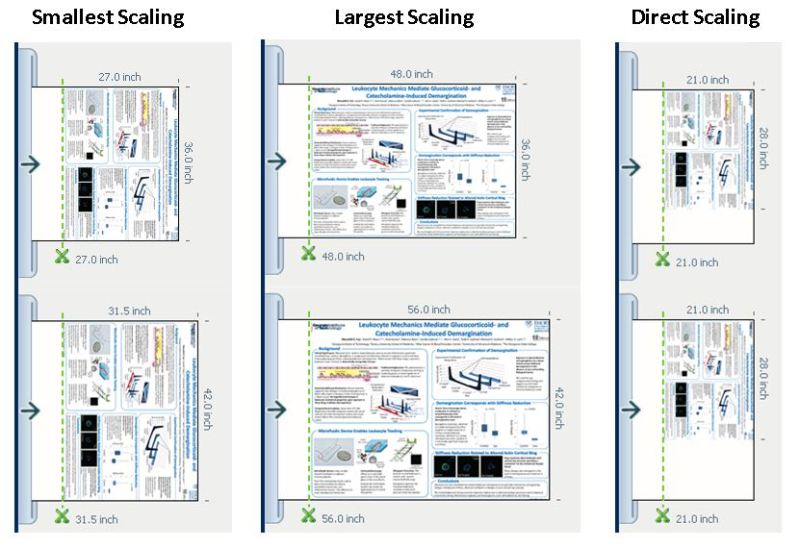
myPrintCenter’s true value lies in its ability to reduce friction in academic workflows. For students, it eliminates the need to carry physical media or visit multiple print shops; for faculty, it centralizes printing for lab groups; and for departments, it provides granular spending reports. The system’s scalability is evident in how it handles spikes during thesis deadlines or conference preparations, where demand can surge by 300% in a single week. Without this infrastructure, Georgia Tech’s document-heavy environment would grind to a halt.Yet, the platform’s impact extends beyond convenience. By standardizing pricing and equipment, it ensures fairness across campuses—no more paying $0.15 per page in one building and $0.25 in another. For researchers, the ability to print large-format documents (e.g., 36" x 48" posters) on-site saves time and shipping costs. Even the smallest features, like the ability to duplicate a print job without re-uploading, compound into significant time savings over a semester.
"The difference between a student who prints efficiently and one who doesn’t isn’t skill—it’s knowledge of the system’s hidden levers. Most users never realize they can split a large PDF into smaller batches to avoid long queues." — Georgia Tech IT Services Print Operations Team
Major Advantages
- Multi-campus accessibility: Submit a job in Atlanta and release it in Savannah without losing your place in the queue.
- Third-party top-ups: Use services like Reloadit or Vanilla Card to add funds beyond the $100 default limit, ideal for high-volume users.
- Departmental subsidies: Check with your school/college for approved projects that offer reduced rates (e.g., 20% off for engineering lab reports).
- File optimization tools: The portal’s built-in PDF compressor reduces file sizes by up to 40%, lowering print costs.
- Audit trails: Track every print job via the "My Activity" dashboard, useful for budgeting or identifying wasteful habits.
Comparative Analysis
| Feature | myPrintCenter (Georgia Tech) | Third-Party Alternatives (e.g., Staples, FedEx Office) ||-----------------------|------------------------------------|--------------------------------------------------------|
| Cost per Page | $0.05–$0.20 (varies by type) | $0.10–$0.30 (higher for color) |
| Campus Integration| Seamless (no shipping delays) | Requires physical drop-off or pickup |
| Mobile Access | Full app support | Limited or nonexistent |
| Large-Format Support | Up to 36" x 48" (on-site) | Available but with longer turnaround times |
Note: While third-party services offer convenience for non-campus users, myPrintCenter’s integration with Georgia Tech’s ecosystem makes it the clear choice for students and faculty.
Future Trends and Innovations
The next phase of myPrintCenter’s evolution will likely focus on AI-driven features, such as automated file optimization (e.g., detecting and removing low-resolution images before printing) and predictive queue management (alerting users to optimal print times based on historical data). Georgia Tech’s push toward sustainability may also introduce eco-friendly printing modes, like duplex defaults or toner-saving presets. Additionally, the platform could expand its API to allow third-party integrations, such as direct printing from research databases or collaborative tools like LaTeX editors.Long-term, the system may phase out physical release stations in favor of secure digital lockers (e.g., QR-code access at designated pick-up points), reducing congestion during peak hours. However, any changes must balance innovation with accessibility—ensuring that students without smartphones or reliable internet aren’t left behind.

Conclusion
myPrintCenter is more than a printing tool; it’s a reflection of Georgia Tech’s operational efficiency. By understanding its mechanics—from queue prioritization to cost-saving hacks—users can transform a mundane task into a streamlined process. The key lies in proactive management: monitoring balances, optimizing file formats, and leveraging lesser-known features like departmental subsidies. Ignoring these details isn’t just inefficient; it’s costly, both in time and money.For those who treat printing as an afterthought, the system remains a source of frustration. But for those who master its workflows, myPrintCenter becomes an invisible ally—one that quietly supports the academic and research endeavors that define Georgia Tech’s mission.
Comprehensive FAQs
Q: How do I check my remaining print balance?
Log in to myPrintCenter, navigate to the "Account" tab, and select "Balance." You can also check via the mobile app under "Wallet." Balances update in real-time after transactions.
Q: Can I print from a USB drive without uploading to the portal?
No. myPrintCenter requires files to be uploaded via the web portal or cloud storage (Google Drive/OneDrive). USB submissions are not supported due to security and compatibility risks.
Q: Why does my color print job take longer than black-and-white?
Color printing involves four ink cartridges (CMYK) and higher-resolution settings, which slows down the process. Economy color prints may take 2–3x longer than black-and-white in peak hours.
Q: Are there any free printing options for students?
Limited free printing is available through departmental initiatives (e.g., the Library’s "Print for Free" program for certain materials). Check with your school or college for approved subsidies.
Q: What should I do if my print job is stuck in the queue?
Cancel the job via the portal’s "My Jobs" section and resubmit with a smaller file size or lower resolution. If the issue persists, contact printhelp@gatech.edu with your job ID.
Q: How can I reduce my printing costs?
Use the built-in PDF compressor, print double-sided by default, and avoid color unless necessary. For large documents, split into smaller batches to bypass queue delays.
Q: Can I release someone else’s print job?
No. Release stations require the original submitter’s credentials (job ID + PIN). Exceptions are made only for authorized departmental assistants with shared accounts.
Q: What file formats does myPrintCenter support?
PDF, DOCX, PPTX, and JPEG/PNG (images only). Complex formats like CAD files or encrypted PDFs may fail. Convert files to PDF if errors occur.
Q: Is there a way to print without a Georgia Tech account?
No. myPrintCenter is restricted to GT-affiliated users (students, faculty, staff). Guest accounts are not available for public use.
Q: How do I report a malfunctioning printer?
Use the "Report Issue" link on the myPrintCenter homepage or submit a ticket via OIT’s service portal. Include the printer’s location and error code if visible.
Leave a Comment
Comments are moderated before appearing. The data you submit is processed according to the Privacy Policy of Neip.