Navigating Georgia Tech’s Campus Printing: The Definitive Student Handbook
Georgia Tech’s campus printing infrastructure is a lifeline for students, researchers, and faculty—yet few leverage it to its full potential. Whether you’re submitting a 50-page thesis, prototyping a mechanical design, or printing a last-minute presentation, understanding the system’s nuances can save you time, money, and frustration. The difference between a seamless workflow and a last-minute scramble often hinges on knowing where to print, how to budget for costs, and which hidden services (like large-format printing or 3D printing integration) can elevate your academic or professional projects.
For many, the first encounter with Georgia Tech’s printing ecosystem comes with a mix of excitement and confusion. The university’s sprawling campuses—Midtown, Downtown, and the Research Triangle—each host distinct printing hubs, from high-speed black-and-white stations to specialized labs for engineering schematics. But beyond the physical locations lies a labyrinth of policies, pricing tiers, and technical quirks that can trip up even the most organized student. Without a roadmap, you might overlook cost-saving measures, miss out on premium services, or waste hours troubleshooting a jammed printer.
This guide cuts through the noise to deliver a precise, actionable breakdown of Georgia Tech’s printing resources. From the low-cost basics of Tech Green’s student printing plans to the high-stakes requirements of lab-quality outputs, we’ll dissect every facet of the gatech ultimate guide campus printing—so you can print smarter, not harder.
The Complete Overview of Georgia Tech Campus Printing
Georgia Tech’s printing network operates as a hybrid system, blending traditional campus services with modern digital integrations. At its core, the university provides printing through two primary channels: Tech Green’s student printing plans and departmental/faculty-managed labs, each catering to different needs. Tech Green, the student government’s initiative, offers subsidized printing at select locations (e.g., Library, Student Center) with plans ranging from 50 to 500 pages per semester. Meanwhile, academic departments—especially in engineering and design—maintain their own printing hubs, often equipped with high-end equipment like plotters, laser cutters, and even 3D printers, accessible via departmental accounts or research funding.
The system’s design reflects Georgia Tech’s dual identity as both a rigorous technical institution and a student-centered community. While undergraduates might rely on Tech Green for everyday assignments, graduate students and researchers frequently navigate a patchwork of departmental policies, where printing costs are often absorbed by grants or lab budgets. This bifurcation can create friction, particularly for cross-disciplinary projects or students working outside traditional majors. However, the university’s investment in digital infrastructure—such as the Print & Go app and cloud-based printing—aims to streamline access, reducing reliance on physical queues and paper waste.
Historical Background and Evolution
The evolution of Georgia Tech’s printing services mirrors broader shifts in higher education toward sustainability and digital integration. In the early 2000s, printing was a straightforward, high-cost operation, with students bearing the brunt of expenses for academic outputs. The introduction of Tech Green in 2010 marked a turning point, shifting the burden to student government funding while promoting environmental consciousness through duplex printing defaults. This move aligned with Georgia Tech’s broader sustainability goals, including its commitment to reducing campus paper consumption by 20% by 2025.
Table of Contents
- The Complete Overview of Georgia Tech Campus Printing
- Historical Background and Evolution
- Core Mechanisms: How It Works
- Key Benefits and Crucial Impact
- Major Advantages
- Comparative Analysis
- Future Trends and Innovations
- Conclusion
- Comprehensive FAQs
- Q: How do I set up a Tech Green printing plan?
- Q: Can I print from my personal laptop to campus printers?
- Q: What’s the difference between black-and-white and color printing costs?
- Q: Are there any restrictions on printing large-format documents?
- Q: What should I do if a printer is jammed or not working?
- Q: Can I get my prints bound or laminated on campus?
- Q: Are there any discounts for graduate students or researchers?
- Q: How can I reduce my printing costs?
- Q: What’s the policy on printing for commercial use?
More recently, the pandemic accelerated digital transformation, with Georgia Tech rapidly expanding its cloud printing and mobile printing capabilities. The Print & Go app, launched in 2021, eliminated the need for physical card swipes, allowing students to release print jobs from anywhere on campus. Meanwhile, engineering and architecture departments have invested in specialized equipment, such as large-format plotters for CAD drawings and 3D printers for prototyping, reflecting the institution’s emphasis on hands-on, design-driven learning. These advancements haven’t just modernized printing—they’ve redefined it as a tool for innovation, not just a utility.
Core Mechanisms: How It Works
Navigating Georgia Tech’s printing system begins with understanding its two-tiered access model. For most students, the process starts with Tech Green’s printing plans, which require an annual fee (typically $5–$15, depending on the tier) and grant access to designated printers across campus. To use these, students add money to their GT Print Account via the Print & Go app or the Tech Green website, then select their printer and release jobs. The system tracks usage in real time, with alerts for low balances. Departmental printers, by contrast, operate on a different model: users often need a departmental ID or research account to access high-end equipment, with costs covered by grants or lab budgets.
Behind the scenes, Georgia Tech’s printing network relies on a mix of Konica Minolta and HP hardware, with some labs using Epson for specialized outputs. The university’s IT team regularly maintains and upgrades these systems, though students occasionally report issues like slow speeds or paper jams—particularly during peak times (e.g., midterms, thesis deadlines). To mitigate disruptions, Tech Green recommends using off-peak hours (early mornings or late evenings) and submitting jobs via the app to avoid physical queues. For large or urgent prints, some departments offer express services, though these may incur additional fees.
Key Benefits and Crucial Impact
Georgia Tech’s printing ecosystem isn’t just about convenience—it’s a strategic resource that directly impacts academic success, research output, and even career readiness. For undergraduates, access to reliable printing reduces the stress of last-minute assignments, while graduate students benefit from high-quality outputs that meet professional standards. Beyond academics, the system supports entrepreneurship: students in the Georgia Tech Enterprise Innovation Institute frequently use campus printers to prototype products, from drone components to wearable tech. Even alumni leverage these skills in industries where precision printing—whether for schematics or marketing materials—is critical.
The financial and environmental benefits are equally significant. Tech Green’s subsidized plans cut printing costs by up to 70% compared to retail alternatives, while the university’s sustainability initiatives (like default duplex printing) have saved over 500,000 sheets of paper annually. For students, this means lower expenses; for the university, it’s a step toward its carbon-neutrality goals. Yet the system’s true value lies in its adaptability. Whether you’re a computer science major printing code documentation or an architecture student rendering blueprints, Georgia Tech’s printing resources are designed to scale with your needs.
— Dr. Elena Vasquez, Associate Dean of Student Affairs
"Printing isn’t just about paper anymore. It’s about enabling creativity, collaboration, and problem-solving—whether that’s debugging a program or designing a sustainable structure. Our goal is to make sure every student, regardless of major, has the tools they need to bring their ideas to life."
Major Advantages
- Cost Efficiency: Tech Green’s plans offer $0.05–$0.10 per page for black-and-white prints, far below retail rates (often $0.20+). Color prints are also subsidized, with rates as low as $0.25/page.
- Convenience: The Print & Go app allows job release from any device, with no need to carry physical cards. Printers are strategically located near high-traffic areas (e.g., Library, Student Center).
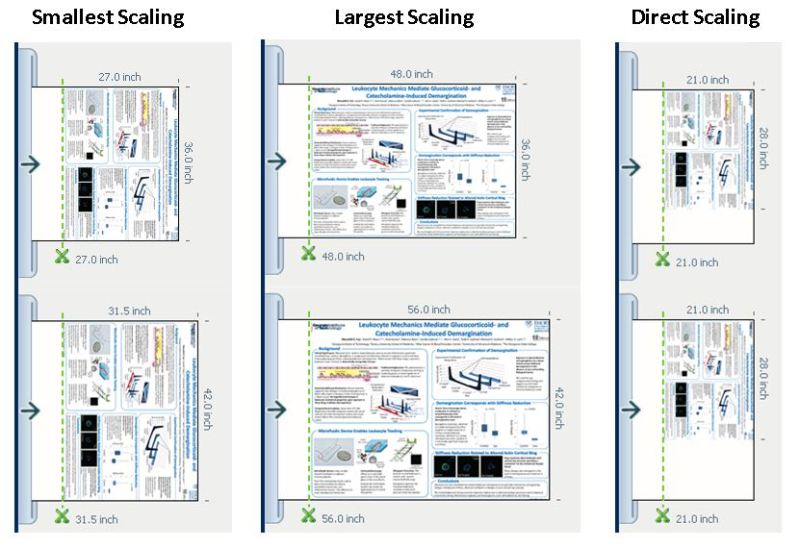
- Specialized Services: Engineering and design departments provide large-format printing (up to 44" x 34"), 3D printing, and plotter services for CAD files, often at no additional cost for students.
- Sustainability: Default duplex printing and paper recycling programs reduce waste, aligning with Georgia Tech’s 2025 sustainability targets.
- Research Support: Graduate students and faculty can access high-resolution scanners, binding services, and archival-quality printing through departmental labs, often funded by grants.

Comparative Analysis
| Feature | Tech Green (Student Plan) | Departmental Labs |
|---|---|---|
| Cost Structure | Semester-based plans ($5–$15); pay-per-page after plan limits. | Often free for students (covered by departmental budgets); research projects may have separate funding. |
| Equipment | Standard HP/Konica Minolta (B/W and color); limited to A4/Letter size. | Specialized: Large-format plotters, 3D printers, high-end laser cutters. |
| Access Method | GT Print Account via Print & Go app or website. | Departmental ID or research account; some require training. |
| Turnaround Time | Instant for app-released jobs; queues during peak hours. | Varies by lab; express services may take 1–2 hours. |
Future Trends and Innovations
As Georgia Tech continues to evolve, its printing infrastructure is poised for further innovation, particularly in AI-assisted design and automated workflows. Imagine a system where you upload a CAD file to a portal, and within minutes, a robotically guided printer produces a prototype—complete with quality checks for accuracy. The university is already testing smart printing kiosks that use computer vision to detect paper jams before they occur, reducing downtime. Additionally, partnerships with local 3D printing hubs could expand access to advanced materials, like biodegradable plastics or metal alloys, for student projects.
Sustainability will remain a cornerstone of these changes. Georgia Tech’s 2030 Climate Action Plan includes goals to eliminate single-use plastics in printing supplies and transition to 100% recycled or renewable materials. Pilot programs for digital-first workflows—where students submit assignments electronically and only print final versions—are being explored to further reduce paper use. For students, this means staying ahead of trends like augmented reality (AR) printing, where physical prototypes can be overlaid with digital data for interactive reviews. The future of printing at Georgia Tech won’t just be faster and cheaper—it’ll be smarter.

Conclusion
Georgia Tech’s printing resources are more than a utility—they’re a testament to how infrastructure can empower innovation. Whether you’re a first-year student printing lecture notes or a PhD candidate preparing a dissertation, understanding the gatech ultimate guide campus printing system puts you in control. The key is balancing cost, quality, and convenience, whether that means sticking to Tech Green’s plans for everyday needs or tapping into departmental labs for high-stakes projects. As the university embraces digital transformation, the lines between physical and virtual printing will blur further, but the core principle remains: access to the right tools can turn an assignment into an opportunity.
So next time you’re faced with a printing deadline, don’t just hit "print"—strategize. Use the Print & Go app to avoid queues, explore departmental resources for specialized needs, and keep an eye on upcoming tech like AR prototypes. The campus printing system isn’t just here to serve you; it’s here to help you build, create, and lead. Now go print something remarkable.
Comprehensive FAQs
Q: How do I set up a Tech Green printing plan?
A: Visit the Tech Green website, log in with your GT account, and select your plan (Basic, Premium, or Unlimited). Fund your account via the Print & Go app or the website, then install the app to release print jobs. Plans renew annually in August.
Q: Can I print from my personal laptop to campus printers?
A: Yes. Install the Print & Go app, log in with your GT credentials, and select your printer. You can also use Google Cloud Print or AirPrint (for Apple devices) if your printer supports it. For departmental labs, check with your department’s IT team for specific instructions.
Q: What’s the difference between black-and-white and color printing costs?
A: Tech Green’s Basic plan includes 50 B/W pages ($0.05/page after limit) and 20 color pages ($0.25/page after limit). Premium plans offer more pages at discounted rates. Departmental labs may have separate pricing, often subsidized for students.
Q: Are there any restrictions on printing large-format documents?
A: Large-format printing (e.g., posters, blueprints) is available in design and engineering labs, such as the College of Design’s Fabrication Lab or Mechanical Engineering’s Prototyping Center. These require departmental approval or a research account. Standard Tech Green printers do not support sizes larger than 11x17".
Q: What should I do if a printer is jammed or not working?
A: First, check the Printer Status Board near high-traffic locations or the OIT Printing Support page. For jams, follow on-screen instructions or contact Tech Green Support at support@techgreen.gatech.edu. For departmental printers, reach out to your department’s IT staff.
Q: Can I get my prints bound or laminated on campus?
A: Yes. The Georgia Tech Bookstore and Student Center Copy Center offer binding (spiral, coil, or hardcover) and laminating services. Prices vary: binding starts at ~$5 for a 20-page report, while laminating costs ~$0.50 per sheet. Some departments also provide binding for research papers.
Q: Are there any discounts for graduate students or researchers?
A: Graduate students often have access to departmental printing budgets, covering costs for academic or research-related prints. Check with your advisor or department’s administrative office. Some labs also offer priority scheduling for large or urgent prints.
Q: How can I reduce my printing costs?
A: Use duplex (double-sided) printing by default, opt for B/W over color, and stick to Tech Green’s plan limits. For large documents, consider PDF editing to remove margins or compress images. Some departments offer free print credits for students presenting at conferences.
Q: What’s the policy on printing for commercial use?
A: Campus printing is for academic, research, or university-related purposes only. Commercial printing (e.g., flyers for a side business) may violate university policies. For such needs, use off-campus services or check with the Georgia Tech Entrepreneurship Center for approved vendors.
Leave a Comment
Comments are moderated before appearing. The data you submit is processed according to the Privacy Policy of Neip.