Tag
cognitive psychology
-
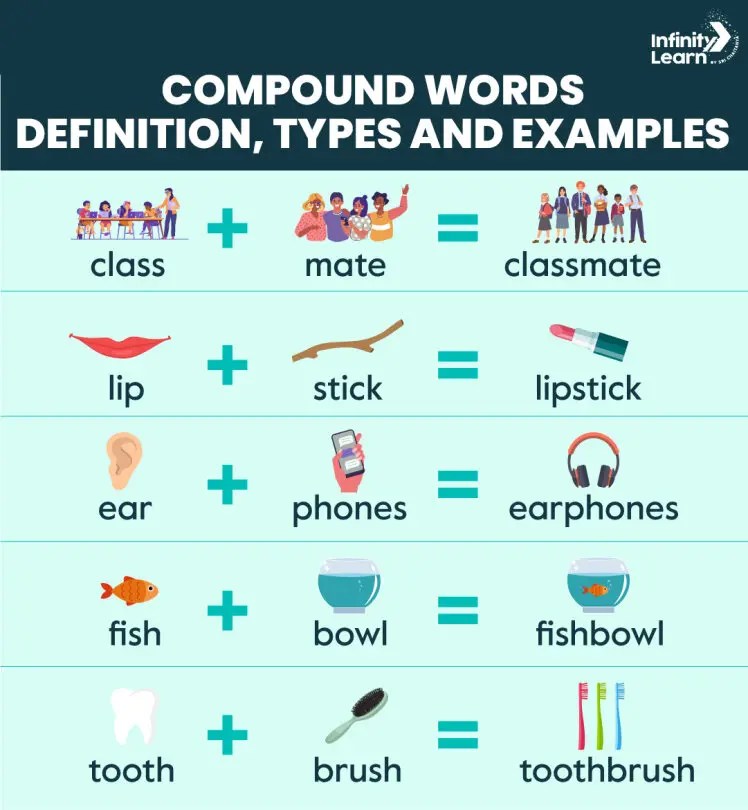
How Compound Examples Shape Modern Thinking and Practical Applications
The problem with traditional learning is its linearity. Most education systems dissect concepts into silos: math here, history there, ethics elsewhere. But...
-

The Hidden Power of Starting from Familiar of Zero
What makes this approach uniquely disruptive is its refusal to offer shortcuts. Most frameworks promise efficiency by leveraging existing knowledge, but...
-

The Hidden Depths of Head in the Clouds Meaning
What makes the "head in the clouds meaning" so enduring is its duality: it can describe a mental state of disengagement or, paradoxically, a heightened state...
-
The Art of Memory Reinforcement: How You Remind Yourself Lasts
The paradox of memory is this: the harder you try to remember something once , the less likely you are to retain it long-term. The secret lies in how you...
-

Beyond the Obvious: What So What Else Reveals About Hidden Patterns
What makes "so what else" so potent is its ability to cut through noise. In an era where information overload drowns out critical thinking, the phrase acts as...
-

How the Brain Stores What It Can’t Recall: What Is Implicit Memory?
Consider the way your body flinches at a sudden loud noise, even if you can’t remember the last time you associated that sound with danger. Or how a song’s...
-

Why Can’t I Remember My Dreams? The Science Behind Lost Sleep Stories
The phenomenon of poor dream recall isn’t just a personal quirk—it’s a well-documented puzzle in neuroscience and cognitive psychology. Studies suggest that up...
-

How to Secure Your Path: Mastering Insights Passing Final Exam
What separates a student who guesses their way to a C from one who walks out knowing they’ve maximized every possible point? The difference lies in recognizing...
-

How to Select the Best Perspective: The Ultimate Guide Choosing Best Perspective for Clarity and Success
The art of selecting the best perspective demands self-awareness, critical thinking, and an understanding of how cognitive biases distort perception. Whether...
-

The Unseen Magic Happening Before Your Eyes
Consider this: when you blink, the screen you’re reading vanishes—not because it’s gone, but because your brain suppresses the disruption. The same mechanism...
-

How Depth Perception Works: The Science Behind Seeing in 3D
The brain doesn’t passively receive visual data; it actively constructs depth from fragmented clues. These clues—some subtle, others overt—are processed in...
-

The Art of How to Basic: Why Simplicity Is the Ultimate Skill
Yet society glorifies overcomplication. We’re sold on "advanced" techniques, premium tools, and layered methodologies as badges of progress. The truth? The...
-

The Hidden Power of the Letter P: How It Shapes Language, Culture, and Thought
Consider the P in politics : a single character that encapsulates systems of governance, propaganda, and public perception. Or the P in privacy , a concept so...
-

What Does Conclusion Mean? The Hidden Depths of Finality in Thought and Action
Yet the concept resists simplicity. In mathematics, a conclusion is a logical inevitability; in law, it’s a verdict with binding force; in everyday speech...
-

How Imagine Meaning Shapes Reality—The Psychology and Power of Creative Interpretation
Neuroscientists now confirm what philosophers have debated for centuries: the brain doesn’t just record experiences—it reconstructs them, stitching together...
-

What Is an Alliteration? The Art of Sound That Shapes Language and Memory
Yet for all its ubiquity, what is an alliteration remains a concept often misunderstood. Many conflate it with rhyme or assume it’s merely a quirk of...
-

How the Teach Drop Method Transforms Learning and Memory
What makes teach drop uniquely powerful is its dual mechanism: it combines the protection effect (where teaching others preserves your own knowledge) with...
-

The Mind’s Hidden Code: Unraveling *Mind Cognitive Definition Psychology Foundation* Through Science
The study of this foundation has evolved from philosophical speculation into a rigorous scientific discipline, blending psychology, neuroscience, and computer...
-

The Art of Intentional Living: Mastering the Science Behind Making Good Choices
The paradox of good decision-making lies in its invisibility. When choices work out, we rarely analyze why; when they fail, we scramble for explanations. Yet...
-

Unlocking the Impeccable Meaning: How Precision Defines Excellence
What separates an impeccable performance from a merely "good" one? The answer lies in the absence of any traceable imperfection—not just in the result, but in...